Adding Actives to Sleeping Mask Base: Mixing Method & Stability
Question
I plan to add various oil-soluble and water-soluble active ingredients (including powders and liquids) to a Cica Sleeping Mask Base. My proposed method involves preparing separate oil and water phases, then adding them sequentially to the base. Will this mixing procedure work, will the final formulation be stable (specifically regarding phase separation), and is it necessary to add an additional emulsifier like Satin Cream Maker to ensure stability?
Answer
Evaluation of Proposed Formulation Steps
Oil Phase Preparation (Step 1): Heating Shea Butter, TXC, MSH White, and Natural Bisabolol to 60°C to create an oil solution is a reasonable starting point for melting Shea Butter and dissolving Natural Bisabolol. However, MSH White is recommended to be dissolved in oil at 80°C for better solubility. Heating only to 60°C might result in incomplete dissolution of MSH White, potentially affecting its efficacy and the stability of the oil phase. TXC also dissolves better at 60-80°C. Increasing the temperature slightly for this step might be beneficial for dissolving these ingredients, but be mindful of the stability of the ingredients at higher temperatures.
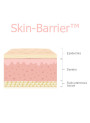
Water/Liquid Phase Preparation (Step 2) and Powder Dissolution (Step 3 & part of 4): Dissolving the water-soluble powders (4MSK, Safe-B3, GlucoBright, Z-White, Natural Betaine, and Ectoine) into the liquid phase containing WhiteCumin 2x, Skin-Barrier, and VersaMoist is chemically sound as these ingredients are water-soluble or dispersible. WhiteCumin 2x and Skin-Barrier are liquids that mix with water. VersaMoist is soluble in both water and oil.
Combining Phases (Part of Step 4): The main challenge lies in combining the phases.
- You are adding a significant amount of water-based solution (26g) containing dissolved powders and liquids to 74g of the Cica Sleeping Mask Base. While the base is designed to accept active ingredients and is electrolyte resistant (which helps with ingredients like 4MSK and Natural Betaine), adding such a large proportion of an external water phase can potentially dilute or disrupt the base's existing emulsion structure.
- Crucially, you then add the pre-formed oil phase (9g) after mixing the water phase and the base. Pre-made emulsion bases like the Cica Sleeping Mask Base are already stable oil-in-water or water-in-oil systems created with specific emulsifiers and processes. Adding a separate oil phase to this mixture in this manner is highly likely to break the emulsion, leading to separation of oil and water phases over time. Emulsions are typically formed by carefully combining the oil and water phases with emulsifiers under controlled mixing conditions.
Preservative Addition (Final Step): Adding Phenoxyethanol SA at the end is correct in terms of temperature sensitivity (<60°C). However, its efficacy depends on the final pH of the formulation, which should be within the range of 2.0-6.0 for Phenoxyethanol SA. The combination of all your added ingredients and the base will determine the final pH, and it's essential to check this to ensure the preservative is effective. Also, Phenoxyethanol SA has limited solubility in water and oil (<= 1.0% in water, <= 0.6% in mineral oil). Adding 1g (approximately 0.91% of the total 110g batch) might be at the edge of its solubility depending on the final composition, although it's designed as a blend to improve solubility.
Stability Concerns
Based on the proposed steps, the resulting formulation is likely to be unstable. The primary reasons are:
- Disruption of Base Emulsion: Adding a large external water phase and then a separate oil phase to a pre-made emulsion base is a common cause of instability and phase separation.
- High Total Additive Load: The total amount of added ingredients (36% of the final formula weight) is quite high relative to the base (67.27%). While the base can accommodate some additions, this high load, especially with diverse ingredient types (oils, water-soluble powders, liquids), puts significant stress on the base's emulsification system.
Need for Satin Cream Maker
You asked if you need to add Satin Cream Maker. Adding an additional emulsifier/thickener like Satin Cream Maker might help to some extent, as it is electrolyte resistant and can help stabilize emulsions. However, it is not guaranteed to fix the fundamental issue of the mixing method (adding phases separately to a pre-made base) or the high total load of diverse ingredients. Satin Cream Maker is typically used as the primary emulsifier in a formulation, not as an additive to re-stabilize a potentially broken base.
Recommendation
To create a stable formulation with these ingredients and the Cica Sleeping Mask Base, you would likely need to adjust the mixing method significantly. It might be more effective to:
- Dissolve all water-soluble ingredients in the water phase.
- Combine all oil-soluble ingredients in the oil phase, heating as necessary for dissolution (potentially closer to 80°C for MSH White).
- Carefully incorporate the combined oil phase and the combined water phase into the Cica Sleeping Mask Base using appropriate mixing techniques (e.g., high shear mixing if suitable for the base) to help maintain or re-establish the emulsion.
- Add the preservative at the end below 60°C and verify the final pH is within the preservative's effective range.
Even with adjusted mixing, the high total percentage of added ingredients still poses a risk to long-term stability. Testing the stability of the final product (e.g., at different temperatures, centrifuge testing) is crucial before concluding that it is stable.
Using Satin Cream Maker as the primary emulsifier in a formulation from scratch might provide better control over stability when incorporating a high load of oils and water-soluble actives, but this would mean not using the Cica Sleeping Mask Base as your primary component.
In summary, your proposed steps are likely to lead to an unstable product due to the method of adding the oil phase and the high total percentage of added ingredients to the base. Adding Satin Cream Maker might not fully resolve these issues.
Related Products Mentioned

Natural Bisabolol (Brazil Chamomile)
GlucoBright™ (Acetyl Glucosamine)
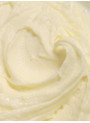
Shea Butter (Ultra Soft)

Satin Cream Maker™
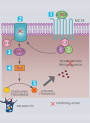
MSH White™ (Undecylenoyl phenylalanine)

Phenoxyethanol SA (eq. Optiphen Plus)
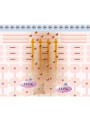
4MSK (Potassium Methoxysalicylate)
Ectoine (Ectoin, from Bio-fermentation)
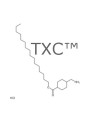
TXC™ (Cetyl Tranexamate HCl)
Z-White™