Adding Clays to Cold Process and Hot Process Soap
Question
Can various types of clay, such as Green Clay, Red Clay, Yellow Clay, Bentonite Clay, and Kaolin (China Clay), be added to Cold Process (CP) and Hot Process (HP) soap formulations? If so, what is the appropriate percentage to use?
Answer
Yes, the clays you mentioned, including Green Clay, Red Clay, Yellow Clay, Bentonite Clay, and Kaolin (China Clay), can generally be incorporated into Cold Process (CP) and Hot Process (HP) soaps.
Clays are often added to soap formulations for several benefits:
- Absorption: They can help absorb excess oil and impurities from the skin.
- Exfoliation: The fine particles provide gentle exfoliation.
- Color: Clays impart natural colors to the soap.
- Texture: They can contribute to the texture and feel of the soap bar.
Regarding the percentage to use, while clays are safe for skin even at high amounts, adding too much to soap can potentially affect the soap's stability or cause it to crack or become brittle. There isn't a single fixed percentage that works for all soap recipes and desired outcomes. The appropriate percentage often requires experimentation based on your specific soap formulation (oils used, water content, etc.) and the desired effect (color intensity, level of exfoliation, absorption). Starting with a small percentage, perhaps 1-2% of the total soap batch weight, and testing is a common approach, gradually increasing in subsequent batches if needed.
Updated Review: May 2026
This section was added after reviewing the original answer against current product availability and formulation knowledge at the stated point in time.
Update as of 2026-05-24: Cosmetic-grade Green Clay, Red Clay, Yellow Clay, Kaolin/China Clay, and suitable Bentonite grades can still generally be used in both Cold Process (CP) and Hot Process (HP) soap. For soapmaking, clay should be treated as an insoluble mineral powder: it will not dissolve in the soap batter, so pre-wet or disperse it into a smooth slurry with a small amount of water, oil, or taken-out soap batter before adding it to the main batch.
A practical starting level is about 1–2% of the total oils, or approximately 1–2 teaspoons per pound of oils, then adjust only after testing the finished bars. There is no universal best percentage because the suitable level depends on the oil formula, water discount, superfat, clay type, desired color/slip/absorbency, and cure conditions. Too much clay can make the soap feel more drying or draggy, reduce lather, or make the bar brittle/crack during cure.
Use cosmetic-grade clay only and avoid inhaling fine clay powder during weighing or mixing. For Bentonite, especially anti-settling or specialty thickener grades, test compatibility first because not every treated or rheology-modified clay behaves the same in high-pH lye soap.
References: Kevin M. Dunn, Scientific Soapmaking (2010); Bergaya, Theng & Lagaly, Handbook of Clay Science (2006/2013); SCCS Notes of Guidance for the Testing of Cosmetic Ingredients and Their Safety Evaluation, 12th revision (2023).
Related Products Mentioned
Kaolin (China Clay, 200nm)
Green Clay
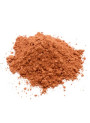
Red Clay
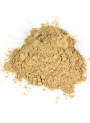
Yellow Clay