Adding Vitamin E dl-alpha Tocopherol to Lip Balm
Question
Adding Vit E dl-alpha tocopherol
When adding it to lip balm, at which stage of production should it be added,
and how much should be used?
Answer
Adding Vitamin E to Lip Balm
When adding Vitamin E, such as Tocopheryl Acetate or dl-alpha tocopherol, to a lip balm formulation, it is best to incorporate it during the oil phase. Since both types are oil-soluble, they will easily mix with the oils and waxes in your lip balm base.
It is recommended to add Vitamin E after the main heating phase, when the mixture has cooled down slightly but is still liquid, typically below 50°C. Avoid prolonged heating (more than 5 minutes) after adding Vitamin E, as excessive heat can degrade it.
Recommended Usage Rate
The typical usage rate for Vitamin E in cosmetic formulations, including lip balms, is between 0.1% and 1%.
- For Vitamin E (Tocopheryl Acetate), the recommended rate is 0.1-1%. If primarily used as an antioxidant for the oils in the formula, 0.01% might suffice. If used for its benefits on the skin, 0.1-0.5% is suggested. Using more than 0.5% might result in a sticky feeling.
- For Vitamin E (dl-alpha tocopherol), the general usage range is 0.1-2% in skin care cosmetics. This type is considered more active but also more expensive and less stable than Tocopheryl Acetate.
Choose a percentage within these ranges based on your desired effect (antioxidant for the formula, skin conditioning, or both) and consider the potential for stickiness at higher concentrations.
Updated Review: May 2026
This section was added after reviewing the original answer against current product availability and formulation knowledge at the stated point in time.
As of May 17, 2026, our product specifications confirm that Vitamin E (Tocopheryl Acetate) has a maximum recommended usage rate of 1.0%. For formulations seeking a higher concentration, we offer Vitamin E Acetate (Tocopheryl Acetate, Colorless), which has an extended usage range of up to 2.0%. The guidance for adding Vitamin E during the cool-down phase below 50°C remains valid to preserve its efficacy.
Related Products Mentioned
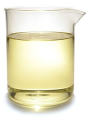
Vitamin E (Tocopheryl Acetate)