Adding Water-based Ingredients to Cream (W/O vs O/W) and Formula Review
Question
If I want to add a water-based ingredient to a Water in Oil cream base (like Water-in-Oil EZ™ - ID 726) in the cool-down phase, what is the maximum percentage I can add without destabilizing the formula due to adding too much water at the final step? I understand this ingredient is heat-sensitive and should not exceed 40°C, so it cannot be added to the water phase. Can a 50g cream be formulated according to the following recipe, considering the heat sensitivity and addition in the cool-down phase?
Water phase
37.8% DI Water
4% Glycerin
4% Propylene Glycol
4% Niacinamide
0.2% Xanthan Gum
0.5% Allantoin
Oil phase
5% Grape Seed Oil
5% Rose Hip Oil
4% Cetearyl Alcohol
4% E-wax
1% Tween20
4% IPM
3% Silicone oil
Cool down phase
3% Calendula Extract
4% Rice Milk extract
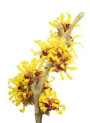
10% Witch Hazel
2% Grape Seed Extract
2% DL-Panthanol (gel)
2% Vitamin E
0.5% Phenoxyethanal
Answer
Understanding Witch Hazel in Your Cream Formulations
You've asked about incorporating Witch Hazel into two scenarios: a Water in Oil (W/O) serum base and a specific 50g cream recipe you provided.
Based on the ingredients and percentages in your 50g cream recipe (which includes Cetearyl Alcohol, E-wax, and Tween 20 in the oil phase, and a high percentage of water in the water phase), this formula is characteristic of an Oil in Water (O/W) emulsion, not a Water in Oil (W/O) emulsion.
Understanding the emulsion type is key, as it affects how ingredients can be added:
Water in Oil (W/O) Emulsions (like Water-in-Oil EZ™ - ID 726)
A true Water in Oil emulsion has a continuous oil phase with water droplets dispersed within it. Adding large amounts of water-based ingredients like Witch Hazel in the cool-down phase of a W/O emulsion is generally very difficult and can easily destabilize the formula. This is because you are trying to add more of the dispersed phase (water) into the continuous phase (oil) late in the process.
- For a W/O base like Water-in-Oil EZ™, water-soluble ingredients should ideally be incorporated into the water phase before emulsification, following the specific mixing instructions for the emulsifier (which typically involves gradually adding the water phase to the oil phase while mixing).
- Adding Witch Hazel in the cool-down phase of a W/O would only be possible at very low percentages (likely 1-5% at most) and would require careful testing to avoid breaking the emulsion.
Your Provided 50g Cream Recipe (Oil in Water - O/W Emulsion)
Your recipe is an Oil in Water (O/W) emulsion, where the continuous phase is water and oil droplets are dispersed within it. Adding water-based ingredients in the cool-down phase is much more common and easier in O/W emulsions.
- Your recipe already includes 10% Witch Hazel (Distillate - Alcohol Free, Paraben Free) in the cool-down phase. This percentage is well within the typical effective usage range for Witch Hazel in cosmetic creams and lotions (which is often 5-15%, sometimes up to 20%).
- Therefore, your formula can be mixed as written, including 10% Witch Hazel in the cool-down phase. This amount is standard and should be compatible with your O/W formulation.
- Regarding adding more than 10% to this specific O/W recipe: While O/W emulsions are more tolerant, significantly increasing the water phase percentage in the cool-down phase can still potentially thin the cream or affect its long-term stability. Increasing the Witch Hazel percentage towards the higher end of its typical usage range (e.g., 15-20%) might be possible, but it is crucial to test this by making a small batch and observing the texture and stability over time (checking for separation or changes in consistency).
Adding in the Cool-Down Phase
You are correct that Witch Hazel should be added in the cool-down phase (below 40°C). This is important to preserve its beneficial volatile compounds and prevent degradation from heat, regardless of whether you are making a W/O or O/W emulsion.
In summary, while adding Witch Hazel in the cool-down phase of a Water in Oil serum is problematic, your provided 50g cream recipe is an Oil in Water emulsion, and the 10% Witch Hazel included in the cool-down phase is appropriate and should work without destabilizing the formula. Increasing the percentage further would require careful testing.
Related Products Mentioned
Vitamin E (Tocopheryl Acetate)
Safe-B3™ (Vitamin B3, Niacinamide)

Allantoin

Calendula Extract (Water Soluble)
Propylene Glycol (USP)
Glycerin (USP/Food Grade)
Phenoxyethanol (Extra Pure)
Polysorbate 20 (Tween 20)
Cetearyl Alcohol (50/50, e.q. Lanette O)

Purified Water, TDS Limit 1PPM)
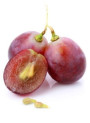
Grape Seed Extract (Proanthocyanidins)
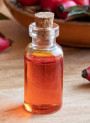
Rosehip Oil (Virgin, Fresh)