Adjusting Leave-on Conditioner Formula for Hair Loss, Growth, and Texture
Question
I am developing a Leave-on Conditioner formula to address thin, frizzy hair and significant hair shedding. My goal is to create a product that adds weight to the hair, reduces shedding, and promotes thicker, darker hair growth.
My current formula attempt is as follows:
- Pure Keratin: 2%
- Melatonin Forte™: 1%
- Creatine 100: 1%
- Slim-Coffee™ (Caffeine): 2%
- Condi-B5™: 3%
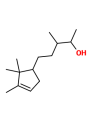
- Sandal Pentanol (Sandalore): 3%
- Sea Kelp Extract: 2%
- Hydrolyzed Milk (Casein) Protein: 2.5%
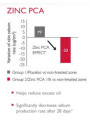
- Zinc PCA: 0.1%
- Poly-Conditioner Eco: 2%
- SiliWater: 2%
- Ethyl Alcohol: 20%
- Phenoxyethanol SA: 1%
- Fragrance: 1%
- Distilled Water: Remaining
I am concerned that this formula might feel too heavy or sticky, especially if used as a spray. The staff mentioned that the formula contains both water-soluble and oil-soluble ingredients and requires an emulsifier, recommending Light Lotion Maker 3% and suggesting Mild Preserved Eco 1% as a gentler preservative instead of Phenoxyethanol SA.
Could you please provide the adjusted formula based on these recommendations and advise on the expected texture and suitability for a spray application? How can I test or adjust the texture if needed?
Answer
Hello! Thank you for reaching out about your Leave-on Conditioner formula. It sounds like you've put a lot of thought into addressing your concerns about thin, frizzy, shedding hair and achieving more weight, reduced shedding, and thicker growth.
Your chosen ingredients include several known to benefit hair health and appearance, such as Keratin and Hydrolyzed Milk Protein for strength and body, Melatonin Forte™ and Slim-Coffee™ (Caffeine) which are often associated with reducing hair loss and promoting growth, and conditioning agents like Condi-B5™, Poly-Conditioner Eco, and SiliWater for smoothness and manageability. Ingredients like Creatine, Sandal Pentanol, Sea Kelp Extract, and Zinc PCA also contribute to scalp health and overall hair vitality.
Regarding your concern about the formula being too heavy for a spray, the staff's response confirms that with the number of ingredients, it might feel substantial. However, the perception of "heavy" can be subjective.
As the staff advised, your formula contains both water-soluble and oil-soluble components, requiring an emulsifier to ensure everything stays well-mixed. They recommended adding Light Lotion Maker at 3%. Additionally, they suggested replacing Phenoxyethanol SA with Mild Preserved Eco at 1% for a gentler preservative option, especially for a product applied to the scalp.
Based on your formula and the staff's recommendations, here is the adjusted formula:
- Pure Keratin: 2%
- Melatonin Forte™: 1%
- Creatine 100: 1%
- Slim-Coffee™ (Caffeine): 2%
- Condi-B5™: 3%
- Sandal Pentanol (Sandalore): 3%
- Sea Kelp Extract: 2%
- Hydrolyzed Milk (Casein) Protein: 2.5%
- Zinc PCA: 0.1%
- Poly-Conditioner Eco: 2%
- SiliWater: 2%
- Ethyl Alcohol: 20%
- Light Lotion Maker: 3% (Added as emulsifier)
- Mild Preserved Eco: 1% (Replaces Phenoxyethanol SA as gentler preservative)
- Fragrance: 1%
- Distilled Water: 54.4% (Remaining)
This adjusted formula includes the necessary emulsifier and the recommended preservative change. With 20% Ethyl Alcohol and over 50% water, the base is liquid, but the combination of conditioning agents and proteins might result in a consistency that is thicker than a very fine mist spray. It might be more suitable for a pump spray that dispenses a slightly thicker liquid, or even a serum or light lotion consistency applied directly to the scalp and hair.
The best way to determine if it works as a spray for you is to make a small test batch of this adjusted formula and check its viscosity. If it's too thick for your desired spray bottle, it would still function effectively as a leave-on serum or light cream applied to the roots and lengths. Applying to the roots is definitely achievable with these textures as well.
You can adjust the percentages of conditioning agents or proteins slightly in future batches if you want to fine-tune the consistency, keeping in mind the staff's note that your original percentages were within appropriate ranges.
I hope this helps you in creating your ideal Leave-on Conditioner! Let me know if you have any more questions.
Updated Review: May 2026
This section was added after reviewing the original answer against current product availability and formulation knowledge at the stated point in time.
Update 24 May 2026: The original recommendation is still technically acceptable: because this formula contains both water-soluble ingredients and oil/fragrance-soluble materials, it should be treated as an oil-in-water emulsion or spray-emulsion system, not as a simple clear water solution. Light Lotion Maker at about 3% remains a reasonable cold-process option, and the added amount should be deducted from the water phase.
Please recalculate water to make the total 100%. For the reviewed version where all other percentages are kept unchanged and Phenoxyethanol SA 1% is replaced one-for-one with Mild Preserved Eco 1%, the distilled water would be approximately 48.4%. This figure depends on the exact original ingredient total, so always check the final sum.
This formula is still likely to feel more like a conditioning scalp serum or pump spray than a very fine mist, because the combined level of proteins, conditioning agents, fragrance/oil-soluble materials, emulsifier, and ethanol is high. Make a small test batch first and check phase separation, final pH, spray pattern with the actual pump/nozzle, tackiness after drying, scalp feel, and combing feel. A practical pH target is around 4.5–6.0 unless the final ingredient set requires otherwise.
For preservation, Mild Preserved Eco remains a gentle preservative-free-positioned option, and newer options such as Mild Preserved SC10 or Preserve-Free CE85 may also be considered. However, the final water-containing leave-on formula should still pass preservative efficacy/challenge testing, especially when using ethylhexylglycerin/caprylyl glycol type systems instead of Phenoxyethanol SA. Also note that 20% ethanol plus 1% fragrance may increase scalp dryness, stinging, or irritation; reduce fragrance/oil-soluble load and total polymer/protein/conditioning load if a lighter or gentler spray is desired. Spray Maker can be considered for a dedicated spray-emulsion project, but it is a heat-process system and is not a direct same-process replacement for Light Lotion Maker.
Related Products Mentioned

Sea Kelp Extract
Zinc PCA
SiliWater™ (silicone dissolved in water)

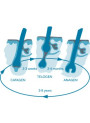
Melatonin Forte™
Creatine 100
Mild Preserved Eco™ (Preservative-Free)
Poly-Conditioner Eco
Sandal Pentanol (Sandalore)
Light Lotion Maker
Mild Preserved SC10™ (Preservative-Free)

Preserve-Free CE85™
Spray Maker™