Advice and Formula Review for Anti-aging Cream
Question
I would like advice on creating a cream formulation with the following properties:
- Reducing wrinkles
- Lifting (for sagging skin, e.g., nasolabial folds)
- Providing skin moisture
- Repairing damaged skin
- Brightening skin
The formulation includes the following ingredients:
- น้ำกลั่น ปราศจากเชื้อ OTHERS ..........................................................71.00%
- Ectoine (Ectoin, from Bio-fermentation) anti-aging ……………………2.00%
- Panthenol (Vitamin B5) ExtraLite™ moisturizer ……………………..2.00%
- Odor-Kill™ (ละลายน้ำ) SCENT ..........................................................1.00%
- Pal-GHK, Pal-GQPR (eq. Matrixyl 3000) anti-aging …………………3.00%
- Acetyl Hexapeptide-8 (eq. Argireline) anti-aging ……………………5.00%
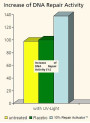
- Repair Activator™ Liquid (Bifida Ferment Lysate) moisturizer ......10.00%
- Phenoxyethanol SA (eq. Optiphen Plus) OTHERS ............................0.50%
- Lemon Peel Bioferment (Lemon Skin™) whitening ..........................3.00%
- Light Cream Maker™ CREAM MAKER (ALL-IN-ONE Emulsifier) ......1.50%
- Phospholipid OTHERS ………………………………………………….1.00%
Regarding the formula, I would like to know if the proportions above:
- Can be mixed well
- Will cause harm to the skin
- Are excessive to the point of not increasing efficacy
Additionally, regarding the mixing process, I would like to know if the following steps are correct:
A. Add ingredients 2, 3, 4, 10, 11 into ingredient 1. Mix well.
B. Gradually add ingredients 5, 6, 7, 8, 9 into mixture A. Continue mixing until a cream texture is formed.
Could the team or experts please provide guidance? Thank you very much.
Answer
Regarding your request for advice and formula review for an "Anti-aging" cream with the specified properties (reducing wrinkles, lifting, moisturizing, repairing, brightening) and ingredients:
Here is a review of your proposed formula and mixing steps:
Formula Composition and Efficacy
Your formula includes a good selection of active ingredients targeting multiple signs of aging and skin concerns:
- Anti-aging/Peptides: Ectoine, Matrixyl 3000, Argireline, Repair Activator (Bifida Ferment Lysate) are excellent choices for addressing wrinkles, firmness, and repair. The concentrations (2-10%) are within effective ranges commonly used in high-performance products.
- Moisturizing: Panthenol and Repair Activator contribute well to skin hydration and barrier function.
- Brightening: Lemon Peel Bioferment is included for its potential to improve skin radiance.
- Other: Odor-Kill™ for scent/odor control, Phenoxyethanol SA as a preservative, and Light Cream Maker™ with Phospholipid for forming the cream structure.
The total percentage listed is 100.50%, which is a minor calculation discrepancy from 100%.
Evaluation of Your Questions
Can the ingredients be mixed well?
- Most of your ingredients are water-soluble or dispersible. The formula appears to be primarily water-based, relying on Light Cream Maker™ and Phospholipid to create the cream texture.
- Mixing these ingredients together is generally possible. However, achieving a stable, homogenous cream texture might depend heavily on the specific properties of the Light Cream Maker™ and the mixing method used. Given the low percentage of the cream maker (1.5%) and the absence of a significant oil phase, the resulting texture might be lighter than a traditional cream, possibly a lotion or gel-cream.
Will it cause harm to the skin?
- The ingredients you have chosen are widely used in cosmetic formulations and are generally considered safe at the concentrations listed.
- Active ingredients like peptides and Bifida Ferment Lysate are used at concentrations aimed at efficacy, but these are within ranges found in many cosmetic products.
- The preservative (Phenoxyethanol SA at 0.5%) is used at a standard, safe concentration.
- Overall, the formula is unlikely to cause general harm. However, individual skin sensitivity varies, so it is always recommended to perform a patch test before applying the product extensively.
Are any ingredients used in excessive amounts, leading to no further efficacy?
- The concentrations of the key active ingredients (Ectoine, Peptides, Repair Activator, Panthenol, Lemon Peel Bioferment) are within ranges typically used for efficacy. While there can be a point of diminishing returns, these percentages are reasonable for aiming for noticeable results.
- The percentage of Odor-Kill™ (1.00%) seems potentially high for a scent/odor control agent, but its optimal usage rate depends on the specific product.
- The percentage of Light Cream Maker™ (1.50%) seems low for creating a stable cream, which might affect the texture and stability more than the efficacy of the actives.
Review of Mixing Steps
Your proposed mixing steps (A and B) are a logical sequence for incorporating the ingredients, especially if the Light Cream Maker™ is designed for cold processing or simple mixing:
- Step A: Combining water-soluble/dispersible ingredients (Ectoine, Panthenol, Odor-Kill, Phospholipid) with the cream maker in the water phase is a reasonable starting point.
- Step B: Gradually adding the main actives (Peptides, Repair Activator, Lemon Peel Bioferment) and the preservative to the base mixture is also a standard approach.
However, to ensure optimal stability and texture for your cream, it is highly recommended to follow the specific usage instructions provided by the supplier for the Light Cream Maker™. Emulsification often requires specific temperatures, mixing speeds, and durations. Thorough mixing at each step is crucial.
Recommendations
- Consult the supplier's technical data sheet or instructions for Light Cream Maker™ regarding optimal usage percentage, mixing temperature, and procedure.
- Prepare a small test batch first to evaluate the texture, stability, and feel before making a larger quantity.
- Always perform a patch test on a small area of skin before using the finished product extensively.
Your formula contains a promising combination of ingredients for anti-aging benefits. With careful preparation and attention to the emulsification process, you should be able to create an effective product.
Hope this advice is helpful!
Related Products Mentioned
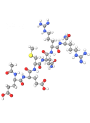
Acetyl Hexapeptide-8 (eq Argireline)
Pal-GHK, Pal-GQPR (eq Matrixyl 3000)
Light Cream Maker™
Lemon Peel Bioferment (Lemon Skin™)
Panthenol (Vitamin B5) ExtraLite™
Purified Water, TDS Limit 1PPM)

Phenoxyethanol SA (eq. Optiphen Plus)
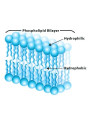
Phospholipid
Ectoine (Ectoin, from Bio-fermentation)