Advice on Whitening Body Lotion and AHA Peeling Gel Formulas
Question
Regarding the topic "Inquiry about whitening body lotion and peeling gel formula", I would like to ask for advice on two specific formulas:
Whitening Body Lotion Formula:
- Water: 84%
- Niacinamide (B3): 5%
- N-acetyl-d (N-Acetyl Glucosamine): 4%
- Licorice: 1%
- RoseHip: 5%
- Moist72: 1%
- Glycerin: 3%
- Phenoxylethanol: 1%
- I am considering substituting Alpha Arbutin with Deoxyarbutin. Is this feasible? What are the considerations?
- I plan to replace the emulsifier/thickener Sepiplus with Satin Mousse (Sepinov EMT10) at 1%. Will this provide a smooth texture without needing other smoothing agents?
AHA Gel Formula for Body Exfoliation:
- Glycolic Acid: 70% (or perhaps 50%)
- Thickener: Pro polymer (assumed to be Carbomer)
- Is this formulation safe and effective for body exfoliation? What are the technical considerations regarding the high concentration and the thickener?
Answer
Recommendations for Whitening Body Lotion and Peeling Gel Formulas
Whitening Body Lotion Formula
Regarding your whitening body lotion formula aimed at achieving smooth, moisturized, and brighter skin, several of the ingredients you've chosen work well together:
- Niacinamide (B3) 5% and N-acetyl-d (N-Acetyl Glucosamine) 4%: These are excellent ingredients for promoting skin brightness and reducing dark spots. They work synergistically for whitening effects.
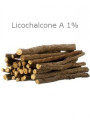
- Licorice 1%: Licorice extract has soothing and anti-inflammatory properties. However, some types of licorice extract (like Licochalcone A 1%) may not primarily focus on whitening but rather on reducing inflammation and controlling oil.
- RoseHip 5%: Depending on whether this is a rosehip extract or oil, it can offer moisturizing and antioxidant benefits. Rosehip oil is known for its fatty acids and vitamins beneficial for skin moisture.
- Moist72 1% and Glycerin 3%: These are good humectants that help attract and retain moisture, contributing to smooth and soft skin.
- Phenoxylethanol 1%: This is a standard preservative.
Substituting Alpha Arbutin with Deoxyarbutin:
Deoxyarbutin is a potent whitening agent, but it has significantly different properties and formulation requirements compared to Alpha Arbutin. Deoxyarbutin is oil and alcohol soluble, not water-soluble, and requires a specific pH range (around 5.0-5.8) for stability. Your formula is predominantly water-based (84% water) and appears to lack a significant oil phase (unless RoseHip 5% is an oil). Incorporating an oil-soluble ingredient like Deoxyarbutin into such a water-heavy formula without a suitable oil phase and emulsification system designed for it will be difficult, and it may not dissolve or remain stable. Furthermore, Deoxyarbutin can be more irritating than Alpha Arbutin, and maintaining the pH between 5.0-5.8 for Deoxyarbutin's stability might not be optimal for the activity of Niacinamide and N-Acetyl Glucosamine, which are generally effective in a slightly broader pH range (3-7, optimally 4-7). Therefore, Deoxyarbutin is not a simple direct substitute for Alpha Arbutin in this formula structure.
Replacing Sepiplus with Satin Mousse 1%:
As confirmed in the previous reply, replacing the emulsifier/thickener from Sepiplus to Satin Mousse (Sepinov EMT10) at 1% is feasible and should provide a smooth texture without needing additional ingredients for smoothness. Sepinov EMT10 is a polymer thickener and emulsifier that can impart a pleasant feel.
AHA 70% Gel Formula
Regarding your AHA 70% gel formula for body exfoliation:
Glycolic Acid Concentration:
As discussed previously, using Glycolic Acid at very high concentrations like 70% or even 50% is extremely unsafe and exceeds the safety regulations set by the Thai FDA for consumer cosmetic products. The limit for AHA in consumer products is typically 5%, with a pH no lower than 3.5. Using concentrations this high, even on the body, carries a significant risk of causing severe burns, irritation, and skin damage. It is strongly recommended to start with a much lower concentration, such as 10% or less, and carefully observe your skin's tolerance, always adhering to safety guidelines and legal limits. High concentration peels should only be performed under professional supervision.
Thickener (Pro polymer):
Carbomer (likely the "Pro polymer" you mentioned) is not suitable for use in highly acidic formulas. The structure of Carbomer polymers prevents them from thickening effectively in very acidic conditions (pH below 5). Glycolic Acid at high concentrations (like 50-70%) will result in a very low pH (100% powder has a pH of 0.4-0.6), rendering Carbomer ineffective as a thickener. You would need to use an acid-tolerant gelling agent, such as Xanthan Gum or Hydroxyethyl Cellulose, for a high-acid AHA formula.
In summary, for the AHA gel, you must reduce the Glycolic Acid concentration to a safe and legally compliant level (5% or less for consumer use) and switch to an acid-tolerant thickener instead of Carbomer.
Related Products Mentioned
Safe-B3™ (Vitamin B3, Niacinamide)
GlucoBright™ (Acetyl Glucosamine)
Glycerin (USP/Food Grade)
Phenoxyethanol (Extra Pure)
Carbomer 940 (EasyDisperse™, France)
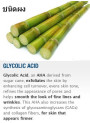
Glycopure™ (Glycolic Acid (AHA) Powder)
Deoxyarbutin (D-Arbutin)