AHA Body Lotion Formulation and Mixing Procedure
Question
I have the following formula and mixing procedure and would like to know if it can be done and if the mixing method is correct.
Formula:
- Shea Butter (Refined) 10%
- LipidSoft CC 5%
- Lactic Acid (AHA) Neutralized 10%
- Butter Cream Maker 3%
- Mild Preserved Eco 1%
- Water 71%
Proposed Mixing Procedure:
- Warm the oil phase until homogeneous.
- Dissolve Lactic Acid, Butter Cream Maker with water until combined. Warm to the same temperature as step 1.
- Gradually pour the oil phase and blend with the water phase. Then add Mild Preserved Eco and stir until combined.
Is the mixing method correct?
Also, is Lactic Acid (AHA) Neutralized considered an electrolyte since its pH has been adjusted? And can Satin Cream Maker be used instead of Butter Cream Maker?
Thank you.
Answer
AHA Body Lotion Formulation Review
Your proposed formula uses appropriate ingredients at suitable percentages for an AHA body lotion:
- Shea Butter (Refined) 10%
- LipidSoft CC 5%
- Lactic Acid (AHA) Neutralized 10%
- Butter Cream Maker 3%
- Mild Preserved Eco 1%
- Water 71%
Total: 100%
The percentages of each ingredient are within the typical recommended usage rates.
However, the mixing procedure you described has some steps that need adjustment based on the properties of the ingredients, particularly the emulsifier and preservative.
Evaluation of Your Mixing Procedure
- Warm the oil phase until homogeneous: This step is correct for melting the Shea Butter and combining it with LipidSoft CC. Shea Butter needs heat to melt.
- Dissolve Lactic Acid, Butter Cream Maker with water until combined. Warm to the same temperature as step 1: This step is incorrect for Butter Cream Maker. Butter Cream Maker is an emulsifier that should be added to the oil phase and heated to around 70°C to dissolve and activate properly before combining with the water phase. Lactic Acid (AHA) Neutralized should be dissolved in the water phase and does not require heating.
- Gradually pour oil phase and blend with water phase. Then add Mild Preserved Eco and stir until combined: The principle of combining phases is correct, but because step 2 was incorrect, the emulsion may not form properly. Also, Mild Preserved Eco should be added during the cooling phase, typically below 40-50°C, after the emulsion has formed, as it is sensitive to prolonged high heat.
Corrected Mixing Procedure (Using Butter Cream Maker)
Here is a corrected procedure using the ingredients you listed with Butter Cream Maker:
- Oil Phase: Combine Shea Butter and LipidSoft CC in a heat-resistant container. Heat this mixture to 70°C to melt the Shea Butter and ensure everything is well mixed. Add Butter Cream Maker to this heated oil phase and stir until it is fully dissolved/dispersed. Maintain the temperature around 70°C.
- Water Phase: In a separate heat-resistant container, combine the water and Lactic Acid (AHA) Neutralized. Heat this water phase to approximately the same temperature as the oil phase (around 70°C).
- Emulsification: Slowly pour the heated oil phase into the heated water phase while mixing continuously with a high-shear mixer (like a stick blender) until a stable emulsion forms.
- Cooling: Switch to a lower speed mixer or stir manually as the mixture cools down.
- Add Preservative: When the emulsion has cooled to below 40-50°C, add Mild Preserved Eco and stir until it is completely incorporated and the mixture is homogeneous.
- Final Thickening: Continue stirring occasionally until the cream reaches room temperature. Butter Cream Maker formulations often thicken further over the next 12 hours.
Lactic Acid (AHA) Neutralized and Electrolytes
You asked if Lactic Acid (AHA) Neutralized is considered an electrolyte because its pH is adjusted.
Lactic Acid (AHA) Neutralized is a form of lactic acid that has been partially neutralized to raise its pH (typically 4.0-4.5 at 10% concentration). While the pH is adjusted to be less acidic and reduce irritation compared to un-neutralized lactic acid, a 10% concentration of an alpha hydroxy acid like lactic acid can still contain ionic components (salts formed during neutralization) and acidity that can affect the stability of some emulsifiers.
Butter Cream Maker is specifically designed to be highly resistant to electrolytes and work over a wide pH range (3-12), making it suitable for formulas containing ingredients like 10% Lactic Acid (AHA) Neutralized or other acidic/alkaline components. Satin Cream Maker also states it is electrolyte resistant.
Therefore, while not a simple salt solution, a 10% concentration of Lactic Acid (AHA) Neutralized can behave in a way that requires an emulsifier with good electrolyte tolerance to ensure formula stability.
Substituting Satin Cream Maker for Butter Cream Maker
Yes, you can substitute Satin Cream Maker for Butter Cream Maker in this formula.
Satin Cream Maker is also an emulsifier and thickener that is suitable for use in formulas with a wide pH range (3-12) and is electrolyte resistant, making it compatible with 10% Lactic Acid (AHA) Neutralized. Your oil phase is 15% (10% Shea Butter + 5% LipidSoft CC), which is within the 25% oil capacity of Satin Cream Maker.
A key difference is that Satin Cream Maker is a heat-free emulsifier and is added to the water phase.
Alternative Mixing Procedure (Using Satin Cream Maker)
Here is a mixing procedure if you choose to use Satin Cream Maker:
- Oil Phase: Combine Shea Butter and LipidSoft CC in a container. Heat to 50-60°C to melt the Shea Butter and mix the oils. Set aside.
- Water Phase: In a separate container, combine the water and Lactic Acid (AHA) Neutralized. Add Satin Cream Maker to this water phase and stir or mix until it is dispersed.
- Emulsification: Slowly add the oil phase to the water phase while mixing continuously with a mixer (do not exceed 2500 rpm to avoid damaging the polymer) until an emulsion forms and thickens.
- Add Preservative: When the emulsion has cooled to below 40-50°C, add Mild Preserved Eco and stir until fully incorporated.
- Final Mixing: Continue stirring until the cream reaches room temperature.
Both Butter Cream Maker and Satin Cream Maker are suitable emulsifiers for this type of formula, but they require different mixing methods. Ensure you follow the correct procedure for the emulsifier you choose.
Remember to perform a stability test on your final product to ensure the emulsion remains stable over time and under different temperature conditions.
Related Products Mentioned
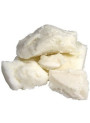
Shea Butter (Refined , Deodorised)

Satin Cream Maker™
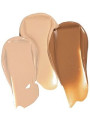
LipidSoft™ CC (Cetyl Ethylhexanoate)
Mild Preserved Eco™ (Preservative-Free)