AHA Gel Formulation for Oily Skin and Whitening
Question
I want to formulate an AHA gel for oily skin and whitening. I plan to use Glycolic Acid 100% (powder), Vitamin B3 (powder), Pro Polymer, and water. I'm unsure about the mixing method for the Glycolic Acid powder: should I dissolve it in water first, or dissolve the powder directly into the gel base? Could you also provide guidance on suitable percentages for the ingredients, mixing instructions, and any other suggestions for a gel targeting oily skin and whitening? I am also interested in formulating a similar gel for the face using Lactic Acid (90% liquid) instead of Glycolic Acid.
Answer
AHA Gel Formulation Guide
Here is a guide to formulating your AHA gels for body and face, including mixing instructions, recommended percentages for oily skin aiming for whitening, and suggestions for improvement.
Regarding the mixing method for Glycolic Acid 100% powder, you have two main options:
- Dissolving in water first: This can help the powder dissolve more easily. However, the acidity of the solution might make the gelling process with Pro Polymer slower.
- Dissolving directly in the gel base: The initial dissolving of the powder might be slightly more challenging. Once dissolved, the gel might become a bit thinner, but it's easier to adjust the final consistency by adding a little more gelling agent if needed.
Both methods are viable; you can choose the one you find most convenient.
AHA Gel for Body (Glycolic Acid)
This formula uses Glycolic Acid for exfoliation, Vitamin B3 for whitening and oil control, and Pro Polymer for gelling.
Key Ingredients:
- Glycolic Acid 100% (e.g., Glycopure™)
- Vitamin B3 (Niacinamide, e.g., Safe-B3™ or Extreme-B3™)
- Pro Polymer™ (Gel Maker)
- Water
- Optional beneficial additions: Humectant (like Glycerin), Soothing Agent (like Allantoin), Preservative
Recommended Starting Percentages:
- Glycolic Acid 100%: 5-10% (For body skin, which is generally less sensitive than facial skin. Start with a lower percentage if you are new to AHAs or have sensitive skin.)
- Vitamin B3: 5% (A good concentration for targeting hyperpigmentation and helping to regulate oil production.)
- Pro Polymer™: 0.8-1.5% (Adjust this percentage to achieve your desired gel thickness.)
- Water: Up to 100%
- Optional additions: Follow supplier guidelines for usage rates.
Mixing Instructions:
- Begin by preparing your water phase. If you plan to use a humectant like Glycerin, you can disperse the Pro Polymer™ in the Glycerin first before adding it to the water, which can help with hydration.
- Slowly sprinkle the Pro Polymer™ powder onto the surface of the water phase while stirring gently. Continue stirring until the powder is fully dispersed. Allow sufficient time for the Pro Polymer™ to hydrate and the gel to form. This can take several minutes of stirring or longer if left to sit.
- In separate small containers, dissolve the Glycolic Acid 100% powder in a small amount of water and dissolve the Vitamin B3 powder in another small amount of water.
- Once your Pro Polymer™ gel base has formed, slowly add the dissolved Glycolic Acid solution and the dissolved Vitamin B3 solution to the gel, stirring gently until everything is uniformly mixed.
- Incorporate any optional ingredients, such as a preservative, at this stage.
- Measure the pH of your final product. For consumer AHA products, the pH should be adjusted to be between 3.5 and 4.0. If the pH is below 3.5, carefully add a basic solution (like a dilute solution of Sodium Bicarbonate or Triethanolamine) drop by drop, stirring and re-measuring the pH until it falls within the target range (3.5-4.0). Maintaining this pH is crucial for both the effectiveness of the Glycolic Acid and the stability of the Vitamin B3.
- Give the mixture a final gentle stir to ensure homogeneity.
AHA Gel for Face (Lactic Acid)
This formula utilizes Lactic Acid, which is generally milder than Glycolic Acid, along with Vitamin B3 and Pro Polymer.
Key Ingredients:
- Lactic Acid (using a 90% concentration product, e.g., Lactic Acid (AHA) 90% Deodorized or ordinary grade)
- Vitamin B3 (Niacinamide, e.g., Safe-B3™ or Extreme-B3™)
- Pro Polymer™ (Gel Maker)
- Water
- Optional beneficial additions: Humectant (like Glycerin), Soothing Agent (like Allantoin), Preservative
Recommended Starting Percentages:
- Lactic Acid 90%: 5-8% (Lactic Acid is a good choice for facial exfoliation, often preferred for its milder nature and hydrating properties. Start lower if you have sensitive skin.)
- Vitamin B3: 5% (Beneficial for whitening, reducing oiliness, and improving skin barrier function, which is helpful for oily skin.)
- Pro Polymer™: 0.8-1.5% (Adjust for desired gel consistency.)
- Water: Up to 100%
- Optional additions: Follow supplier guidelines for usage rates.
Mixing Instructions:
- Prepare your water phase. You can disperse Pro Polymer™ in a humectant like Glycerin first if using one, before adding to water.
- Slowly sprinkle Pro Polymer™ into the water phase while stirring gently until dispersed. Allow it to hydrate fully to form the gel base.
- In a separate small container, dissolve the Vitamin B3 powder in a small amount of water.
- Once the Pro Polymer™ gel has formed, add the Lactic Acid (liquid) and the dissolved Vitamin B3 solution to the gel base, stirring gently until fully combined.
- Add any optional ingredients, such as a preservative.
- Measure the pH of your final product. The pH should be adjusted to be between 3.5 and 4.0 for consumer AHA products. If the pH is below 3.5, carefully add a basic solution (like dilute Sodium Bicarbonate or Triethanolamine) drop by drop, stirring and re-measuring until the pH is within the target range (3.5-4.0).
- Stir gently to ensure homogeneity.
Formula Suitability and Potential Adjustments
Both of your proposed basic formulas are suitable starting points for creating AHA gels targeting whitening and suitable for oily skin. The combination of AHA for exfoliation and Vitamin B3 for whitening and oil control is effective.
- For Oily Skin: The recommended percentages of AHA and Vitamin B3 are generally well-tolerated by oily skin and address concerns like excess oil and uneven skin tone.
- For Whitening: Both AHAs and Vitamin B3 contribute to a brighter complexion. The suggested concentrations are effective for this purpose.
- Potential Additions:
- Adding a preservative is highly recommended to prevent bacterial and fungal growth, ensuring the safety and shelf life of your product.
- Including a humectant like Glycerin or Propanediol can enhance the gel's texture and provide additional hydration.
- Incorporating a soothing agent such as Allantoin, Panthenol (Vitamin B5), or extracts like Centella Asiatica can help minimize potential irritation from the AHAs.
- Potential Removals: The ingredients you listed are fundamental to the function of these gels. There are no essential ingredients to remove from your basic lists.
Remember the importance of pH adjustment to the 3.5-4.0 range for safety and efficacy. Always perform a patch test before using a new product extensively. Daily sunscreen use is crucial when using AHA products as they increase sun sensitivity.
Related Products Mentioned
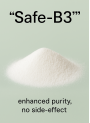
Safe-B3™ (Vitamin B3, Niacinamide)
Pro Polymer™ (Gel Maker)
Glycopure™ (Glycolic Acid (AHA) Powder)