Aloe Vera Extract Heat Stability, pH Adjustment in Pomade, and Aloe Vera Juice Availability
Question
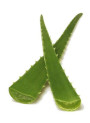
Regarding Aloe Vera Extract (FullAssay), the product description mentions mixing in the water phase with a pH between 3.5-7.
- What is its heat resistance? My water phase is at 75-80°C.
- Can it be added during the cool-down phase (below 40°C) instead?
- Can it be used to balance the pH of a Clay Pomade containing Kaolin?
Also, do you have Aloe Vera Juice with INCI Name: ALOE BARBADENSIS LEAF available? I see it used by formulators abroad due to its lower cost compared to Aloe Vera Extract. If not currently available, will it be sold in the future?
Answer
Aloe Vera Extract (FullAssay) Usage and Heat Stability
Regarding your questions about Aloe Vera Extract (extraction ratio 10:1 FullAssay™):
Heat Stability: The product description indicates mixing in the water phase with a pH between 3.5-7. While the extraction process involves pasteurization, the beneficial polysaccharides are preserved through low-temperature extraction and freeze-drying. Adding the extract to a water phase at 75-80°C for an extended period might potentially degrade these sensitive components, reducing its efficacy. Therefore, it is generally recommended to add Aloe Vera Extract (FullAssay) during the cool-down phase (below 40°C) to ensure the preservation of its active compounds.
pH Balancing: Aloe Vera Extract (FullAssay) has a pH of approximately 3.5-5. While it can contribute to lowering the pH of your Clay Pomade formulation, relying solely on it to significantly balance the pH from Kaolin might require a high concentration, which could affect the texture of your product as it is an electrolyte. For substantial pH adjustment, using a dedicated pH adjuster might be more effective.
Aloe Vera Juice Availability
Regarding your question about Aloe Vera Juice with the INCI Name ALOE BARBADENSIS LEAF:
Based on the available product information, a product specifically named "Aloe Vera Juice" with the INCI ALOE BARBADENSIS LEAF does not appear to be currently stocked. We cannot provide information about future product availability.
Follow-up Replies
Question:
I am developing a hair styling product, specifically a Clay–Cream Pomade. I need to select ingredients that can support marketing claims (such as hair conditioning, reducing irritation, hair protection, etc.) and provide real benefits. These ingredients must also withstand the production process temperature of 50–80°C without losing efficacy.
I am looking for recommendations for ingredients from groups such as:
- Hydrolyzed Protein
- Amino Acid
- Extract
- Panthenol
- Allantoin
- Bisabolol
- And other similar groups
I require ingredients for which research data is available, or for which I can request COA, MSDS, Claim documents, or Test data. Please recommend suitable ingredients.
Answer:
Heat-Resistant Ingredients for Clay-Cream Pomade
Regarding your request for heat-resistant ingredients (50-80°C) from categories like Hydrolyzed Protein, Amino Acid, Extract, Panthenol, Allantoin, Bisabolol, etc., that offer hair benefits for your Clay-Cream Pomade formulation, here is an analysis of the provided ingredients:
Creatine 100 (ID 913): This ingredient is an amino acid derivative that can be mixed in the water phase. Its description explicitly states it withstands heat up to 80°C for up to 15 minutes, which fits your required processing temperature range. It offers several benefits for hair, including increasing moisture, restoring dry and damaged hair, adding weight, and helping to close hair cuticles (smooth hair cuticle). This makes it a suitable option for your formulation.
Hair-Prebiotic™ (ID 8353): This extract (Fructooligosaccharides) is mixed in the water phase and provides hair softening and nourishment. However, the product description does not specify its heat resistance. Adding it at 50-80°C might risk degrading its efficacy. While it offers relevant hair benefits, its heat stability for your process is uncertain based on the provided information.
Natural Bisabolol (Brazil Chamomile) (ID 78): This extract/bisabolol is typically mixed in the oil phase or with emulsifiers and dissolves in oil and alcohol. While the oil phase is often heated, the description does not specify its heat tolerance in the 50-80°C range. Its primary listed benefits are reducing skin irritation and brightening skin, not specific hair nourishment or protection as requested for the pomade.
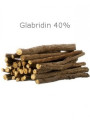
Hi-Glabridin™ Licorice Extract (Glabridin 40%) (ID 1503): This extract is dissolved in Butylene Glycol or Ethanol and can withstand heat not exceeding 60°C. This is slightly below your target temperature range of 50-80°C. Its primary benefits are whitening and anti-irritation, mainly for skin.
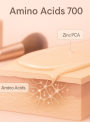
Natural Make-Up Amino Acids (e.q. Prodew 700) (ID 127645): This blend is mixed in water. The description does not specify its heat resistance. Its primary positioning is for skin-caring make-up, offering moisturising, film adhesion, and oil control, although it mentions adaptability to hair care. Its suitability for your specific heat requirements and primary hair benefits is not clearly stated.
Based on the explicit information provided in the product descriptions regarding heat resistance and hair benefits relevant to a pomade, Creatine 100 (ID 913) is the most clearly suitable ingredient for your Clay-Cream Pomade formulation requiring processing temperatures between 50-80°C.