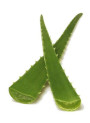
Aloe Vera Extract: Stability, Concentration, and Formulation Questions
Question
Regarding Aloe Vera Extract (10:1 concentration ratio): 1. Will the extract's properties degrade in a finished product stored at room temperature before the extract's expiry date, given the raw extract requires refrigeration after opening? 2. Does 3% extract equal 30% fresh Aloe Vera, and 10% extract equal 100% fresh Aloe Vera? 3. Can mixing the extract with Propylene Glycol before adding it to the formula help extend the Aloe Vera's properties' shelf life in the final product stored at room temperature?
Answer
Answering Your Questions About Aloe Vera Extract
Thank you for your interest in our Aloe Vera Extract and for your detailed questions. Here are the answers to your inquiries:
1. Shelf Life in Finished Product vs. Extract Storage
The supplier's recommendation to refrigerate the Aloe Vera Extract after opening at 4°C is primarily for maintaining the optimal quality and extending the shelf life of the concentrated extract itself before it is used in a formulation. This helps preserve the delicate active components like polysaccharides over long periods.
Once the extract is incorporated into a finished cosmetic product, the stability and shelf life of the Aloe Vera properties depend on several factors of the final formulation, including:
- The overall preservation system used in the product.
- The product's pH level.
- The presence of other ingredients that might affect stability.
- The packaging.
- The storage conditions of the final product (avoiding extreme heat or direct sunlight).
Our Aloe Vera Extract is preserved with Phenoxyethanol 0.5%, which contributes to its stability within a formulation. A well-formulated and properly preserved cosmetic product containing this extract should maintain the properties of the Aloe Vera throughout the product's stated shelf life when stored at typical room temperature conditions, as is standard for most cosmetic products. While prolonged exposure to high temperatures can accelerate degradation of many ingredients, the extract's properties are not expected to automatically degrade before the product's expiry date if the product is formulated correctly and stored appropriately at room temperature.
2. Concentration Equivalence
Yes, your understanding is correct. The statement "3% equals 30% Aloe Vera" for this extract, which has an extraction ratio of 10:1, means that 3% of the extract is equivalent to the amount of active components found in 30% of fresh Aloe Vera leaf pulp before extraction. This is based on the 10:1 concentration ratio (1 part extract comes from 10 parts fresh material).
Following this logic:
- 1% of the extract is equivalent to 10% fresh Aloe Vera.
- Therefore, using 10% of the Aloe Vera Extract would indeed be equivalent to using 100% of the fresh Aloe Vera leaf pulp in terms of the concentration of active components.
3. Using Propylene Glycol to Extend Shelf Life
Mixing the Aloe Vera Extract with Propylene Glycol before adding it to your product formulation is unlikely to significantly extend the shelf life of the Aloe Vera's properties in the final product if it is not refrigerated.
Propylene Glycol is primarily used as a solvent, humectant, and penetration enhancer in cosmetic formulations. While it can help solubilize certain ingredients and might offer some minor preservative boosting effects in specific formulations, it is not a primary preservative for botanical extracts and will not replace the need for a robust preservation system in the final product.
The stability of the Aloe Vera's active components (glycoproteins, polysaccharides) in the finished product at room temperature depends mainly on the overall effectiveness of the product's preservation system (like the Phenoxyethanol already present in the extract, combined with other preservatives in your formula), the product's water activity, pH, and packaging. Focusing on a well-preserved and stable overall formulation is the key to ensuring the Aloe Vera properties last throughout the product's shelf life, regardless of pre-mixing the extract with Propylene Glycol.
We hope this clarifies your questions and assists you in your formulation work!