Analysis and Formulation Advice for Natural Skin Cream
Question
I am planning to create a natural skin cream using the following ingredients: Beeswax, Soy lecithin, Shea butter, Alpha arbutin, Niacinamide, Licorice powder, Tomato extract, and Glycerin (vegetables).
Could you please analyze this list of ingredients and provide guidance on formulating a stable and effective cream?
Answer
Analysis of Your Natural Skin Cream Formula
Based on the ingredients you listed and the available information, here is an analysis of your proposed natural skin cream formula:
The ingredients you wish to use for your natural skin cream are Beeswax, Soy lecithin, Shea butter, Alpha arbutin, Niacinamide, Licorice powder, Tomato extract, and Glycerin (vegetables). Overall, these ingredients can serve as a basis for a skin cream, including fats/oils (Beeswax, Shea butter), a humectant (Glycerin), potential emulsifiers (Beeswax, Soy lecithin), and active ingredients for skin brightening and anti-inflammation (Alpha arbutin, Niacinamide, Licorice extract, Tomato extract - particularly for color).
However, creating a stable and effective cream requires careful consideration of the appropriate proportions of each ingredient, the selection of compatible emulsifiers, pH adjustment for certain active ingredients, and preservation. You listed "Licorice powder" and "tomato extract," which were found as "Licorice Extract" and "Tomato Natural Water Soluble Color."
Ingredient Information and Basic Usage
Based on the product search, related ingredients are available for cosmetic use, with the following details and recommended usage rates:
Beeswax:
- Various types available, such as Natural White Beeswax (USA, Melting 62C, Deodorized) and Emulsifying Beeswax (Non-Ionic, Natural).
- Acts as a thickener and emollient.
- Emulsifying Beeswax also functions as an emulsifier, helping to bind water and oil.
- Usage Rate: Natural White Beeswax use 2-40%, Emulsifying Beeswax use 0.5-5% (recommended 3%).
- Mixing Method: Dissolve in the oil phase with heat.
-
- Available in forms like Soy Lecithin (Soy Bean Oil, Liquid Lecithin) and LeciCream (Natural Emulsifier / Cream Maker).
- Acts as an emulsifier, binding water and oil in the formula.
- Soy Lecithin Liquid is suitable for Water-in-Oil formulas.
- Usage Rate: Soy Lecithin Liquid use 3-10%, LeciCream use 0.5-5% (recommended 3%).
- Mixing Method: Dissolve in the oil phase with heat.
-
- Available in forms like Shea Butter (Refined, Deodorised) and Golden Shea Butter (Virgin, Ghana).
- A natural fat providing high moisture, helps nourish skin, reduce wrinkles, and improve blood circulation.
- Usage Rate: 1-100% (can be applied directly to the skin).
- Mixing Method: Dissolve in the oil phase by heating to approximately 60-70 degrees Celsius.
Alpha arbutin:
- Available in forms like Alpha Arbutin (Switzerland) and Alpha Arbutin (China, Powder, Enzymatic Synthesis).
- A water-soluble synthetic ingredient that helps brighten skin and even skin tone. It is a safe alternative to hydroquinone.
- Usage Rate: 0.2-2% (recommended 2% for skin brightening).
- Mixing Method: Add in the final step when the formula temperature is below 30 degrees Celsius.
- Caution: The pH should be between 3.5-6.5. If the pH is higher than 8, it may decompose into hydroquinone.
Niacinamide (Vitamin B3):
- Available in forms like Safe-B3™ (Vitamin B3, Niacinamide) and Extreme-B3™ (Vitamin B3, Niacinamide, Highest Purity).
- A vitamin with multiple skin benefits, including reducing wrinkles, red/dark spots, increasing moisture, strengthening the skin barrier, reducing oiliness, and helping with dark circles.
- Water-soluble.
- Usage Rate: 1-10% (recommended 5%).
- Mixing Method: Mix in the water phase, can withstand heat but should not be heated for a long time.
- Caution: The optimal pH is in the range of 3-8 (best at 4.0-7.0).
Licorice powder:
- Search results found Licorice Extracts rather than direct powder form.
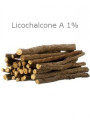
- Licorice Extract (Glabridin 4.5%, Water-Soluble) has skin brightening and anti-irritation properties. Usage rate 1-2%. Water-soluble. Avoid heat.
- Licorice Extract (Licochalcone A 1%, Water-Soluble) helps reduce inflammation, redness from acne, irritation, and controls oiliness. Usage rate 0.5-3% (recommended 0.5-1.0% for general use, 3% for Eczema). Water-soluble. pH should be 3.5-6.5. Avoid heat.
- If you intend to use Licorice in powder form, you would need to consider its solubility and dispersion in the cream base.
Tomato extract:
- Search results found Tomato Natural Water Soluble Color, which is a natural color powder from tomatoes.
- This product is primarily used for coloring cosmetic formulations. It is water-soluble with a usage rate of 0.1-1%.
- If you are looking for a tomato extract with skin benefits, you may need to find a product specifically described for that purpose.
Glycerin (vegetables):
- Available in forms like Glycerin (USP/Food Grade).
- Acts as a humectant, solvent, and emollient, making cosmetic products soft and smooth.
- Water-soluble.
- Usage Rate: 1-100% (not suitable for applying directly to the skin at 100%).
- Mixing Method: Mix in the water phase.
Suggestions for Your Formula
Your proposed formula includes several good ingredients for a natural skin cream focusing on moisture and brightening properties:
- Basic Structure: Beeswax and Shea butter will be key components in the oil phase, providing viscosity and moisture. Glycerin will be a primary component in the water phase, providing hydration.
- Emulsifier: You will need an emulsifier to bind the water and oil phases together. Soy lecithin or Emulsifying Beeswax can serve this purpose, or you might consider other natural emulsifiers suitable for the desired cream type.
- Active Ingredients: Alpha arbutin and Niacinamide are excellent active ingredients for skin brightening and conditioning. Licorice Extract (as opposed to powder) also offers good properties for brightening (Glabridin) and reducing inflammation (Licochalcone A).
- Tomato extract: If you intend to use this for skin benefits, you should verify if the specific extract you use is formulated for that purpose. If it is the Tomato Natural Water Soluble Color found, its primary function is coloring.
- Usage Percentage: The usage rates provided in the product information (e.g., Alpha arbutin 0.2-2%, Niacinamide 1-10%, Licorice Extract 1-3%) are recommended ranges for efficacy. However, the optimal percentage for your specific formula will depend on the desired concentration, the intended texture of the cream, and compatibility testing of all ingredients in your formulation.
In summary: The ingredients you have chosen are interesting and can be developed into a natural skin cream. However, you will need to consider:
- Selecting the type of Beeswax and Soy lecithin to act as the primary emulsifier(s).
- Determining the appropriate ratio of oil and water phases.
- Adjusting the pH of the formula to be suitable for Alpha arbutin and Niacinamide.
- Choosing a Licorice Extract with the properties you desire (focusing on brightening or anti-inflammation).
- Clarifying whether the Tomato extract is for skin benefits or primarily for color.
- Adding appropriate preservatives for a natural formula to prevent microbial growth.
Determining the exact percentage for each ingredient in your formula requires formulation knowledge and experimentation to achieve a stable, safe, and effective cream that meets your specific goals.
Related Products Mentioned
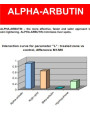
Alpha Arbutin (Switzerland)
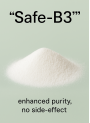
Safe-B3™ (Vitamin B3, Niacinamide)
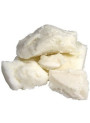
Shea Butter (Refined , Deodorised)
Glycerin (USP/Food Grade)
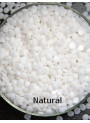
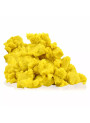
Golden Shea Butter (Virgin, Ghana)
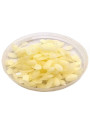
Emulsifying Beeswax (Non-Ionic, Natural)