Anhydrous Vitamin C Serum Formulation with Silicone Gel
Question
Hello,
Now that the silicone gel base is available, could you please recommend a formulation and mixing instructions for an anhydrous Vitamin C serum (a water-free Vitamin C serum)?
If this question has been answered before, please direct me to the relevant page. Apologies if this is a repeated question.
Answer
Anhydrous Vitamin C Serum Formulation with Silicone Gel
Thank you for your question! It's great that the silicone gel base is now available for your formulations. Creating an anhydrous (water-free) Vitamin C serum using a silicone gel base is an excellent way to enhance the stability of Vitamin C.
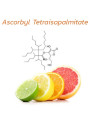
For an anhydrous serum, it's best to use an oil-soluble and stable form of Vitamin C. Based on the available options, Perfect-C™ (Ascorbyl Tetraisopalmitate) is highly recommended. It is an oil-soluble derivative of Vitamin C that offers excellent stability and skin absorption in oil-based or anhydrous systems.
You can use a silicone gel base such as Silicone Gel (High Gloss, Dimethicone Base) as the primary component of your serum.
Here is a simple example formulation:
- Silicone Gel (High Gloss, Dimethicone Base): 95%
- Perfect-C™ (Ascorbyl Tetraisopalmitate): 5%
Mixing Instructions:
Simply combine the Silicone Gel (High Gloss, Dimethicone Base) and Perfect-C™ (Ascorbyl Tetraisopalmitate) and mix thoroughly until a homogeneous serum is achieved.
This formulation provides a stable Vitamin C serum with a pleasant silicone-based texture.
While other forms like L-Ascorbic Acid or Ethyl Ascorbic Acid are also Vitamin C derivatives, L-Ascorbic Acid is water-soluble and less stable, requiring specific anhydrous conditions or low pH, and Ethyl Ascorbic Acid is also water-soluble, making Perfect-C™ a more straightforward choice for a stable anhydrous silicone-based serum.