Anti-Aging Cream Formulation: pH, Active Ingredient Percentage, Water Content, and Stability
Question
I am formulating an anti-aging facial cream with several active ingredients. I have some questions about the formulation process:
- What should the pH value be after finishing the cream (I am targeting pH 4.0-7.0)?
- What is the maximum total percentage of water-soluble active ingredients that should be used?
- What is the minimum percentage of Distilled Water needed in the cream formula?
- Can I use a digital scale for baking to weigh cosmetic ingredients?
I am using a formula with a high concentration of active ingredients and would like advice on potential issues and adjustments.
Answer
Hello,
Thank you for sharing your anti-aging cream formula. I have reviewed the ingredients in your formula. This formula contains a large number of active ingredients which are beneficial for the skin in many ways, including reducing wrinkles, increasing brightness, and providing moisture.
However, combining many active ingredients at high concentrations like this can be challenging in terms of ingredient compatibility, formula stability, and may increase the potential for skin irritation, especially for those with sensitive skin.
I will first answer the questions you asked:
Additional Questions about Formulating Face Cream
What should the pH value be after finishing the cream (pH 4.0-7.0)?
The appropriate pH range for facial skincare products is generally between 4.0-7.0. However, for formulas with multiple active ingredients, controlling the pH within the optimal range for each ingredient is important for their efficacy and stability. Based on the ingredients in your formula, the optimal pH for most active ingredients is around 4-6. Therefore, aiming for a pH range of 4.0-6.0 might be a better option to ensure the active ingredients work effectively and reduce the potential for irritation from pH that is too high or too low.What is the maximum total percentage of water-soluble active ingredients?
There is no strict rule for the maximum total percentage of water-soluble active ingredients. However, using active ingredients at excessively high concentrations (such as 41% in your formula's Part 1) can lead to formula instability, separation, poor texture, and significantly increase the risk of skin irritation. Generally, the total percentage of active ingredients in cosmetic formulas is much lower. When combining multiple active ingredients, you should consider the recommended concentration for each ingredient and the combined effect.What is the minimum percentage of Distilled Water needed in the cream formula?
There is no strict minimum percentage for distilled water in a cream formula. The amount of water needed depends on the total amount of other ingredients in the formula and the desired cream texture (e.g., heavy or light). Water is the main component of the water phase, which is essential for dissolving water-soluble ingredients and forming the emulsion. It is important to use distilled water or deionized water with high purity to prevent ions in tap water from interfering with formula stability.Can I use a digital scale for baking?
Yes, you can use a digital scale for baking. However, you should choose a scale that is accurate enough for weighing cosmetic ingredients, which are often used in small quantities, especially active ingredients used at low percentages. A scale that can measure to at least two decimal places (0.01 grams) is recommended for accurate measurement of small amounts.
Formula Evaluation and Adjustment
Your formula includes many good ingredients with anti-aging and brightening properties. However, with the relatively high total percentage of active ingredients (approximately 66% of the formula), it may lead to the issues mentioned above.
If you want to adjust the formula focusing on Centella Asiatica Extract (Madecassoside) and maintain the anti-aging and brightening properties, I recommend considering reducing the amount of some active ingredients and selecting active ingredients that complement each other and are compatible, to make the formula more effective, safe, and stable.
Suggestions for Formula Adjustment (Example):
- Reduce Total Active Load: Consider selecting key active ingredients that truly address your needs and reduce the amount of other ingredients that may have overlapping properties or use them at lower percentages within their recommended ranges.
- Check Compatibility and pH: Some active ingredients have different optimal pH ranges. Combining many ingredients can make it difficult to control the pH within the suitable range for all of them. You should check the information for each ingredient and adjust the formula's pH to the most suitable range for the main active ingredients you want to emphasize.
- Mixing Procedure: Some active ingredients, such as Resveratrol and Oxyresveratrol, are powders that need to be dissolved in specific solvents before being added to the water phase. The mixing procedure should be adjusted according to the instructions for each ingredient. Additionally, Coenzyme Q10 and Full & Lift are oil-soluble ingredients that may require heat to dissolve. The oil phase mixing steps should be adjusted to properly dissolve these ingredients.
- Preservation System: The 0.5% Phenoxyethanol SA (Optiphen Plus) may not be sufficient for microbial protection in a formula with various ingredients and packaged in a jar (which is frequently opened). It is recommended to increase the amount to 1.0-1.25% or consider other suitable preservative systems for the formula composition and pH. It is absolutely necessary to perform a Challenge Test to confirm the effectiveness of the preservative system in the finished formula.
- Night Cream Formula: Replacing water with Rose Water and adding Evening Primrose Oil is feasible. However, the percentages of the water and oil phases need to be recalculated, and ensure that the total oil phase percentage is within the capacity of the Satin Cream Maker (not exceeding 25%).
Example of a Simplified Formula (to reduce complexity and total Active amount):
If focusing primarily on Centella Asiatica Extract (Madecassoside), you might consider a simpler formula such as:
- Centella Asiatica Extract (Madecassoside): 1-2% (as desired)
- Other complementary and compatible Anti-aging/Brightening active ingredients (choose 2-3): e.g., Safe-B3™ (Niacinamide) 3-5%, Acetyl Hexapeptide-8 (Argireline) 3-5%, or Tranexamic Acid 3%
- Moisturizing/Soothing ingredients: Allantoin 0.5%, Skin conditioning oils (e.g., Argan Oil, Rose Hip Oil, Avocado Oil) total 5-10%
- Cream Maker: Satin Cream Maker 1-2% (adjust based on oil amount)
- Preservative: Phenoxyethanol SA (Optiphen Plus) 1.0-1.25%
- Disodium EDTA: 0.2%
- Distilled Water or Rose Water (for Night Cream): Remaining percentage
This simplified formula is just an example approach to reducing complexity and total active ingredient amount. Actual formula adjustment should consider the desired results, the user's skin type, and require thorough stability and efficacy testing.
I hope this information is helpful for your formula development. If you have any further questions, please feel free to ask.
Related Products Mentioned
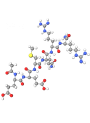
Acetyl Hexapeptide-8 (eq Argireline)
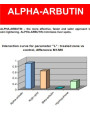
Alpha Arbutin (Switzerland)
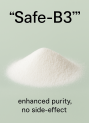
Safe-B3™ (Vitamin B3, Niacinamide)
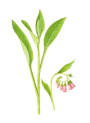
Allantoin
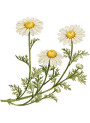
Natural Bisabolol (Brazil Chamomile)

Rosehip Oil (Extra Virgin Organic)
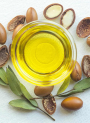
Argan Oil (Virgin - Deodorized)
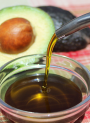
Avocado Oil (Refined)
Vitamin E (dl-alpha tocopherol)
Disodium EDTA

Satin Cream Maker™
DMAE (SkinTight MD™) Liquid
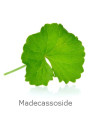

Coenzyme Q10 (98%, Powder, Oil-Soluble)
Dipalmitoyl Hydroxyproline (DPHP)

AcneBee™ Extra สารสกัดนมผึ้ง

Phenoxyethanol SA (eq. Optiphen Plus)

Tranexamic Acid (Trans-White™)