Anti-Aging & Moisturizing Cream Formula Review and Method
Question
I want to formulate a cream for wrinkle reduction and moisturizing. For the following formula, I'm unsure if the ingredients and quantities are suitable, and I would like to request the method for making it:
1.Pal-GHK (7%)
2.Acetyl Hexapeptide-8 (10%)
3.Double Hyaluron Liquid (5%)
4.Safe-B3 (5%)
5.Acetyl glucosamine (4%)
6.Yeast Resurface (4%)
7.Copper Peptide(GHK-Cu) (1%)
8.water (58%)
9.Satin Cream Maker (1%)
10.Sweet Almond Oil (5%)
11.shea butter(ultra soft)(5%)
12.Phytosphingosine (1%)
13.Co Q-10 (0.5%)
14.Dimethyl Isosorbide (DMI) (3%)
15.Phenoxyethanol (0.5%)
16.Mild Preserved Eco (0.5%)
Thank you very much.
Answer
Thank you for your question and the formula you've proposed. It's a very interesting formula with several excellent ingredients focused on anti-aging and moisturizing.
Upon reviewing your formula, I noticed that the total percentage of all ingredients exceeds 100% (it sums up to 105.5%). In cosmetic formulation, the total percentage of all ingredients must equal exactly 100%. You will need to adjust the amounts of some ingredients to reach 100%.
Additionally, I'd like to point out the quantity of Phytosphingosine you included at 1%. Generally, the recommended usage rate for Phytosphingosine is around 0.05-0.1%. Using a higher amount may not be necessary and could potentially increase the risk of skin irritation.
The other ingredients you've selected are suitable for the goal of creating an anti-aging and moisturizing cream. The formula includes peptides for wrinkle reduction, moisturizers, vitamins, skin-benefiting substances, and a penetration enhancer, as well as essential emulsifiers and preservatives.
I would like to propose an adjusted formula totaling 100%, reducing the water content and Phytosphingosine amount based on the recommendations.
Proposed Adjusted Formula:
- Pal-GHK (Matrixyl 3000): 7%
- Acetyl Hexapeptide-8: 10%
- Double Hyaluron Liquid: 5%
- Safe-B3 (Niacinamide): 5%
- Acetyl glucosamine: 4%
- Yeast Resurface (Yeast Extract): 4%
- Copper Peptide (GHK-Cu): 1%
- Phytosphingosine: 0.1% (Adjusted from 1%)
- Co Q-10: 0.5%
- Dimethyl Isosorbide (DMI): 3%
- Satin Cream Maker: 1%
- Sweet Almond Oil: 5%
- Shea Butter (ultra soft): 5%
- Phenoxyethanol: 0.5%
- Mild Preserved Eco: 0.5%
- Water: 48.9% (Adjusted from 58%)
Total: 100%
Method for Making the Cream:
This formula contains both water-soluble and oil-soluble ingredients, as well as heat-sensitive ingredients and ingredients that require heat to dissolve. Therefore, the mixing process should be divided into phases based on the properties of the ingredients. Satin Cream Maker is a cold-process emulsifier and can be added directly to the water phase.
- Prepare the Water Phase (Phase A): In a clean container that can withstand slight heat, combine Water, Double Hyaluron Liquid, Safe-B3, Acetyl Glucosamine, and Dimethyl Isosorbide (DMI). Stir or use a mixer until all water-soluble ingredients are fully dissolved.
- Prepare the Oil Phase (Phase B): In another container, combine Sweet Almond Oil and Shea Butter. Gently heat (around 60-70°C) until the Shea Butter is melted into the oil. Add Phytosphingosine and Co Q-10 to the warm oil phase. Stir or use a mixer/blender to dissolve or disperse them well. Let the oil phase cool slightly (below 60°C).
- Emulsification: Add Satin Cream Maker to Phase A (Water Phase) and mix well to disperse. Slowly pour Phase B (Oil Phase) into Phase A (Water Phase) while mixing continuously with a stirrer (avoid high shear/speed exceeding 2500 rpm, as this can damage the emulsifier). Continue mixing until a smooth, homogeneous cream is formed (this typically takes about 1-10 minutes).
- Cooling and Adding Heat-Sensitive Actives (Phase C): Once the cream has formed, continue mixing gently as the cream cools down. When the temperature drops below 40°C, add Pal-GHK, Acetyl Hexapeptide-8, Yeast Resurface, Copper Peptide, Phenoxyethanol, and Mild Preserved Eco. Mix gently until fully incorporated.
- pH Adjustment: Check the pH of the final cream. The ideal pH range for the stability and efficacy of most ingredients (especially peptides and Yeast Resurface) should be around 4.5-6.5. Adjust with a suitable pH adjuster if necessary.
- Final Check and Packaging: Ensure the cream is smooth and homogeneous. Package it in suitable containers, preferably opaque to protect light-sensitive ingredients like Co Q-10.
Additional Considerations:
- The total amount of preservatives (Phenoxyethanol 0.5% and Mild Preserved Eco 0.5%) is 1%. This may be sufficient for a general formula, but since your formula contains several natural ingredients, it is highly recommended to perform a Challenge Test to confirm the effectiveness of your preservative system.
- The product should be stored in a cool place and kept away from direct sunlight to maintain the quality of the active ingredients, especially peptides and Co Q-10.
This formula includes ingredients that effectively address wrinkle reduction, skin regeneration, and moisturization. I hope this information is helpful!
Related Products Mentioned
Acetyl Hexapeptide-8 (eq Argireline)
Pal-GHK, Pal-GQPR (eq Matrixyl 3000)
Safe-B3™ (Vitamin B3, Niacinamide)
GlucoBright™ (Acetyl Glucosamine)
Phenoxyethanol (Extra Pure)
Shea Butter (Ultra Soft)

Satin Cream Maker™
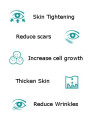
Double Hyaluron Liquid

Coenzyme Q10 (98%, Powder, Oil-Soluble)
Mild Preserved Eco™ (Preservative-Free)

Yeast Resurface
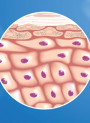
Phytosphingosine (90% Purity)