Basic Perfume Making: Ratios and Fixatives
Question
I'm new to perfume making and don't know where to start, as I couldn't find a pinned topic recommending basic perfume formulation.
From my initial research, I read that Staff recommended the main ingredients for making perfume are:
- Fragrance Oil 30-40%
- The rest is Ethyl Alcohol.
(There was no mention of using a fixative)
However, I checked the details of some fragrance oils, and some specify a Maximum Dose while others don't. For example, Rice Flower & Shea (Bath and Body) states that for Perfume, use at 5-15%. I interpret this to mean the Max Dose for body spray perfume is no more than 15%, and the rest is Ethyl Alcohol (85%). Is this understanding correct? For fragrance oils that don't specify a Max Dose, should I use 30-40% as a standard?
Regarding fixatives, I'm slightly confused whether it's necessary to include them in standard perfume. Comparing Flora Fix and Last Fix, based on what I read, Last Fix is more effective and lasts longer. Is my understanding correct?
These are my initial two questions. I'm about to buy ingredients to start experimenting with making body spray perfume and am unsure which fragrance oil to choose for my first attempt. Any recommendations would be appreciated. Thank you very much.
Answer
Basic Perfume Making
Welcome to the world of perfume making! It's completely normal to have many questions when starting out. I'll help answer your questions one by one.
1. Fragrance Oil and Alcohol Ratio
Your understanding is correct:
- General Principle: Generally, making body perfume uses a relatively high proportion of fragrance oil, which can range from 30-40% or more, with the rest being Ethyl Alcohol.
- Specific Fragrance Oil Recommendations: However, some fragrance oils, such as Rice Flower & Shea (Compare to Bath and Body), may have different usage recommendations (Maximum Dose) depending on their properties and scent concentration. If a fragrance oil specifies a Maximum Dose for Perfume, like the 5-15% you found, you should follow the specific recommendation for that fragrance oil. This means you would use no more than 15% fragrance oil, and the remaining 85% would be Ethyl Alcohol.
- Summary: If a fragrance oil has a specific usage recommendation for Perfume, follow that. If there is no specific recommendation, you can start with the general ratio of 30-40% fragrance oil and the rest Ethyl Alcohol.
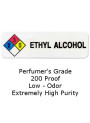
Regarding the Ethyl Alcohol products available, such as Ethyl Alcohol (99.9% , 200 Proof, Research/Perfumer Grade) and Ethyl Alcohol (96% , Perfumer Grade, Low-Odor), both are perfumer grade with high purity and low odor, suitable for use as a base in perfume making.
2. Using Fixatives
Fixatives are another component that helps perfume last longer.
- Necessity: Using a fixative is not a strict requirement for every perfume, especially when you are just starting out. However, fixatives play an important role in slowing down the evaporation of fragrance molecules, helping the scent last longer on the skin and contributing to a more complex and balanced fragrance.
- Effectiveness: Different fixatives have varying properties and effectiveness in fixing scents. The choice depends on the type of fragrance you are creating and the desired longevity.
Although I couldn't find specific information on "Flora Fix" and "Last Fix" directly in the product database, generally, more effective fixatives will help the perfume last longer. If you want your perfume to have extended longevity, considering the use of a suitable fixative is beneficial.
Recommended Fragrance Oils for Beginners
For starting out making body perfume, you can choose any fragrance oil scent that you like! Simple, less complex scents might be a good choice for your initial experiments with mixing and understanding proportions.
Examples of interesting fragrance oils for beginners could be single notes or less complex blends, such as:
- Jasmine Fragrance Oil
- Strawberry (Fragrance Oil)
- Clean Fabric (Fragrance Oil)
Or any other scent from the wide selection available that particularly interests you.
Have fun experimenting with your perfume making!
Related Products Mentioned

Strawberry (Fragrance Oil)
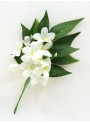
Jasmine Fragrance Oil

Clean Fabric