Beginner's Guide to DIY Cream for Combination Skin (Brightening & Moisturizing)
Question
I'm a beginner interested in formulating my own skincare cream for combination skin, focusing on brightening and moisturizing, with no acne concerns. Could you please guide me on what ingredients to use and how to mix them?
Answer
Beginner's Guide to Cream Formulation (Combination Skin, No Acne)
Hello! If you're interested in starting to formulate your own skincare creams, especially for combination skin with a focus on brightening and moisturizing without acne concerns, starting simple is the best and safest approach. Instead of formulating everything from scratch, it's recommended to use a ready-made cream or gel base suitable for your skin type and gradually add the desired active ingredients.
Active Ingredients of Interest for Combination Skin (Brightening & Moisturizing)
Based on product information, active ingredients suitable for your needs include:
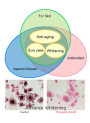
- Niacinamide (Vitamin B3): Helps reduce redness and dark spots, brightens the skin, strengthens the skin barrier, and helps control excess oil. There are different grades available, such as Safe-B3™ (Vitamin B3, Niacinamide) or Extreme-B3™ (Vitamin B3, Niacinamide, Highest Purity), which have high purity and reduce the chance of irritation. It's recommended to start with a concentration of 2-5% and can be increased up to 10% if your skin tolerates it.
- Hyaluronic Acid: An excellent humectant that helps the skin retain water, making it plump and radiant. It comes in various molecular sizes with different benefits, such as Small Molecule Hyaluronic Acid which penetrates deeper, while Standard or Large Molecule Hyaluronic Acid provides hydration on the surface and helps create a gel texture. There are also ready-made bases containing Hyaluronic Acid, such as Hyaluronic Acid Gel Base, which is a moisturizing gel base with a light, non-greasy texture suitable for combination skin.
- Vitamin C Derivative: Helps brighten the skin and acts as an antioxidant. Several stable forms are easier to incorporate than pure L-Ascorbic Acid, such as Ascorbyl Glucoside (AA-2G Stabilized Vitamin C) or Sodium Ascorbyl Phosphate (Vitamin C SAP) By Ascorbyl Glucoside requires pH adjustment of the formula to 6.5-6.8 for optimal stability, while Sodium Ascorbyl Phosphate is stable in formulas with a pH of 7-9 and is easier to mix. Recommended usage is typically around 3-10%.
Simple Steps for Beginner Formulation
- Choose a Base: Start with a ready-made cream or gel base suitable for your combination skin, such as Hyaluronic Acid Gel Base or a cream/lotion you already use.
- Select Active Ingredients: Choose 1-2 active ingredients you are interested in, such as Niacinamide with Hyaluronic Acid, or Niacinamide with a Vitamin C Derivative.
- Calculate Quantity: Study the recommended usage rate for each active ingredient and calculate the amount needed to add to your base (e.g., if you want 5% Niacinamide in 100g of base, use 5g of Niacinamide and 95g of base).
- Mix in Small Batches: For your first attempt, mix a small quantity to test the efficacy and compatibility of the ingredients and to minimize loss if the formulation is unsuccessful.
- Incorporate Actives: Gradually add the active ingredient(s) to the base, stirring or using a small mixer (if available) until well combined. Ensure the ingredient dissolves well in the base with no residue.
- Adjust pH (If Necessary): Some active ingredients, like Ascorbyl Glucoside, require a specific pH for stability. It's advisable to have pH paper or a small pH meter to check and adjust the pH if needed (carefully using a weak alkaline solution like a low concentration of Sodium Hydroxide).
- Add Preservative: Homemade formulations are susceptible to bacterial contamination. Add a suitable preservative in the amount recommended for that specific preservative.
- Package and Store: Store the finished product in a clean, airtight container. Store in a suitable location according to the recommendations for each active ingredient (some may require refrigeration).
- Patch Test: Before applying to your entire face, test the finished product on a small area like under your chin or on your inner arm for 2-3 days to check for any allergic reactions or irritation.
Important Considerations for Beginners
- Hygiene: Maintain strict cleanliness of your equipment and workspace during mixing.
- Concentration: Always start with low concentrations of active ingredients.
- Compatibility: Some active ingredients may not be compatible when mixed together. Research each ingredient before combining them.
- Stability: Homemade formulas may be less stable than commercially produced ones, which undergo rigorous testing.
Starting by enhancing a ready-made base with active ingredients you're interested in is an easy way to begin and helps you learn about the properties of each ingredient before moving on to more complex formulations.
Related Products Mentioned
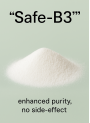
Safe-B3™ (Vitamin B3, Niacinamide)