Body Lotion Formulation with Soy Lecithin and Phospholipid
Question
I want to formulate a body lotion using Soy Lecithin and Phospholipid (Hydrogenated Lecithin) as the main ingredients.
1. Can I use Soy Lecithin 10% alone to achieve a lotion texture?
2. How much Hydrogenated Lecithin should I use?
3. Can Hydrogenated Lecithin replace traditional emulsifiers/thickeners like Ewax and Stearic acid without using other cream makers?
Answer
Body Lotion Formulation with Soy Lecithin and Phospholipid
You're looking to create a body lotion focusing on Soy Lecithin and Phospholipid (Hydrogenated Lecithin) and want to understand their usage and if they can replace traditional emulsifiers like Ewax and Stearic acid without using other cream makers.
Based on the product information:
- Soy Lecithin (Liquid Lecithin): This ingredient functions primarily as a water-in-oil (W/O) emulsifier, suitable for formulas with high oil content. While it can be used in oil-in-water (O/W) emulsions like lotions, it is not a thickener. To achieve a viscous lotion texture and prevent separation in formulas with high water content, a thickener such as Xanthan Gum is necessary. The recommended usage rate is 3-10%, with higher percentages needed for formulas with more water to help with coordination, but it won't thicken the formula on its own. Using 10% Soy Lecithin alone is unlikely to result in a stable lotion texture; it would likely be a thin liquid that may separate without a thickener.
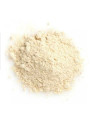
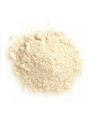
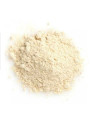
- Hydrogenated Lecithin: The Hydrogenated Lecithin products available (50%, 70%, 95% Phosphatidylcholine) are primarily described for use in encapsulating active ingredients to improve absorption, solubility, and stability. They are fine powders often used in conjunction with Cholesterol to strengthen capsule walls. Their function is centered around encapsulation and enhancing the delivery of actives, rather than acting as primary emulsifiers or thickeners for the main emulsion structure of a lotion in the way Ewax or Stearic acid do.
Addressing your specific questions:
- Can 10% Soy Lecithin be a lotion texture? No, using 10% Soy Lecithin alone will not create a lotion texture. It is an emulsifier but not a thickener. You would need to add a thickener like Xanthan Gum to achieve lotion viscosity.
- How much Phospholipid (Hydrogenated Lecithin) to use? The product descriptions for Hydrogenated Lecithin focus on its use for encapsulation, not as a primary emulsifier or thickener for a lotion base. Typical usage rates for this purpose are not provided in the context of replacing Ewax or Stearic acid. Its primary role is different.
- Can Phospholipid replace Ewax and Stearic acid? Based on the product descriptions, Hydrogenated Lecithin's main function is encapsulation and stabilizing active ingredients, not building the primary emulsion structure and viscosity of a lotion like Ewax and Stearic acid do. Therefore, it is unlikely that Hydrogenated Lecithin can fully replace Ewax and Stearic acid to create a stable lotion with a similar texture without the aid of other emulsifiers or thickeners.
Creating a stable lotion texture using only Soy Lecithin and Hydrogenated Lecithin as the primary emulsifying and thickening system, without other cream makers or thickeners like Xanthan Gum, is challenging because neither ingredient functions as a primary thickener for water-heavy formulas in the way traditional lotion emulsifiers/thickeners do. Soy Lecithin requires a thickener for viscosity, and Hydrogenated Lecithin is primarily for encapsulation.
If you wish to incorporate these ingredients, Soy Lecithin can be used as a co-emulsifier or skin conditioning agent (keeping in mind its strong natural smell) along with a primary O/W emulsifier and a thickener. Hydrogenated Lecithin could potentially be included for its skin-conditioning properties or for encapsulating specific active ingredients, but not as a direct replacement for the structural components like Ewax and Stearic acid in a lotion base.