Body Oil Formulation Review and Optimization
Question
I have developed a body oil formulation with the following ingredients and percentages:
- Olive Oil (Extra Virgin): 30%
- Apricot Kernel Oil: 15%
- Aloe Vera Oil: 15%
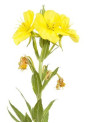
- Evening Primrose Oil (Organic - Virgin, 10% GLA): 15%
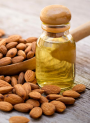
- Sweet Almond Oil (Refined): 15%
- Lanolin Oil: 2%
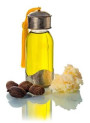
- Shea Butter Light Oil: 3%
- Vitamin E (Tocopheryl Acetate): 3%
- Hi-EGCG™ (Green Tea Extract): 1%
- German Chamomile Extract (Natural Bisabolol): 1%
Total: 100%
Could you please review this formula and provide guidance on the following points:
- Are the ingredient percentages appropriate, particularly for
Vitamin E (Tocopheryl Acetate)andHi-EGCG™ (Green Tea Extract)? - Is a preservative needed for this formula, given it is oil-based?
- What is the correct manufacturing process? Is heat required to mix the oils?
- Are there ways to reduce the cost of this formulation?
- How can I address the heavy feel of Olive Oil in the formula?
- Can a natural fragrance be added, and if so, how?
Answer
Body Oil Formulation Review and Suggestions
Hello Chananya,
Thank you for your question about your body oil formulation. It's a good starting point with many beneficial oils!
Let's review your formula and questions based on your goals and the staff's feedback:
1. Formula Review and Adjustments
Based on the staff's reply:
- Vitamin E: As advised, please reduce Vitamin E (Tocopheryl Acetate) from 3% to 0.1%. Higher concentrations can indeed feel sticky.
- Hi-EGCG™ (Green Tea Extract): This ingredient is water-soluble and will not dissolve in oil. As the staff mentioned, please remove it from your oil-based formula.
Your original percentages added up to 100%. After removing 1% Hi-EGCG and reducing Vitamin E by 2.9% (3% - 0.1%), you have a total reduction of 3.9%. To keep the total at 100%, this 3.9% needs to be added back to the base oils.
You mentioned you like Olive Oil but find it heavy. To address this and incorporate the missing 3.9%, I recommend adding it to one of the lighter carrier oils in your formula, such as Apricot Kernel Oil, which is known for its light texture and fast absorption.
Here is a suggested adjusted formula:
- Olive Oil (Extra Virgin): 30%
- Apricot Kernel Oil: 15% + 3.9% = 18.9%
- Aloe Vera Oil: 15%
- Evening Primrose Oil (Organic - Virgin, 10% GLA): 15%
- Sweet Almond Oil (Refined): 15%
- Lanolin Oil: 2%
- Shea Butter Light Oil: 3%
- Vitamin E (Tocopheryl Acetate): 0.1%
- Hi-EGCG™ (Green Tea Extract): 0% (Removed)
- German Chamomile Extract (Natural Bisabolol): 1%
Total: 100%
This blend combines nourishing oils like Olive Oil and Sweet Almond with lighter oils like Apricot Kernel and Shea Butter Light, aiming for a balanced feel that is less heavy than pure Olive Oil. The Aloe Vera Oil and German Chamomile Extract add soothing benefits.
Preservative
As the staff correctly pointed out, a purely oil-based formula does not require a preservative because microorganisms need water to grow. However, if you plan to sell this product, adding a preservative like Phenoxyethanol SA at 0.5-1.0% is a good safety measure to prevent contamination during use by consumers.
2. Manufacturing Process
Making this body oil is very simple:
- Measure: Accurately measure all your ingredients according to the percentages in the adjusted formula. It's generally more accurate to measure by weight, but volume can also be used if you are careful.
- Combine: Add all the measured oils, Vitamin E, Lanolin Oil, Shea Butter Light Oil, and German Chamomile Extract into a clean container.
- Mix: Stir gently until all ingredients are thoroughly combined and the mixture is uniform. No heat is needed as confirmed by the staff. Heat can potentially degrade some oils and active ingredients.
- Package: Pour the finished oil into clean, dry bottles.
3. Cost Reduction
Some ingredients in your formula are typically more expensive than basic carrier oils. If you need to reduce costs, you could consider:
- Reducing the percentage of or replacing Evening Primrose Oil (especially the organic virgin type) with a more cost-effective carrier oil like Grapeseed Oil or Sunflower Oil High Oleic. Note that this would mean losing the specific GLA benefits of Evening Primrose.
- Reducing the percentage of Aloe Vera Oil or German Chamomile Extract. These are specialty extracts that add specific benefits but are usually more expensive than base oils.
- Increasing the percentage of more economical oils already in your formula, such as Apricot Kernel Oil or Sweet Almond Oil, while reducing some of the pricier ones.
Any changes to these ingredients will alter the specific properties and feel of the final product.
4. Addressing Olive Oil Weight
Your original formula already helps mitigate the heaviness of Olive Oil (30%) by including lighter oils like Apricot Kernel Oil (15%), Sweet Almond Oil (15%), and Shea Butter Light Oil (3%). The adjusted formula further increases the lighter Apricot Kernel Oil to 18.9%, which should help improve the absorption speed and reduce the heavy feel compared to using Olive Oil alone or a blend with a higher proportion of heavy oils. If you still find it too heavy, you could further reduce the Olive Oil percentage and increase the lighter oils.
Natural Fragrance
You mentioned wanting a natural fragrance. Your current formula doesn't include a specific fragrance ingredient. You could add a small percentage (e.g., 0.5% - 2%) of a natural essential oil or a natural fragrance oil blend to achieve your desired scent.
I hope this detailed review and these suggestions are helpful for creating your ideal body oil!
Related Products Mentioned
Vitamin E (Tocopheryl Acetate)

Natural Bisabolol (Brazil Chamomile)
Olive Oil (Extra Virgin)
Apricot Kernel Oil (Refined)
Evening Primrose Oil (Refined, 9% GLA)
Shea Butter Light Oil

Phenoxyethanol SA (eq. Optiphen Plus)

Lanolin Oil