Body Sunscreen Formulation for Rub-off Resistance and No Fabric Staining
Question
Body Sunscreen Formulation for Rub-off Resistance (No Dark Fabric Staining)
I have formulated a body sunscreen focusing on rub-off resistance and not staining dark fabrics. The formula is as follows:
Formula (%)
- Isododecane....................20
- Microcrystalline Wax..........15
- Oil Film..............................20
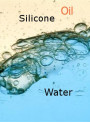
- SiliSolve Plus......................2
- Silicone Gel........................5
- Cyclomethicone..................6
- Silicone Blender..................3
- TiO2 liq 10% + TiO2 powder 3%
- ZnO liq 10% + ZnO powder 3%
- Polyhydroxystearic acid.....3
Procedure:
- Heat ingredients 2, 3, and 5 until melted.
- Add other ingredients after step 1 is melted.
Questions:
- After melting step 1, there is a white residue floating on the surface. When touched, it is sticky and clumpy, similar to glue. (I am sure it is not due to insufficient melting temperature).
I am unsure if this is Microcrystalline Wax. - In sunscreen formulas that use Oil Film to prevent rub-off, what alternatives can be used besides Microcrystalline Wax that also help disperse physical sunscreen and maintain stability?
- Since I was unsure which ingredients could be mixed in step 1 (using heat), I only included 3 ingredients. Which ingredients in the formula can actually withstand heat?
- In this formula, I chose to use volatile substances like Isododecane and Cyclomethicone, hoping they would dissolve the powdered sunscreen actives and then evaporate after application, thus not including Silicone Gel, Isohexadecane, or Dimethicone in the formula. I assumed that having silicones/non-volatile substances would make the cream more likely to rub off and stain dark clothes compared to volatile substances. Is this assumption correct? Please provide suggestions.
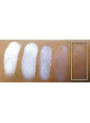
- This formula leaves more white cast on the skin compared to a formula using Vinyl Film, as shown below:
Comparison Formula (%):
- Titanium Dioxide 200nm.....3% (liquid 10%)
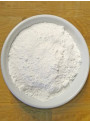
- Zinc Oxide 200nm .............3% (liquid 10%)
- Silicone Blender (to emulsify various silicones).3%
- Vinyl Film..............................................10%
- Silicone Gel (Ultra Clear)...........................29%
- Cyclomethicone........................................29%
- Polyhydroxystearic acid..............................3%
What causes the white cast in my first formula? The formula using Vinyl Film does not leave a white cast.
However, based on rub-off resistance testing, I prefer Oil Film > Vinyl Film > Silicone Film. Does this align with your team's opinion?
Thank you.
Answer
Analysis of Your Sunscreen Formulation
You've presented an interesting body sunscreen formula focused on rub-off resistance and provided a detailed process and questions. Let's break down the issues and provide some guidance.
Addressing Your Questions
White residue after heating: The sticky white residue observed after heating Microcrystalline Wax, Oil Film (Hydrogenated Polycyclopentadiene), and Silicone Gel is most likely the Microcrystalline Wax. Microcrystalline Wax needs to be fully melted and properly dispersed in the oil phase. If the temperature wasn't high enough to fully melt the wax (melting points vary depending on the specific type, but are generally above 70°C) or if the mixing wasn't sufficient after melting, it can remain as solid or semi-solid particles, leading to a sticky, clumpy residue.
Alternatives to Microcrystalline Wax for rub-off resistance and physical sunscreen dispersion: While Microcrystalline Wax contributes to the formula's structure and film-forming properties, Polyhydroxystearic acid is the key ingredient in your formula specifically designed to disperse physical sunscreens like Titanium Dioxide and Zinc Oxide. For enhancing rub-off resistance alongside Oil Film (Hydrogenated Polycyclopentadiene), you could consider other film-forming polymers soluble in the oil/silicone phase. Vinyl Film (VP/Hexadecene Copolymer), which you mentioned in your comparison formula, is another effective film former that aids in pigment dispersion and transfer resistance. Other waxes could potentially provide structure, but their impact on pigment dispersion varies.
Heat stability of ingredients: In your formula, the ingredients that typically require or can withstand heating in the oil phase include:
- Microcrystalline Wax (needs melting)
- Oil Film (Hydrogenated Polycyclopentadiene) (can withstand heat)
- Polyhydroxystearic acid (melt into oil)
Ingredients that are volatile or should generally be added in the cooling phase (below 40°C) to prevent evaporation or degradation include:
- Isododecane (volatile)
- Cyclomethicone (volatile)
- Silicone Gel (Dimethicone/Vinyl Dimethicone Crosspolymer in Cyclopentasiloxane base - the base is volatile)
- SiliSolve Plus (emulsifier/dispersant, typically added without high heat)
- Silicone Blender (silicone blend, typically added without high heat)
- TiO2 and ZnO powders/liquids (while the pigments themselves are heat stable, the coatings or dispersion bases might be sensitive to prolonged high heat, and they are best dispersed thoroughly in the appropriate phase after heating).
Your current process of heating only Microcrystalline Wax, Oil Film, and Silicone Gel in step 1 is generally appropriate for melting the wax and Oil Film. However, Silicone Gel is often added in the cooling phase. A revised process might involve heating the waxes and Oil Film, cooling slightly, then adding the Silicone Gel and other oil/silicone phase ingredients before incorporating the dispersed physical sunscreens.
Role of volatile vs. non-volatile ingredients in rub-off and staining: Your hypothesis has some validity. Volatile carriers like Isododecane and Cyclomethicone help spread the formulation evenly and then evaporate, leaving behind the non-volatile components like film formers and pigments on the skin. This can contribute to a lighter feel and, when combined with effective film formers, improve transfer resistance. Non-volatile silicones (like higher molecular weight Dimethicones or the crosspolymer in Silicone Gel) provide slip, barrier properties, and a smooth feel. While they are essential for texture and feel, relying solely on them without sufficient film formers can potentially lead to more transfer or rub-off compared to a system where volatile carriers deposit a strong film. The key to rub-off resistance is the effectiveness and concentration of the film-forming polymers (like Oil Film or Vinyl Film) and how well the pigments are dispersed within that film matrix.
Cause of white cast: The primary reason your first formula likely leaves more white cast than the second is the total concentration of physical sunscreen actives (TiO2 and ZnO). Your first formula uses 10% liquid TiO2 + 3% powder TiO2 and 10% liquid ZnO + 3% powder ZnO, totaling 26% physical sunscreen components. Your second formula uses 3% powder TiO2 + 10% liquid TiO2 and 3% powder ZnO + 10% liquid ZnO. Assuming the liquids in the second formula are concentrated dispersions (e.g., 30-50% active), the total active physical sunscreen concentration is significantly lower (likely in the 13-15% range). Higher concentrations of TiO2 and ZnO inherently lead to more visible white cast, regardless of particle size or dispersion quality, although using nano-sized and properly coated/dispersed pigments (like those likely in the liquid forms of your second formula) helps minimize it. The type and particle size of the powders and the nature of the liquid dispersions (e.g., nano vs. micron, coated vs. uncoated, dispersion base) also play a significant role in the degree of white cast.
Regarding your observation that Oil Film provides better rub-off resistance than Vinyl Film and Silicone Film: This is plausible as different film formers have varying properties in terms of hardness, flexibility, and adhesion, which impacts their transfer resistance. Your experimental results are valuable in determining which film former works best for your specific formulation goals.
Summary and Recommendations
- Ensure Microcrystalline Wax is fully melted and well-dispersed during heating to avoid residue.
- Polyhydroxystearic acid is crucial for dispersing physical sunscreens. Oil Film is a good choice for rub-off resistance. Vinyl Film is another viable alternative.
- Be mindful of adding volatile ingredients and heat-sensitive components like Silicone Gel in the cooling phase.
- Your understanding of volatile carriers aiding film deposition for transfer resistance is generally correct.
- The higher concentration of physical sunscreens is the main cause of increased white cast in your first formula. To reduce white cast, you would need to reduce the total amount of TiO2 and ZnO or use forms with smaller particle size and optimized coatings/dispersions, potentially combined with chemical sunscreens to achieve the desired SPF level.
Keep experimenting and adjusting the concentrations and types of film formers and dispersants to achieve the desired balance of rub-off resistance, feel, and minimal white cast.
Related Products Mentioned
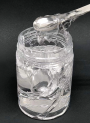
Silicone Gel (Ultra Clear, Super Silky)
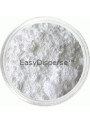
Zinc Oxide (Micronized)
SiliSolve Plus™
Silicone Blender