Brightening Formula Review, Mixing, and Recommendations
Question
Could you please review this formula again? If you have any additional recommendations, please provide them, along with the mixing procedure.
Here is the formula:
- Ethyl Ascorbic acid (Vitamin C Ethyl Ether) 3%
- Tranexamic Acid 3%
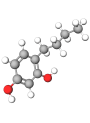
- Activated Resorcinol™ 1%
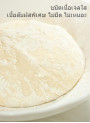
- Lemon Peel Bioferment (Lemon Skin™) 2%
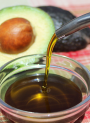
- Avocado Oil (Refined) 5%
- Shea Nut Oil 10%
- MOIST24 (Glycereth-26) 5%
- German Chamomile Extract (Natural Bisabolol) 1%
- Rose (Rosa Damascena) Extract สารสกัดกุหลาบมอญ 3%
- Mild Preserved Eco™ (Preservative-Free) 0.5%
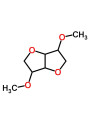
- Dimethyl Isosorbide (DMI) 3%
- Xanthan Gum (ชนิดเจลใส, เนื้อเนียนไม่ยืด) 1%
- Wax Cream Maker™ 3%
- Disodium EDTA 0.2%
- น้ำกลั่น 59.3%
Answer
Formulation Review and Mixing Instructions
Thank you for providing your formulation for review. This formula combines several potent skin brightening and moisturizing ingredients. The inclusion of Natural Bisabolol is beneficial to help soothe potential irritation from Activated Resorcinol. The percentages of the active ingredients like Ethyl Ascorbic Acid, Tranexamic Acid, and Activated Resorcinol are within the recommended usage rates for cosmetic products.
Here are the recommended steps for mixing this formulation:
Mixing Procedure
This formulation involves both water and oil phases, requiring heating and emulsification, followed by adding sensitive ingredients during the cool-down phase.
Phase A (Water Phase):
- Distilled Water
- Disodium EDTA
- MOIST24
Phase B (Oil Phase):
- Avocado Oil
- Shea Nut Oil
- Wax Cream Maker
Phase C (Cool Down Phase - Add below 40°C):
- Ethyl Ascorbic Acid
- Tranexamic Acid
- Activated Resorcinol
- Lemon Peel Bioferment
- Natural Bisabolol
- Dimethyl Isosorbide (DMI)
- Rose Extract
- Mild Preserved Eco
- Xanthan Gum (Alternatively, disperse in a small amount of oil from Phase B or DMI before adding to Phase A)
Instructions:
- Prepare Phase A: Combine Distilled Water, Disodium EDTA, and MOIST24 in a heat-resistant beaker. Heat this phase to 70-75°C.
- Prepare Phase B: Combine Avocado Oil, Shea Nut Oil, and Wax Cream Maker in a separate heat-resistant beaker. Heat this phase to 70-75°C until all solid ingredients are completely melted and the phase is uniform.
- Disperse Xanthan Gum: While Phase A is heating, disperse Xanthan Gum in a small amount of oil from Phase B (or Dimethyl Isosorbide (DMI) from Phase C). Add this dispersion to the heated Phase A while mixing vigorously with a high-shear mixer (such as a homogenizer or stick blender) to ensure the gum fully hydrates and forms a smooth gel without lumps.
- Emulsification: Slowly add the heated Phase B to the heated Phase A while continuing high-shear mixing. Mix until a stable emulsion is formed and the cream begins to thicken.
- Cooling: Switch to slower paddle stirring and begin cooling the emulsion.
- Add Phase C: Once the temperature drops below 40°C, add the ingredients from Phase C one by one, mixing thoroughly after each addition:
- Premix Ethyl Ascorbic Acid and Tranexamic Acid with Dimethyl Isosorbide (DMI) and a small amount of the remaining water (if any was held back from Phase A) to help dissolve them, then add to the cream.
- Add Activated Resorcinol.
- Add Natural Bisabolol.
- Add Lemon Peel Bioferment.
- Add Rose Extract.
- Add Mild Preserved Eco.
- Final Mixing: Continue mixing until the cream is completely cooled and uniform in texture.
- pH Adjustment: Check the pH of the final product. For optimal stability and efficacy of the active ingredients, the pH should ideally be in the range of 4.5-5.5. Adjust with a suitable acid (e.g., Lactic Acid or Citric Acid solution) or base (e.g., Sodium Hydroxide solution) if necessary.
Additional Recommendations
- Consider adding an antioxidant like ActiveProtec™ OX to help prevent potential discoloration of the formula, especially due to Activated Resorcinol.
- Protect the finished product from light by using opaque packaging, as Activated Resorcinol is light-sensitive.
- Always perform stability testing on your final product to ensure its quality over time.
- A challenge test is recommended to confirm the effectiveness of the Mild Preserved Eco preservative system in your specific formulation.
Related Products Mentioned

Natural Bisabolol (Brazil Chamomile)
Avocado Oil (Refined)
Disodium EDTA
Lemon Peel Bioferment (Lemon Skin™)
Shea Butter (Ultra Soft)
Mild Preserved Eco™ (Preservative-Free)
MOIST24
Tranexamic Acid (Trans-White™)
Wax Cream Maker™