Can Xanthan Gum Emulsify Oil for Cream-Gel Texture?
Question
I am trying to create a light cream-gel texture for personal use with the following ingredients in the water phase:
- Trans-Resveratrol (Powder, 98%) = 4%
- WhiteCumin™ 2x = 4%
- Madecassoside-80 (Centella Asiatica Extract) = 1%
- L-Carnosine = 0.5%
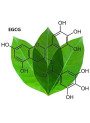
- Pure-EGCG™ (Green Tea Extract, 98% EGCG) = 4%
- Glycerin = 5%
- 1,3-Propanediol = 5%
I also have an oil phase consisting of German Chamomile Extract (1%), Stearyl Glycyrrhetinate (1%), and Squalane (3%), totaling 5% oil.
I understand that some ingredients like Trans-Resveratrol and Madecassoside-80 may not be water-soluble and need specific dissolution methods.
My main question is: Since AnyGel™ can emulsify oil in a formula (up to 5% oil per 1% AnyGel™ or 10% oil per 2% AnyGel™), can Xanthan Gum (specifically the clear gel, smooth non-stretchy type) achieve a similar result in my formula to prevent water-oil separation and create the desired light cream-gel texture?
Answer
Regarding Xanthan Gum vs. AnyGel™ for Gel-Cream Formulation
You've asked if Xanthan Gum (clear gel, smooth non-stretchy type) can be used in your formula to create a gel texture and emulsify the oil phase, similar to how AnyGel™ might function, aiming for a light cream-gel texture for personal use.
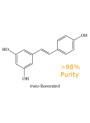
First, regarding the ingredients in your water phase, the staff correctly pointed out that Trans-Resveratrol (4%) and Madecassoside-80 (1%) are generally not water-soluble. You should check the specific usage instructions for these ingredients to ensure they can be properly dissolved or dispersed in your formula, regardless of the gelling agent or emulsifier used.
Now, addressing the use of Xanthan Gum for both gelling and emulsifying: Xanthan Gum is primarily a thickener and gelling agent for the water phase. It excels at creating gel textures and increasing viscosity. While it can offer some stability to emulsions by thickening the water phase and slowing down separation, it is not a primary emulsifier capable of effectively binding significant amounts of oil into a stable emulsion, especially at the 5% total oil concentration in your formula (German Chamomile Extract 1%, Stearyl Glycyrrhetinate 1%, Squalane 3%).
AnyGel™ (Dehydroxanthan Gum) also functions mainly as a thickener and gelling agent, though it is noted to have some ability to help stabilize oil in water emulsions up to a certain percentage. However, as the staff's response implies and is a general principle in formulation, for creating a stable cream or cream-gel texture that combines both water and oil phases without separation, using a dedicated emulsifier is the most reliable method.
The staff's recommendation to use emulsifiers like Light Cream Maker or Satin Cream Maker is based on their function to create stable emulsions, ensuring the oil and water phases remain uniformly mixed over time. This is crucial for achieving and maintaining the desired light cream-gel texture.
Regarding Glycerin (5%) and 1,3-Propanediol (5%), these are humectants and solvents that are fully compatible with the water phase. They contribute to hydration and can help dissolve certain water-soluble ingredients. They do not act as emulsifiers for the oil phase, nor would their presence at these percentages typically prevent a proper emulsifier from working to create a cream-gel texture.
In summary, while Xanthan Gum can create the gel base of the water phase, it is not sufficient on its own to reliably emulsify the oil phase in your formula to create a stable cream-gel texture. To achieve a stable, uniform cream-gel as you desire, incorporating a dedicated emulsifier along with a thickener (like Xanthan Gum or AnyGel™ for the water phase viscosity) is the recommended approach, as advised by the staff. This will ensure your formula remains stable and has the desired texture without separation.
Related Products Mentioned

Natural Bisabolol (Brazil Chamomile)
Squalane (Olive)
Light Cream Maker™
Glycerin (USP/Food Grade)

Satin Cream Maker™

Trans-Resveratrol (Powder, 98%)
Stearyl Glycyrrhetinate
AnyGel™ (Dehydroxanthan Gum)
L-Carnosine