Chemical Sunscreen Recommendations for Formulations with Plant Extracts
Question
I am formulating a product and want to use chemical sunscreens, potentially combining them with a plant extract that has some SPF value, to achieve the desired SPF and PA values. Could you please provide recommendations for suitable chemical sunscreens and guidelines on their usage percentages and how to combine them for broad-spectrum protection? What are the key considerations when using chemical sunscreens in a formulation, especially regarding compatibility, stability, and achieving specific SPF/PA values?
Answer
Chemical Sunscreen Recommendations for Your Formulation
Combining chemical sunscreens with your plant extract is a good approach to achieve broad-spectrum UV protection. Chemical sunscreens work by absorbing UV radiation and converting it into heat.
Here are some common chemical sunscreens and their typical usage ranges. You can choose one or a combination depending on the desired SPF/PA level and the specific UV protection needed (UVA, UVB, or both):
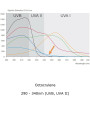
- Octocrylene: Protects against UVB and some UVA II. It also helps stabilize other sunscreens like Avobenzone. Typical usage rate is 5-10%. (Product ID: 268)
- Octisalate (Ethylhexyl Salicylate): Primarily protects against UVB. It can also act as a solvent for other powder sunscreens. Typical usage rate is 1-5%. (Product ID: 269)
- Homosalate: Primarily protects against UVB. It is also a good solvent for many powder sunscreens. Typical usage rate is 1-10%. (Product ID: 527)
- Oxybenzone (Benzophenone-3): Protects against UVB and short UVA rays. It helps stabilize Avobenzone. Typical usage rate is 0.1-6%. (Product ID: 524)
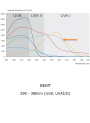
- BEMT (Bis-Ethylhexyloxyphenol Methoxyphenyl Triazine): Provides broad-spectrum protection against both UVA and UVB and is highly stable. Typical usage rate is 1-10%, with 2-4% often sufficient for high performance. (Product ID: 772)
- SPF Protect Ultra™ III: This is a blend of multiple sunscreens designed to provide high UVA and UVB protection. Usage rate is 1-25%, with 10% providing SPF 20-25, 20% providing SPF 50, and 25% providing SPF 70-100 (in an oil-in-water emulsion system).
To achieve broad-spectrum protection (covering both UVA and UVB), it is often necessary to use a combination of different chemical sunscreens. For example, combining a good UVB filter (like Octocrylene, Octisalate, or Homosalate) with a good UVA filter (like BEMT or Avobenzone - although Avobenzone requires stabilization, often by Octocrylene or Oxybenzone).
The specific percentage of chemical sunscreen needed in your formula will depend on the target SPF/PA value and the contribution of your plant extract. Since your plant extract also provides some SPF, you might be able to use lower percentages of chemical sunscreens compared to a formula using only chemical filters. However, the exact contribution of your plant extract needs to be carefully evaluated.
Important Considerations:
- Testing: The only way to know the actual SPF and PA value of your final formulation is through standardized testing.
- Solubility: Ensure the chemical sunscreens you choose are compatible with your formulation base (oil phase, water phase, etc.). Most common chemical sunscreens are oil-soluble.
- Regulatory Limits: Always adhere to the maximum allowed usage rates for each sunscreen ingredient as regulated by relevant authorities (like the FDA in Thailand).
You can start by formulating with a combination of chemical sunscreens at the lower end of their recommended ranges and then adjust based on your SPF testing results and desired product characteristics.
Related Products Mentioned
Octocrylene
Oxybenzone (Benzophenone-3)
Homosalate