Cica Sleeping Mask Formulation: Mixing, Texture, Irritation, and Preservation
Question
I need advice on a Cica Sleeping Mask formulation using the following ingredients:
- Cica Sleeping Mask Base (compare to Laneige): 56.5%
- Wrinkle-Lax: 0.5%
- Skin-Barrier: 10%
- Salmon Roe Extract: 5%
- Pure-Adenosine: 1%
- Dipalmitoyl Hydroxyproline: 2%
- Pisum Sativum Extract: 10%
- Repair-activator: 10%
- Celendula extract: 5%
I have the following questions:
- Can this formula be mixed together directly without using a mixer?
- Will the cream texture be thin? If so, which ingredient should I add to thicken it?
- Will this formula cause skin irritation?
- Is it necessary to add a preservative?
- Do you have any additional recommendations?
Answer
Formulation Analysis and Recommendations
Here is an analysis of your Cica Sleeping Mask formulation and answers to your questions:
1. Can this formula be mixed together without a mixer?
Most of the ingredients in your formula are water-soluble or dispersible liquids and powders that can be added to the Cica Sleeping Mask Base. However, Dipalmitoyl Hydroxyproline (DPHP) requires heating to 80-85°C in an oil phase to dissolve properly. Since the Cica Sleeping Mask Base is a pre-made cream base, adding DPHP powder directly without pre-dissolving it will likely result in it not incorporating correctly and potentially affecting the texture and efficacy. Therefore, simply mixing everything together without proper processing for DPHP is not recommended. A mixer would likely be needed to ensure homogeneity, especially if DPHP is not fully dissolved.
2. Will the texture be thin? If so, what should be added?
Adding a total of 43.5% of additional ingredients, many of which are liquids or water-soluble, to 56.5% of the cream base is a significant addition. Ingredients like Skin-Barrier (10%), Pisum Sativum Extract (10%), Repair Activator (10%), Salmon Roe Extract (5%), and Calendula Extract (5%) are added at relatively high percentages and are in liquid or dispersible forms. This volume of addition is likely to thin the texture of the Cica Sleeping Mask Base. To thicken the formula if it becomes too thin, you would typically need to add a compatible water-soluble thickener or rheology modifier.
3. Will this formula cause skin irritation?
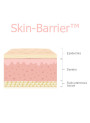
The formula contains several ingredients known for their soothing and barrier-repairing properties, such as the Cica Sleeping Mask Base itself, Skin-Barrier (containing ceramides), and Calendula Extract. However, the formula also includes multiple active extracts (Pisum Sativum Extract, Salmon Roe Extract, Calendula Extract, Repair Activator) at relatively high concentrations. While generally well-tolerated, high concentrations and the combination of multiple actives can potentially cause irritation in individuals with very sensitive or reactive skin. The Repair Activator BG version also contains preservatives/glycols which can sometimes be irritating to highly sensitive individuals. It is recommended to perform a patch test before full application, especially for sensitive skin types.
4. Is a preservative needed?
The Cica Sleeping Mask Base is described as preservative-free but contains antimicrobial agents like 1,2-Hexanediol, Ethylhexylglycerin, and Glyceryl caprylate. Skin-Barrier also contains 1,2-Hexanediol, and Repair Activator BG is preserved. However, you are adding multiple water-based extracts (Salmon Roe Extract, Pisum Sativum Extract, Calendula Extract) at significant percentages (total 20%) which may not be fully preserved or are preserved at lower levels. Water-based formulations are prone to microbial growth. Relying solely on the existing antimicrobial agents might not be sufficient for long-term stability and safety of this complex formula. Therefore, adding a broad-spectrum preservative system is highly recommended to ensure the product is protected against bacterial, yeast, and mold contamination, unless challenge testing confirms adequate preservation.
5. Any additional recommendations?
- DPHP Dissolution: As mentioned, Dipalmitoyl Hydroxyproline (DPHP) needs to be dissolved in an oil phase with heat before adding to the base. This requires a modification to a simple cold-mix process. You would need to heat a small amount of a compatible oil (if the base can accommodate more oil, check the description - it says it can accommodate up to 10% oil/silicone) to 80-85°C, dissolve the DPHP, and then carefully incorporate this heated oil mixture into the cream base while mixing.
- Texture Adjustment: Be prepared that the texture will likely be thinner. Have a compatible water-soluble thickener on hand to adjust the viscosity if needed.
- Preservation: Strongly consider adding a broad-spectrum preservative for microbial safety.
- Compatibility Testing: Always make a small test batch first to check for any signs of incompatibility, such as separation, discoloration, or precipitation.
- pH Check: Check the pH of the final formula. Some ingredients like Pure-Adenosine and Repair Activator have optimal pH ranges for efficacy. Ensure the final pH is suitable for the ingredients and skin application.
- Stability Testing: Conduct stability testing on your final product to ensure it remains consistent over time under various conditions.
Related Products Mentioned

Calendula Extract (Water Soluble)
Dipalmitoyl Hydroxyproline (DPHP)

Wrinkle-Lax™ คลายริ้วรอย

Pisum Sativum Extract (Pea-Ex™)
Pure-Adenosine™