Clarification on BHA Function (Clogged Pores vs. Exfoliation) and Ingredient Compatibility in Gel Formulation
Asked by: chayapop18909
On: January 20, 2018
Product Type:
Cosmetics
Answered
Question
Based on a previous staff comment stating that BHA does not require high acidity (pH 4-6 is sufficient) to dissolve clogged pores, but requires low pH for effective exfoliation, I have the following questions:
- Please explain further the distinction between "exfoliating skin cells" and "dissolving clogged pores". From my understanding, dissolving clogged pores is a result of skin exfoliation. Is this understanding incorrect?
- Regarding a gel formulation containing BHA, Niacinamide (Vitamin B3), and Green Tea Extract:
- 2.1 Both Niacinamide and Green Tea Extract are claimed to help reduce facial sebum. Is using both together redundant? I haven't researched if they use the same mechanism for sebum reduction.
- 2.2 The website information states that Green Tea Extract is suitable for pH 4-6.5, while BHA is suitable for pH 3-4. If I formulate a BHA gel at pH 3-4, should I exclude Green Tea Extract?
Answer
Clarification on BHA's Function and Your Formulation
Hello,
Thank you for your questions regarding BHA and acne treatment.
Clarification on BHA's function: You are right to seek clarification on the distinction between BHA's ability to "dissolve clogged pores" and "exfoliate skin cells". Based on the staff's explanation, these are related but distinct mechanisms:
- Dissolving clogged pores (Comedolytic effect): BHA is lipophilic (oil-loving), which allows it to penetrate into pores and dissolve the sebum and dead skin cells that form clogged pores (comedones). This property is inherent to BHA's chemical structure and is not strongly dependent on pH. This is why BHA can still help dissolve clogged pores even at a higher pH (like 4-6), which causes less irritation.
- Exfoliating skin cells: BHA also helps to exfoliate the surface layers of the skin by breaking down the bonds between skin cells. This exfoliating action is pH-dependent, similar to AHAs. Lower pH (like 3-4) leads to more effective exfoliation. While exfoliation helps prevent clogged pores from forming in the first place by removing dead skin cells that could block pores, the direct dissolving of existing clogged pores is primarily due to BHA's lipophilic nature.
So, while exfoliation contributes to preventing clogged pores, BHA's ability to dissolve existing ones is a separate, less pH-sensitive property. Formulating at a higher pH prioritizes the comedolytic effect with less irritation, sacrificing some exfoliating power.
Questions about your formulation (BHA, Niacinamide, Green Tea Extract):
- 2.1 Redundancy for sebum control: Using both Niacinamide (Vitamin B3) and Green Tea Extract for sebum control is not redundant. It is common and often beneficial to use multiple ingredients that target sebum production or absorption through different mechanisms to achieve better and more comprehensive oil control. These ingredients can work synergistically.
- 2.2 pH compatibility: Green Tea Extract is stated to be optimal at pH 4-6.5, while BHA is optimal at pH 3-4 for exfoliation. The staff confirmed that pH 4 is acceptable for Green Tea Extract. Therefore, formulating your gel at pH 4 would allow both BHA (for comedolytic effect and some exfoliation) and Green Tea Extract to function within or near their optimal ranges. However, the staff also noted that Green Tea Extract has a dark color and suggested considering alternative sebum-reducing ingredients like Zinc PCA, L-Carnitine, or AcneBee if the color is an issue, especially for a daytime product.
I hope this clarifies your questions!
Related Products Mentioned
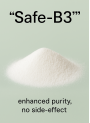
Safe-B3™ (Vitamin B3, Niacinamide)
Cosmetics
Salicylic Acid (BHA, Pharma Grade)
Cosmetics
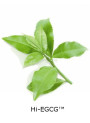
Hi-EGCG™ (Green Tea Extract)
Cosmetics