Cleansing Oil Formulation: Mixing Steps and Ingredient Compatibility
Question
I need advice and mixing steps for a cleansing oil formulation. I'm unsure if it can be mixed. The ingredients are as follows: Oilsify 30 (Sorbeth-30 Tetraoleate) 20% (is this percentage too high?), Fractionated Coconut Oil 20%, Grape Seed Oil 15%, Safflower Seed Oil 15%, LipidSoft Lite (Isononyl Isononanoate) 10%, Glycerin 9.5%, Propylene Glycol 5% (should this be included?), Mild Preserved Eco (Ethylhexylglycerin, Caprylyl Glycol) 1%, White Tea Extract 4% (for scent), Tocopherol Acetate 0.5%. Thank you very much.
Answer
Advice and Mixing Steps for Cleansing Oil
Regarding the Cleansing Oil formula you inquired about, it is possible to mix it. The main ingredients, which are oils and emollients, are compatible. However, there are some water-soluble ingredients in your proposed formula which might cause the formula to be unstable or cloudy over time.
Let's look at each ingredient in your formula:
- Oilsify 30 (Sorbeth-30 Tetraoleate): This is the primary emulsifier specifically designed for Cleansing Oil. It effectively helps oil capture makeup and rinse off easily with water. The recommended usage rate is 8-15%. Using 20% is within the allowed range (5-30%) but is on the higher side. This might result in a lighter texture or make it rinse off particularly easily.
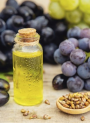
- Fractionated Coconut Oil, Grape Seed Oil, Safflower Seed Oil, LipidSoft Lite: These are the oil and emollient base of the Cleansing Oil, helping to dissolve makeup and nourish the skin. These proportions are suitable for an oil base.
- Glycerin, Propylene Glycol: These are primarily water-soluble humectants and solvents. Most Cleansing Oil formulas are anhydrous (contain no water) or have very little water. Adding significant amounts of water-soluble ingredients like Glycerin (9.5%) and Propylene Glycol (5%) might cause the formula to separate or become cloudy, especially since the total oil/emollient phase is around 60% (20+15+15+10). High levels of humectants in the oil phase before adding water could be problematic. Propylene Glycol can help dissolve certain substances, but in a primarily oil-based Cleansing Oil formula, it might not be necessary. If included, it should be in a very small amount, and the formula's compatibility must be thoroughly tested.
- Mild Preserved Eco: This is a preservative blend (Preservative-Free) containing Ethylhexylglycerin and 1,3 Propanediol. It helps inhibit microbial growth. Even though the formula is primarily oil, contact with water during use can lead to contamination, so a preservative helps extend the product's shelf life. Mild Preserved Eco can be dispersed in oil, and 1% is within the recommended usage rate.
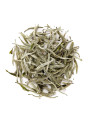
- White Tea Extract: According to the product information, this is a "Smell extract" focused on natural scent for cosmetic formulas, without research results on skin efficacy. It is water-soluble and should be mixed in the water phase. Including it in a primarily oil-based Cleansing Oil formula might cause instability and separation. If you want to add fragrance, consider using oil-soluble Fragrance Oil or Essential Oil instead.
- Tocopherol Acetate (Vitamin E): This is an antioxidant that helps prevent the oils in the formula from becoming rancid. Using 0.5% is within the recommended range for skin benefits (0.1-0.5%) and can also provide antioxidant protection for the oils. If the primary goal is only to prevent oil rancidity, a lower amount (0.01%) can be used. Using 0.5% might leave a slightly sticky feeling on the skin.
Recommendations for Your Formula:
- Consider Water-Soluble Ingredients: Glycerin, Propylene Glycol, and White Tea Extract are primarily water-soluble. Including them in a primarily oil-based Cleansing Oil formula might cause instability. It is recommended to significantly reduce the amount of Glycerin and Propylene Glycol or remove them entirely for better stability in an oil formula. Replace White Tea Extract with an oil-soluble Fragrance Oil or Essential Oil instead.
- Oilsify 30 Percentage: 20% is usable, but if you prefer a moderately easy-to-rinse texture, you might try reducing it to 10-15%.
- Preservative: Mild Preserved Eco at 1% is suitable for helping to prevent contamination when the formula comes into contact with water.
- Vitamin E: 0.5% is suitable for providing antioxidant benefits to the skin and preventing oil rancidity.
Mixing Steps (Adjusted based on recommendations):
If you adjust the formula by reducing or cutting out the water-soluble ingredients and using Fragrance Oil instead of White Tea Extract, the mixing process will be much simpler.
- Combine all oil-soluble ingredients (Fractionated Coconut Oil, Grape Seed Oil, Safflower Seed Oil, LipidSoft Lite) in a container.
- Add Oilsify 30 and stir or blend until well combined.
- Add Tocopherol Acetate and Mild Preserved Eco. Stir or blend until well combined.
- If using Fragrance Oil, add it at this step and mix well.
- Check the formula for clarity and stability (no separation). Test the usage (massage onto dry skin, add a little water and massage to emulsify into a milky texture, then rinse off with clean water).
If you still wish to keep Glycerin and Propylene Glycol in the original formula, you will need to thoroughly test the formula's compatibility and stability, as there is a high chance of separation or cloudiness.
Related Products Mentioned
Vitamin E (Tocopheryl Acetate)
Propylene Glycol (USP)
Glycerin (USP/Food Grade)
Fractionated Coconut Oil
Mild Preserved Eco™ (Preservative-Free)
Oilsify 30 (Sorbeth-30 Tetraoleate)