Clear anhydrous alcohol-based water-resistant sunscreen formula

Asked by: K.Jakubowski On: June 09, 2026 Product Type: Cosmetics Answered

Question

Hello, I want to create a clear, water-free, very light/dry, very water-resistant, sweat-resistant, long-lasting sunscreen.

This probably means that it will have to be alcohol-based (like "Nivea SUN - UV Dry Protect transparent"). However, I don't know how to best dissolve this oil soluble "SPF Protect Ultra III" in alcohol.

  1. Can you please provide a complete recipe (amounts and steps) for the described sunscreen with 25% "SPF Protect Ultra III"? I want it to be super light/dry + super water-resistant and of course stable.

  2. Can you please provide another recipe with the same requirements as above, but also including:

Thanks in advance! 😀

Answer

Yes, but the key is not to dissolve SPF Protect Ultra™ III (UVA+UVB) directly into alcohol first. It is oil-soluble, so make a clear oil/ester/volatile-carrier concentrate first, then add that concentrate into an alcohol phase containing the alcohol-soluble film former.

These are prototype starting formulas for clarity, dry feel and water resistance. Final SPF/UVA/water-resistance claims must be tested on the finished formula, because the SPF estimate for 25% SPF Protect Ultra™ III was measured in an oil-in-water emulsion system, not in this alcohol-based spray.

Formula 1: Clear Dry Water-Resistant Sunscreen Spray

Ingredient %
SPF Protect Ultra™ III (UVA+UVB) 25.00
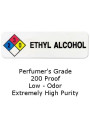
Ethyl Alcohol (99.9% , 200 Proof, Research/Perfumer Grade) 53.95
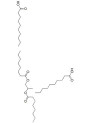
Propylene glycol dicaprylate/dicaprate 8.00
Isododecane (Ultra Lite) 8.00
WaterGuard™ Spray 3.00
Silicone Film (Soft Film, Low Viscosity, Isododecane Base) 2.00
Protec™ OX 0.05
Total 100.00

Formula 2: Same Base + Vitamins

Ingredient %
SPF Protect Ultra™ III (UVA+UVB) 25.00
Ethyl Alcohol (99.9% , 200 Proof, Research/Perfumer Grade) 50.85
Propylene glycol dicaprylate/dicaprate 8.00
Isododecane (Ultra Lite) 8.00
WaterGuard™ Spray 3.00
Silicone Film (Soft Film, Low Viscosity, Isododecane Base) 2.00
Vitamin A Palmitate (retinyl palmitate, 1MIU/g) 1.00
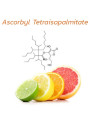
Perfect-C™ (Ascorbyl Tetraisopalmitate, VC-IP/Tetra C) 1.00
Vitamin E (dl-alpha tocopherol) 1.00
Protec™ OX 0.05
Protec™ UV 0.10
Total 100.00

Why this structure works

  • Propylene glycol dicaprylate/dicaprate helps keep the organic UV filters dissolved while maintaining a light sunscreen feel.
  • Isododecane improves quick-dry, very light, non-greasy and water-repellent sensory.
  • WaterGuard™ Spray should be dissolved in the alcohol phase; it is the main alcohol-soluble film former for water/sweat resistance.
  • Silicone Film is added at a low starting level to improve long-wear and waterproof film strength. Too much can increase tackiness or compatibility risk in a high-alcohol spray, so adjust only after testing.
  • Formula 2 includes Protec™ OX and Protec™ UV because Vitamin A Palmitate and Perfect-C™ need extra oxidation/light protection. Use opaque or UV-protective packaging for the retinyl palmitate version.

Manufacturing Steps

  1. Oil/UV concentrate: Combine SPF Protect Ultra™ III, Propylene glycol dicaprylate/dicaprate and Protec™ OX. Heat only as needed to about 70–80°C with mixing until Protec™ OX is dissolved and the phase is completely clear, then stop heating.
  2. Cool below 45–50°C. Add Isododecane and Silicone Film, then mix until uniform and clear. Keep the vessel covered to reduce volatile loss.
  3. Alcohol phase: In a separate closed vessel, add Ethyl Alcohol. Slowly sprinkle in WaterGuard™ Spray under strong mixing until fully dissolved and clear.
  4. Slowly add the clear oil/UV concentrate into the alcohol/WaterGuard™ phase while mixing. Continue until fully uniform and clear.
  5. De-aerate. Filter only if needed through a compatible coarse polishing filter that does not remove UV filters or film former.
  6. For Formula 2, add Vitamin A Palmitate, Perfect-C™, Vitamin E and Protec™ UV only after the heated oil phase is below 45–50°C. Minimize heat exposure after adding the vitamins.
  7. Fill Formula 2 into opaque or UV-protective packaging with minimal headspace.

Important Checks Before Commercial Use

  • Check clarity after 24 hours, 7 days and 1 month at room temperature.
  • Check low-temperature clarity at 4–10°C, because high organic-filter systems can haze or crystallize.
  • Check 45°C stability, freeze/thaw stability, spray pattern, actuator compatibility and package compatibility.
  • Test final SPF, UVA protection/critical wavelength, photostability and water resistance before making SPF, broad-spectrum, sweat-resistant or water-resistant claims.
  • Confirm the UV filter regulatory limits in the target market, especially because SPF Protect Ultra™ III contains multiple organic UV filters.
  • The formula is high in ethanol, so use closed vessels, good ventilation, grounding and explosion-proof mixing/filling equipment. Keep away from heat and flame.

Because the formula is water-free, no preservative, pH adjustment, EDTA or aqueous neutralizer is needed unless the system is redesigned to contain water.

Relevant References

Sources supporting the key technical claims in this answer

Sunscreens: An overview and update
Sambandan DR, Ratner D Journal of the American Academy of Dermatology 2011

Supports general sunscreen formulation/testing context and need for substantiated protection claims.

Sambandan DR, Ratner D. Sunscreens: An overview and update. Journal of the American Academy of Dermatology. 2011;64(4):748-758. doi:10.1016/j.jaad.2010.01.005.
DOI: 10.1016/j.jaad.2010.01.005
Relevance of UV filter/sunscreen product photostability to human safety
Nash JF, Tanner PR Photodermatology, Photoimmunology & Photomedicine 2014

Supports the need to evaluate photostability of the finished sunscreen product.

Nash JF, Tanner PR. Relevance of UV filter/sunscreen product photostability to human safety. Photodermatology, Photoimmunology & Photomedicine. 2014;30(2-3):88-95. doi:10.1111/phpp.12113.

DOI: 10.1111/phpp.12113
Evaluation of the photostability of different UV filter combinations in a sunscreen
Gaspar LR, Maia Campos PMBG International Journal of Pharmaceutics 2006

Supports that UV filter combinations and final formula context affect photostability.

Gaspar LR, Maia Campos PMBG. Evaluation of the photostability of different UV filter combinations in a sunscreen. International Journal of Pharmaceutics. 2006;307(2):123-128. doi:10.1016/j.ijpharm.2005.08.029.

DOI: 10.1016/j.ijpharm.2005.08.029