Color Change and Stability of Retinal Cream with Repair Activator™
Question
I am developing a cream formulation containing Retinal (Retinaldehyde) for anti-aging.
The initial formula includes:
- Retinal (Retinaldehyde)
- Repair Activator™ (Bifida Ferment Lysate)
- Protec™ OX
- Protec™ UV
- Licorice Extract
- Safe-B3™ (Niacinamide)
My problem is that the cream turns brown very quickly (within 2 days) when stored at room temperature, even in a dark place. However, the formula remains stable with no color change when stored in the refrigerator.
I conducted an experiment by removing the Repair Activator™ from the formula (while keeping Retinal, Protec™ OX, and Protec™ UV). This modified formula showed much better stability at room temperature, with color change occurring only after about 1 month.
Based on these experimental results, it seems that Repair Activator™ is causing or accelerating the rapid browning issue at room temperature, even though Retinal itself is known to be unstable. The staff initially suggested adding Protec™ SQ at 3% if the yellow color is acceptable, or removing Repair Activator™ if it affects Retinal.
Given my findings, how should I proceed to address the rapid browning and instability at room temperature? Should I still try adding Protec™ SQ, or is removing Repair Activator™ the necessary step?
Answer
Addressing Color Change in Your Retinal and Repair Activator™ Formula
Based on your detailed observations and the product information, it appears that the color change in your cream formulation, particularly the acceleration to brown at room temperature, is indeed linked to the presence of Repair Activator™, even though Retinal is also known to be sensitive.
Here's a breakdown and potential solutions:
Understanding the Ingredients
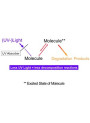
- Retinal (Retinaldehyde): This is a potent form of Vitamin A known for anti-aging benefits. However, its description confirms it is sensitive to light and air and deteriorates quickly when exposed to UV light. It is recommended to use protective ingredients like Protec™ OX, Protec™ UV, and Protec™ SQ with Retinal formulations.
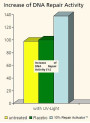
- Repair Activator™ (Bifida Ferment Lysate): The description for Repair Activator™ BG (which seems to be the type you used, based on the product ID) states that it should be stored in the refrigerator (6-8°C) for long-term storage and should avoid heat. Your observation that the formula is stable in the refrigerator but not at room temperature when Repair Activator™ is included strongly suggests that this ingredient, or its interaction with other ingredients at room temperature, is causing or accelerating the instability and color change.
- Protec™ OX: This is an antioxidant designed to protect ingredients from deterioration due to oxidation (free radicals).
- Protec™ UV: This is a UV absorber designed to protect ingredients from deterioration due to UV light.
- Protec™ SQ: This acts as a singlet state quencher, helping to reduce oxidation induced by UV light and specifically mentioned as helping to extend the life of Retinal when exposed to UV light. The description notes it is a yellow oil and can cause the formula to turn yellow.
- Licorice Extract: The description notes this is a brown liquid, which likely contributes to the initial light yellow color of your cream.
- Safe-B3™ (Niacinamide): The description mentions it can be used with Retinal to help reduce irritation.
Analysis of Your Results
You've clearly demonstrated through your experiments that the formula without Repair Activator™ is more stable at room temperature than the one with it. This indicates that while Retinal is inherently unstable, Repair Activator™ is significantly contributing to the rapid browning you're seeing at room temperature.
Adding Protec™ OX and Protec™ UV helped to some extent in the formula without Repair Activator™ (slower color change over 1 month), but they were not sufficient to prevent rapid color change (within 2 days) when Repair Activator™ was present at room temperature.
Recommended Solutions
Based on your findings and the product information, here are the most viable approaches:
Remove Repair Activator™ from the formula: This is the most direct solution suggested by your experiments and supported by the storage recommendations for Repair Activator™. If the formula is stable at room temperature without it, then removing it eliminates the source of the accelerated degradation. You could explore other anti-aging ingredients if desired.
Try adding Protec™ SQ: The staff recommended adding Protec™ SQ at 3%. The description confirms it helps protect Retinal from UV-induced oxidation. While your test was in a dark place, oxidation can still occur. Adding Protec™ SQ might offer additional protection against oxidative degradation pathways, even those potentially triggered by the interaction with Repair Activator™ at room temperature. Be aware that Protec™ SQ is yellow and will likely make your cream more yellow, as noted by the staff and the product description. This might be worth trying if you want to keep Repair Activator™, but given your results, removing Repair Activator™ is likely more effective for room temperature stability.
Additional Considerations
- Packaging: Always store Retinal-containing products in opaque packaging to protect them from light.
- Storage Temperature: Storing the product in the refrigerator significantly improves stability, as you observed. If you choose to keep Repair Activator™ in the formula, refrigeration is highly recommended for extending shelf life and preventing color change.
In summary, your tests strongly suggest Repair Activator™ is the primary factor accelerating the color change at room temperature. Removing it is the most likely way to achieve better room temperature stability. If you wish to attempt to stabilize the current formula, adding Protec™ SQ is the next step recommended by the staff, but be prepared for a more yellow color and understand it may not fully prevent the issue if the interaction with Repair Activator™ at room temperature is the main problem.