Combining Anti-Wrinkle Ingredients and Stability Considerations
Question
I have the following anti-wrinkle ingredients divided into three groups:
- Copper Peptide, Adenosine Liposome
- DMAE, B5, Wrinkle Fill
- Argireline, Pal-GHK (Matrixyl 3000)
The remaining ingredients are water, preservative, and moisturizer. I am not including EDTA to avoid affecting Copper Peptide.
- Could you please provide your opinion on which group, Group 2 or Group 3, is more suitable for use in an anti-wrinkle formula targeting crow's feet, smile lines, and neck wrinkles? Which group would show better results compared to using only Group 1?
- If I use all three groups combined, is there any overlap between the ingredients? Is it unnecessary to use any particular ingredient when combining all three groups?
- If all ingredients are used together, should I add anything else to enhance stability?
Answer
Combining Anti-Wrinkle Ingredients
You're asking about the effectiveness and compatibility of combining different anti-wrinkle ingredients from the three groups you listed for treating crow's feet, smile lines, and neck wrinkles.
Here's an assessment of the groups and their potential synergy:
1. Effectiveness for Specific Wrinkles
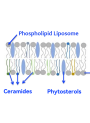
- Group 1 (Copper Peptide, Adenosine Liposome): Copper Peptide (GHK-Cu) is known for its skin regeneration and repair properties, helping to reduce the appearance of wrinkles and improve skin texture. Adenosine supports skin cell function and repair. Ceracare™ Liposome-3 enhances the skin barrier and provides deep moisturization, contributing to overall skin health and resilience against aging. This group offers broad anti-aging benefits by improving skin structure and health.
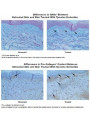
- Group 2 (B5, Wrinkle Fill): D-Panthenol (Pro-Vitamin B5) is excellent for skin hydration, soothing, and supporting the healing process. Wrinkle-Fill™ (Acetyl-Tyrosine) has been shown to improve skin firmness and increase collagen and GAGs, which helps reduce wrinkles. While beneficial, this group is less specifically targeted at expression lines compared to Group 3.
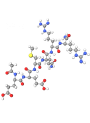
- Group 3 (Argireline, Matrixyl 3000): Argireline (Acetyl Hexapeptide-8) works by relaxing the muscle contractions that cause dynamic wrinkles like crow's feet and smile lines. Matrixyl 3000 (Pal-GHK, Pal-GQPR) is a peptide blend that stimulates collagen and other skin matrix components, addressing wrinkles by improving skin structure and firmness. This group offers a powerful combination for targeting both expression lines and structural wrinkles.
For crow's feet and smile lines, which are often dynamic (caused by muscle movement), the muscle-relaxing effect of Argireline in Group 3 is particularly beneficial. Matrixyl 3000 and Copper Peptide (Group 1) are excellent for improving the underlying skin structure, which is important for all wrinkle types, including deeper lines and neck wrinkles.
2. Combining All Groups: Overlap and Necessity
Combining ingredients from all three groups (using Copper Peptide, Adenosine Liposome/Pure-Adenosine™, D-Panthenol, Wrinkle-Fill™, Argireline, and Matrixyl 3000) creates a comprehensive approach to wrinkle treatment.
- Overlap: There is some overlap in how Matrixyl 3000, Copper Peptide, and Wrinkle-Fill™ work by stimulating collagen and skin matrix components. However, they may act through different pathways, potentially offering synergistic benefits when combined.
- Necessity: While not strictly "necessary" to use every ingredient for some improvement, combining them can provide a multi-targeted strategy:
- Argireline targets expression lines specifically.
- Matrixyl 3000, Copper Peptide, and Wrinkle-Fill™ improve skin structure and firmness.
- Adenosine and Ceramide Liposome support overall skin cell function, repair, and barrier health.
- D-Panthenol provides essential hydration and soothing.
Using a combination can address different aspects of wrinkle formation and skin aging simultaneously. No single ingredient makes the others entirely unnecessary if you aim for a comprehensive formula, though the specific benefits of combining multiple collagen boosters might vary.
3. Stability Considerations
Combining multiple active ingredients, especially peptides and other sensitive compounds, requires careful formulation to ensure stability and efficacy.
- pH Levels: The ingredients you listed have different optimal pH ranges for stability. For example, Copper Peptide prefers a pH of 4.5-7.4, while Argireline and Pure-Adenosine™ prefer 3.5-6.5, and Wrinkle-Fill™ is acidic (pH 2-3 at 2.5%). Creating a single formula where all ingredients are optimally stable can be challenging. The final formulation pH will need to be carefully chosen, likely requiring a compromise that provides reasonable stability for all components.
- Compatibility: It is correct to avoid ingredients like EDTA, as it can interfere with Copper Peptide. Ensure all chosen ingredients and the base formulation (water, preservatives, moisturizers, etc.) are compatible.
- Preservation: A suitable broad-spectrum preservative system is essential to prevent microbial growth, especially in water-based formulas with multiple ingredients. The preservative must be effective at the final pH of the product.
- Mixing and Storage: Many peptides should be added in the final phase of formulation at temperatures below 40°C. Proper storage conditions (like refrigeration for some ingredients) are also crucial for maintaining stability over time.
In summary, while combining these ingredients offers a powerful multi-pronged attack on wrinkles, careful attention must be paid to formulation chemistry, particularly pH and ingredient compatibility, to ensure the final product is stable and effective.
Related Products Mentioned
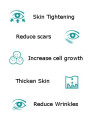
Pal-GHK, Pal-GQPR (eq Matrixyl 3000)
Wrinkle-Fill™ (Acetyl-Tyrosine)
Pure-Adenosine™