Combining Copper Peptide (GHK-Cu) and Activated Resorcinol S™ with Chelating Agents
Question
I want to use the following two ingredients together in a formulation:
- Copper Peptide (GHK-Cu)
- Activated Resorcinol S™
However, Activated Resorcinol S™ requires the addition of Disodium EDTA for stability, but Disodium EDTA is incompatible with Copper Peptide (GHK-Cu) as it binds the copper ions. How can I resolve this issue?
Answer
Combining Copper Peptide and Activated Resorcinol S™
You want to use Copper Peptide (GHK-Cu) and Activated Resorcinol S™ together, but Disodium EDTA, which is recommended for the stability of Activated Resorcinol S™, is incompatible with Copper Peptide as it binds the copper ions and reduces its effectiveness.
To overcome this incompatibility, you need to replace Disodium EDTA with an alternative chelating agent that is compatible with Copper Peptide while still providing stability for Activated Resorcinol S™.
Potential alternative chelating agents include:
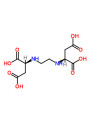
- Trisodium Ethylenediamine Disuccinate (EDDS): This is an effective and biodegradable chelating agent.
- Sodium Phytate: A natural chelating agent with antioxidant properties.
You can try using either Trisodium Ethylenediamine Disuccinate or Sodium Phytate instead of Disodium EDTA in your formulation containing Activated Resorcinol S™. It is important to test the stability and efficacy of your final product to ensure both active ingredients perform as expected.
Ensure your final formulation has a pH between 4.5 and 7, as this range is suitable for both Copper Peptide and Activated Resorcinol S™.
Related Products Mentioned
Disodium EDTA