Combining Oil-Soluble Vitamin E and Water-Soluble Vitamin C in Formulations
Question
How can oil-soluble Vitamin E and water-soluble Vitamin C be combined in a cosmetic formulation? Is direct mixing possible, or is a specific type of base (like a cream, lotion, or serum) required? What are suitable forms of each vitamin and is a preservative needed?
Answer
Combining Vitamin E and Vitamin C in Formulations
Regarding your question about mixing Vitamin E and Vitamin C directly, the previous reply is correct. Vitamin E is typically oil-soluble, while many effective forms of Vitamin C are water-soluble. They cannot be mixed purely together in a stable way without a proper formulation base.
To combine Vitamin E and Vitamin C effectively, you need to create an emulsion, such as a cream, lotion, or serum, that contains both an oil phase and a water phase. This allows the oil-soluble Vitamin E to be dispersed in the oil phase and the water-soluble Vitamin C to be dissolved in the water phase, with the emulsion holding them together.
Suitable Types of Vitamin E and Vitamin C
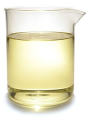
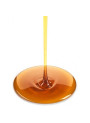
For Vitamin E, you would typically use an oil-soluble form like Vitamin E (Tocopheryl Acetate) or Vitamin E (dl-alpha tocopherol). These provide antioxidant benefits and help stabilize oils in the formula.
For Vitamin C, you have several options, depending on the desired potency and ease of formulation:
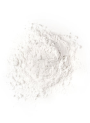
- Vitamin C (L-ascorbic acid): This is the most potent form but is highly unstable in water and requires a low pH (typically 2.0-4.0) for stability, which can be irritating to the skin. It dissolves in water.
- Stable Vitamin C Derivatives: These are easier to formulate and more stable. Examples include:
- Ethyl Ascorbic Acid: Water-soluble, highly stable, works in a pH range of 3.5-6.0.
- Magnesium Ascorbyl Phosphate (MAP) or Sodium Ascorbyl Phosphate (SAP): Water-soluble, highly stable, work in an alkaline pH range (typically 7-9).
Formulation and Ratio
The specific ratio depends on the desired concentration and the type of Vitamin C used. For example, a common effective range for Vitamin E is 0.1-1%. For L-ascorbic acid, concentrations often range from 10-15% for significant effects, while stable derivatives might be used at 1-10%.
A typical formulation would involve creating an oil phase (containing Vitamin E and other oils/emollients) and a water phase (containing Vitamin C and other water-soluble ingredients), then emulsifying them together using an emulsifier.
Preservative
Yes, any cosmetic formulation that contains water must include a preservative to prevent the growth of bacteria, mold, and yeast. There are many types of preservatives available, such as Mild Preserved Eco™.
In summary, you cannot simply mix Vitamin E and Vitamin C powders or liquids directly. They need to be properly formulated into an emulsion base like a cream or serum, using appropriate types of each vitamin and including a preservative if the formula contains water.
Related Products Mentioned
Vitamin E (Tocopheryl Acetate)
Vitamin C (L-ascorbic acid) (Ultra-Fine)
Vitamin E (dl-alpha tocopherol)
Mild Preserved Eco™ (Preservative-Free)