Comparing Cosmetic Ingredients: Isododecane, Cyclomethicone, Isohexadecane, and Isopropyl Myristate Properties
Question
I have two questions regarding cosmetic ingredients:
- Compare Isododecane and Cyclomethicone. Why would one choose one over the other?
- Compare Isohexadecane and Isopropyl Myristate:
- Which has better emollient properties?
- Which is a broader penetration enhancer?
Thank you.
Answer
Comparing Cosmetic Ingredients: Isododecane, Cyclomethicone, Isohexadecane, and Isopropyl Myristate
Here is a comparison of the properties of these cosmetic ingredients:
Isododecane vs. Cyclomethicone
Both Isododecane and Cyclomethicone are lightweight, volatile ingredients commonly used in cosmetics to provide a non-greasy feel and quick drying time.
- Isododecane (e.g., Isododecane (Germany), Isododecane (Ultra Lite)) is a hydrocarbon that evaporates quickly from the skin, leaving a very light, non-sticky feel. It is often used as a solvent, carrier, or disperser, particularly in oil-free formulations and makeup products like mascara, where quick drying and water resistance are desired. It does not clog pores.
- Cyclomethicone (e.g., Cyclopentasiloxane (Low-Odor Cyclomethicone)) is a lightweight silicone that also evaporates quickly. It provides a silky, smooth feel on the skin and hair and acts as a conditioner. The product description notes that Cyclomethicone is suitable for helping to bring active substances into the skin. It is used to improve the texture of creams and lotions, making them feel softer and lighter, although the smooth feel is temporary due to its volatility.
The choice between them depends on the desired feel and function. Isododecane is excellent as a non-greasy solvent and carrier in volatile systems, while Cyclomethicone is preferred for its characteristic silky feel and conditioning properties, as well as its ability to help carry actives.
Isohexadecane vs. Isopropyl Myristate
These two ingredients are compared for their emollient and penetration enhancement properties:
- Emollient Property: Both Isohexadecane (e.g., Isohexadecane) and Isopropyl Myristate (e.g., Isopropyl Myristate (Deodorized)) function as emollients, providing softness and smoothness to the skin.
- Isohexadecane is an ultra-lightweight emollient that does not evaporate at room temperature. It leaves a non-greasy feel and does not clog pores. It is often used as a substitute for oils in lightweight, oil-free formulas and is noted as an ideal substitute for Isopropyl Myristate or Isopropyl Palmitate because it does not clog pores or irritate the skin.
- Isopropyl Myristate is described as a light, highly polarized oil commonly used in cosmetics. While it provides emolliency, using it at high concentrations can potentially clog pores (comedogenic).
Based on product descriptions, Isohexadecane is highlighted for its non-comedogenic and non-irritating properties compared to Isopropyl Myristate.
- Penetration Enhancement: Isopropyl Myristate is generally recognized as a more effective penetration enhancer compared to Isohexadecane. As a polarized oil, Isopropyl Myristate can help improve the absorption of other active ingredients into the skin. Isohexadecane is primarily described as a solvent, carrier, or spreader, which helps distribute ingredients but does not typically enhance skin penetration to the same extent as Isopropyl Myristate. It's also worth noting that the description for Cyclomethicone specifically mentions its suitability for helping to bring active substances into the skin.
In summary, while both are emollients, Isohexadecane offers a non-comedogenic, non-irritating, non-evaporating light feel, often preferred over Isopropyl Myristate for sensitive or acne-prone skin. For penetration enhancement, Isopropyl Myristate is generally more effective than Isohexadecane, although Cyclomethicone is also noted for this property in its description.
Updated Review: May 2026
This section was added after reviewing the original answer against current product availability and formulation knowledge at the stated point in time.
Update as of 2026-05-24
The 2019 comparison is still useful for sensory/formulation behavior, but please add these current cautions:
- Isododecane vs. Cyclomethicone/Cyclopentasiloxane: both are lightweight volatile carriers, but they give different feel. Isododecane gives a quick-dry, light, non-greasy hydrocarbon feel and is useful when a silicone-free or low-silicone direction is preferred. Cyclomethicone/Cyclopentasiloxane gives soft, silky volatile-silicone slip, but current formulation should check the target market and product type because D4/D5/D6 cyclic siloxanes are restricted in the EU under REACH, with Regulation (EU) 2024/1328 extending restrictions beyond earlier wash-off rules after transition periods. This does not mean Cyclomethicone is “banned everywhere” or unsafe in every cosmetic use; it means regulatory and environmental requirements must be checked.
- Isohexadecane vs. Isopropyl Myristate: both are emollients, but the selection target is different. Isohexadecane is normally preferred when the goal is a very light, non-greasy, elegant emollient feel, especially for oily, acne-prone, or sensitive-positioned leave-on facial products. Isopropyl Myristate is generally the more established and stronger penetration enhancer, but the actual result depends on the active ingredient, its polarity, concentration, irritation potential, and the whole formula. It also has a higher breakout/comedogenic concern at higher levels or in acne-prone facial leave-on products, but it does not always clog pores in every formula.
- For modern silicone-free or D5-replacement-style development, lightweight hydrocarbons/alkanes such as Isohexadecane or C13-15 Alkane can be considered, but they are not automatic one-to-one replacements for Cyclomethicone; volatility, slip, dry-down, solubility, and film behavior must be tested in the actual formula.
Related Products Mentioned
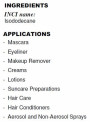
Isododecane (Germany)
Isohexadecane
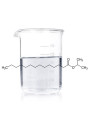
Isopropyl Myristate (Deodorized)
Isododecane (Ultra Lite)
Isododecane Gel (Thixotropic)
Isohexadecane Oil Gel (Thixotropic)
Isopropyl Myristate Gel (Thixotropic)