Comparison of Activated Resorcinol, Ingredient Compatibility, and AHA/BHA Equivalence
Question
Based on my understanding, I have a few questions:
1. Do Activated Resorcinol and Activated Resorcinol S have the same efficacy? I saw in the technical information regarding their function/mechanism that they are not the same.
2. Can products containing Sodium EDTA and Copper Peptide (in separate formulas) be used at the same time, or should they be used at different times?
3. What percentage of AHA is equivalent in efficacy to BHA 2%?
Answer
Activated Resorcinol vs. Activated Resorcinol S
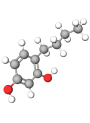
Activated Resorcinol and Activated Resorcinol S do not have the same efficacy. Activated Resorcinol S was developed to be more stable and easier to use, particularly addressing the issue of color change in formulas that occurs with Activated Resorcinol.
According to the technical information, Activated Resorcinol S has approximately 25% of the efficacy of Activated Resorcinol. This means that to achieve a similar whitening effect as 1.0% Activated Resorcinol, you would need to use 4% Activated Resorcinol S.
Using Products with Sodium EDTA and Copper Peptide
It is recommended to use products containing Sodium EDTA and Copper Peptide at different times. Sodium EDTA is a chelating agent that can bind to metal ions like copper. If applied simultaneously, the Sodium EDTA from one product could potentially bind with the copper in the Copper Peptide product on the skin, which may reduce the effectiveness of the Copper Peptide.
BHA 2% vs. AHA Equivalence
A direct percentage comparison between BHA (like Salicylic Acid) and AHA is not possible because they are different types of hydroxy acids with different mechanisms of action and properties. BHA is oil-soluble and can penetrate pores to help dissolve clogged pores and exfoliate within them, making it effective for acne treatment. AHA is water-soluble and primarily exfoliates the surface of the skin by loosening the bonds between skin cells. Therefore, their effects and appropriate usage concentrations differ.
Related Products Mentioned
Salicylic Acid (BHA, Pharma Grade)