Comparison of Sodium Stearoyl Lactylate and Sodium Lauroyl Lactylate for Cream Formulation
Question
Could you please explain the similarities and differences between Sodium Stearoyl Lactylate and Sodium Lauroyl Lactylate? Can they be used interchangeably in a moisturizing cream formulation?
Answer
Comparison of Sodium Stearoyl Lactylate and Sodium Lauroyl Lactylate
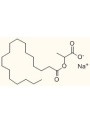
Both Sodium Stearoyl Lactylate and Sodium Lauroyl Lactylate are emulsifiers derived from lactic acid and a fatty acid. However, the key difference lies in the fatty acid used:
- Sodium Stearoyl Lactylate is derived from stearic acid (a longer fatty acid chain).
- Sodium Lauroyl Lactylate is derived from lauric acid (a shorter fatty acid chain).
This difference in fatty acid chain length results in different properties and primary uses:
Sodium Stearoyl Lactylate
- Primary Function: Primarily used as a water-in-oil or oil-in-water emulsifier. It is known for its ability to create stable emulsions and also provides good skin moisturizing and conditioning properties.
- Solubility & Processing: Soluble in oil and requires heating (typically 70-80°C) to incorporate into the oil phase. It is often recommended to be used with thickeners like Cetearyl Alcohol or Cetyl Alcohol for optimal formulation stability.
- Typical Use Rate: 1-3%.
- Applications: Commonly used in leave-on products like creams, lotions, and moisturizers where stable emulsions and skin feel are important.
Sodium Lauroyl Lactylate
- Primary Function: Classified as a gentle anionic surfactant. While it functions as an emulsifier (helping to emulsify oil in water), it also acts as a viscosity builder, foam booster (in rinse-off products), stabilizer, and skin feel enhancer. It is known for being mild to the skin.
- Solubility & Processing: Can be dispersed in water-oil mixtures. It is thermally stable and suitable for cold processing conditions, although it can also be used in heated formulations.
- Typical Use Rate: 0.5-5%.
- Applications: Versatile ingredient used in both rinse-off products (shampoos, body wash, cleansers) and leave-on products (creams, lotions, conditioners, sunscreens).
Can they be used interchangeably in a moisturizing cream?
While both ingredients can function as emulsifiers in a moisturizing cream, they are not directly interchangeable without potentially affecting the final product's characteristics and stability.
- Sodium Stearoyl Lactylate is more specifically designed as a primary emulsifier for creams and lotions, contributing significantly to emulsion stability and skin feel, often requiring heating and co-ingredients for best results.
- Sodium Lauroyl Lactylate is a more multi-functional ingredient that, while emulsifying, also brings surfactant properties (though gentle) and can impact viscosity and feel differently. Its suitability for cold processing is also a distinct difference.
Substituting one for the other would likely require adjusting the formulation, potentially changing other ingredients (like thickeners or co-emulsifiers), and conducting stability testing to ensure the cream remains stable and performs as intended. Therefore, they should not be swapped one-to-one in an existing formula.
Related Products Mentioned