Comparison of Vitamin C (L-Ascorbic Acid) Grades: Effectiveness vs. Dissolution
Question
What is the difference in effectiveness for skin brightening between Vitamin C (L-Ascorbic Acid) Ultra-Fine and Vitamin C (L-Ascorbic Acid) (Standard or Fine grade) when used at the same concentration? Does the particle size affect the final result, or only the ease of formulation (e.g., dissolution speed in different bases like powder or water-based)?
Answer
Comparison of Vitamin C (L-Ascorbic Acid) Grades for Skin Brightening
Regarding the effectiveness for skin brightening between Vitamin C (L-ascorbic acid) Ultra-Fine and Vitamin C (L-ascorbic acid) (Standard or Fine grade) when used at the same concentration, the key point is that the effectiveness is the same once the Vitamin C is completely dissolved in the formula.
The difference lies in the particle size, which affects the ease and speed of dissolution:
- Vitamin C (L-ascorbic acid) Ultra-Fine: Has the smallest particle size (less than 45 microns). This makes it disperse and dissolve very easily and quickly, even in formulas with low water content or when mixing time is limited.
- Vitamin C (L-ascorbic acid) (Fine/Standard): Have larger particle sizes (Fine is 200-300 microns, Standard is larger). They require more time, effort, or potentially gentle heat (50-70°C for 1-3 minutes) to ensure complete dissolution compared to the Ultra-Fine grade.
In summary:
If your formulation and mixing process allow for complete dissolution of the Standard or Fine grade Vitamin C, the skin brightening results at the same concentration will be comparable to using the Ultra-Fine grade. In such cases, choosing the more cost-effective option (Standard or Fine) would be suitable.
The Ultra-Fine grade is particularly beneficial for specific formulations where rapid dissolution or dispersion in challenging bases (like anhydrous formulas) is necessary.
Related Products Mentioned
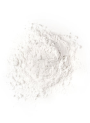
Vitamin C (L-ascorbic acid) (Ultra-Fine)
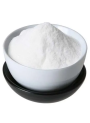
Vitamin C (L-ascorbic acid) (Fine)