Comparison: Phospholipid (Liposome) vs. Nano Gold (Nanocarrier) for Skin Penetration
Question
Regarding skin penetration enhancers, I would like to inquire about the difference between Phospholipid and Nano Gold. Which one helps with penetration better?
- Phospholipid has characteristics that form Liposomes, which should absorb well into the skin.
- Nano Gold has interesting information mentioned on the website, but the price is quite high. I might choose it if it penetrates better.
Also, the information states that the Nano Colloidal Gold sold has a size range of 1-50nm (nanometers). Does this mean that the size of each active ingredient carried by it will also become 1-50nm?
Answer
Comparison: Phospholipid (Liposome) vs. Nano Gold (Nanocarrier) for Skin Penetration
You're asking about the difference in skin penetration effectiveness between Phospholipid (Hydrogenated Lecithin) and Nano Gold (Colloidal Gold), and also clarifying the size aspect of Nano Gold.
Both Phospholipid (forming Liposomes) and Nano Gold are used as delivery systems to enhance the penetration of active ingredients into the skin, but they work through different mechanisms.
Here's a comparison and clarification:
Phospholipid (Hydrogenated Lecithin) - Forming Liposomes
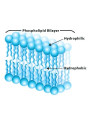
- Phospholipids are key components of cell membranes. When used in formulations, they can self-assemble into spherical structures called Liposomes.
- Liposomes have a lipid bilayer structure that can encapsulate both water-soluble ingredients (in the core) and oil-soluble ingredients (within the lipid bilayer).
- They enhance skin penetration by interacting with the skin's lipid barrier. Liposomes can potentially fuse with skin cell membranes or be absorbed, delivering their encapsulated contents into or through the skin.
- This is a well-established and versatile delivery system.
Nano Gold (Colloidal Gold) - Nanocarrier
- Nano Gold refers to tiny gold particles, typically in the nanometer range (as you mentioned, 1-50nm for the product you referenced).
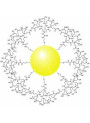
- These nano-sized gold particles can act as carriers, with active ingredients attached to their surface or associated with them.
- The small size of the gold particle carrier is believed to help facilitate the penetration of the associated active ingredients through the stratum corneum (the outermost layer of the skin).
Comparison
- Both aim to improve delivery, but via different routes. Liposomes interact with the skin's lipid structure, while Nano Gold utilizes the small size of the carrier particle.
- The effectiveness of either system can depend heavily on the specific active ingredient being delivered, the overall formulation, and the desired depth of penetration. It's not always a case of one being universally "better" than the other; they may be more suitable for different types of ingredients or applications.
- Liposomes are generally versatile for encapsulating a wide range of ingredients. Nano Gold's effectiveness as a carrier can depend on how well the active ingredient associates with the gold particle.
Regarding the size question:
- The statement that Nano Colloidal Gold is 1-50nm refers to the size of the gold particle itself which acts as the carrier.
- It does not mean that the substance being carried by the Nano Gold will also shrink to 1-50nm. The active ingredient retains its original molecular size.
- The Nano Gold particle (1-50nm) carries the substance, and it is the small size of this carrier system (the gold particle with the attached/associated substance) that helps facilitate penetration.
In summary, both are effective delivery systems but operate on different principles. Your observation about Phospholipid forming Liposomes is correct regarding its mechanism. Nano Gold uses a nano-sized particle as the carrier. The choice between them might depend on the specific active ingredient you are working with and the desired outcome, in addition to cost considerations.
Related Products Mentioned