Compatibility of Disodium EDTA with different forms of Nano Silver
Question
Regarding the compatibility of ingredients, does Disodium EDTA affect `silver nano` in the same way it affects dissolved substances like `Copper Peptide`? Specifically, will `Disodium EDTA` cause precipitation or affect the stability of `silver nano` in a formulation?
Answer
Compatibility of EDTA and Silver Nano
The interaction between EDTA and "silver nano" depends on the specific form of silver nano being used in the formulation.
There are generally different forms of silver available:
Nano Silver Powder: Products like Nano Silver 20nm Powder (ID 872) are described as insoluble powders that are distributed within a product. Since EDTA primarily chelates dissolved metal ions, it is unlikely to cause precipitation with the insoluble powder form of silver nano.
Ionic Silver Solutions: Products such as Silver (2000ppm, Ionic, Colorless Solution, pH 4-6) (ID 7432) and Silver (2000ppm, Ionic, Colorless Solution, pH 10-12) (ID 9275) contain silver in an ionic form dissolved in water. The product descriptions for these ionic silver solutions explicitly state that all types of salt/electrolyte, including EDTA, should be avoided as they may affect the stability of the ionic silver.
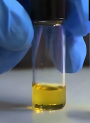
Colloidal Silver Solutions: Products like Nano Silver (2000ppm, Colloidal, Yellow Solution) (ID 8135) are described as colloidal suspensions in water. Similar to ionic solutions, the product description for this colloidal silver solution also advises avoiding all types of salt/electrolyte, including EDTA, as it may affect its stability.
Therefore, while Disodium EDTA (ID 184) is unlikely to cause precipitation with insoluble Nano Silver Powder, it can affect the stability of ionic and colloidal silver solutions according to their product information. It is recommended to avoid using EDTA in formulations containing ionic or colloidal silver solutions to maintain their stability.
Related Products Mentioned
Disodium EDTA