Compatibility of PoreNin™ with Chitox-3000, ActiveProtec™, and Vitamin B6 in Toner
Asked by: Anonymous
On: February 26, 2026
Product Type:
Cosmetics
Answered
Question
I recently learned that PoreNin™ (Natural Extracted Tannic Acid) is sensitive to proteins. I am concerned about the following combinations in a toner formulation:
- Does
Chitox-3000(which is essentially sugar/chitosan) cause precipitation or cloudiness when used withPoreNin™? - Will the inclusion of
ActiveProtec™ UVandActiveProtec™ OXresult in a cloudy product? - Can I combine 3%
PoreNin™(Natural Extracted Tannic Acid) with 2%Vitamin B6to create a clear toner?
Answer
Combining PoreNin™ (Natural Extracted Tannic Acid) with the ingredients you mentioned requires careful consideration of chemical interactions and solubility limits. Here is the breakdown of the compatibility:
1. PoreNin™ + Chitox-3000 (Chitosan Oligosaccharide)
- Compatibility: Likely Incompatible (Cloudiness/Precipitation).
- Rationale: Although you noted that Chitox-3000 is a "sugar" (oligosaccharide), its INCI is Chitosan. Chitosan is a cationic (positively charged) polymer. PoreNin™ (Tannic Acid) is a polyphenol that acts as a powerful anionic (negatively charged) cross-linker.
- Result: When combined in a water-based formula like a toner, these two ingredients typically react to form a "polyelectrolyte complex," which results in immediate cloudiness or the formation of sediment/precipitation. This is similar to how tannic acid reacts with proteins.
2. PoreNin™ + ActiveProtec™ UV & ActiveProtec™ OX
- Compatibility: Risk of Cloudiness and pH Conflict.
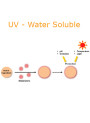
- ActiveProtec™ UV: This is a micellar system. Tannic acid, being a strong polyphenol, can sometimes disrupt micellar structures or interact with the surfactants used to solubilize the UV filters, potentially leading to cloudiness.
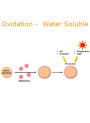
- ActiveProtec™ OX: This product contains stabilizers like Sodium Metabisulfite and chelators. It is an electrolyte. Tannic acid is sensitive to high electrolyte concentrations, which can reduce its solubility.
- pH Conflict: ActiveProtec™ OX requires the formula pH to be above 4.0 to remain stable. However, if you include Vitamin B6, it will naturally pull the pH down to 2.0–3.0, which would cause ActiveProtec™ OX to become unstable.
3. 3% PoreNin™ + 2% Vitamin B6 (Clear Toner?)
- Compatibility: High Risk of Precipitation/Cloudiness.
- Solubility Limit: The maximum recommended usage for PoreNin™ is 3.0%. At this concentration, it is at its limit of solubility in water.
- Electrolyte Effect: Vitamin B6 (Pyridoxine Hydrochloride) is an electrolyte. Adding a high concentration (2%) of an electrolyte to a solution already saturated with Tannic Acid often triggers a "salting-out" effect, causing the Tannic Acid to precipitate or the solution to turn cloudy.
- Recommendation: To maintain a clear toner, it is recommended to reduce the concentration of PoreNin™ (e.g., to 1-1.5%) if using it alongside other high-concentration actives or electrolytes like Vitamin B6.
Summary Table
| Combination | Result | Reason |
|---|---|---|
| PoreNin™ + Chitox-3000 | ❌ Cloudy / Precipitate | Cationic-Anionic interaction (Chitosan + Tannic Acid). |
| PoreNin™ + Vitamin B6 | ⚠️ Risk of Cloudiness | Electrolyte (B6) reduces Tannic Acid solubility at 3%. |
| Vitamin B6 + ActiveProtec™ OX | ❌ Unstable | B6 creates a low pH (2-3), but OX requires pH > 4. |
Suggested Action: If you desire a clear toner, avoid combining PoreNin™ with Chitox-3000. If using Vitamin B6, ensure you test the solubility at lower percentages of PoreNin™ first, and check the final pH to ensure compatibility with your preservative and stabilizer systems.
Related Products Mentioned
Vitamin B6 (Pyridoxine Hydrochloride)
Cosmetics
ActiveProtec™ UV
Cosmetics
ActiveProtec™ OX
Cosmetics
Chitox-3000 (Chitosan Oligosaccharide)
Cosmetics
PoreNin™ (Natural Extracted Tannic Acid)
Cosmetics