Cool Creamy Wax Formulation: Mixing Steps and Ingredient Solubility
Question
I am trying to make a thick, creamy cool wax with the following formula:
- CoolTouch™ 1%
- Freeze Me™ 3%
- Palmitamide MEA 5%
- Ezerrawax™ 5%
- Wax Cream Maker™ 3%
- Oil Blender™ 3%
- Laureth-9 3%
- Shiso Extract 3%
- HydroAlgae™ 2%
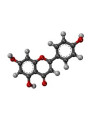
- Pure-Apigenin™ 0.5%
- Phenoxyethanol SA 1.25%
- Water 70.25%
I have some questions:
- Is this formula feasible?
- Could you please explain the mixing steps? Palmitamide MEA seems quite difficult to dissolve. Some formulas I've seen don't include Olive Oil or other solvents like Butylene Glycol but still manage to form a cream, which makes me very curious about the various ways this ingredient can be used.
- If I want to use Palmitamide MEA at 5%, how much Butylene Glycol should I add? (The description mentions "Butylene Glycol at a concentration not exceeding 5% using 70 degree heat" which I don't quite understand).
- Is Oil Blender necessary? (I feel the oil phase isn't very diverse).
- How can Pure Apigenin be mixed in?
Answer
Cool Creamy Wax Formulation
1. Is this formula feasible?
Yes, this formula is feasible for creating a thick, creamy wax. It contains a good combination of waxes (Ezerrawax, Wax Cream Maker) and emulsifiers (Wax Cream Maker, Oil Blender, Laureth-9) to build viscosity and create a stable emulsion. The cooling agents (CoolTouch, Freeze Me) and active ingredients (Palmitamide MEA, Ezerrawax, Shiso Extract, HydroAlgae, Pure-Apigenin) are included at effective concentrations.
2. Can you explain the mixing steps? Palmitamide MEA seems difficult to dissolve. Some formulas don't include Olive Oil or other solvents like Butylene Glycol but still form a cream. This makes me wonder about the various ways to use this ingredient.
You are right that Palmitamide MEA can be challenging to dissolve. Its solubility is limited and requires heat and specific solvents like Olive Oil or Butylene Glycol, as noted in its product description. While some formulas might achieve a cream without explicitly adding these solvents for the sole purpose of dissolving Palmitamide MEA, it's likely that other oil phase ingredients or glycols present in those formulas are helping to dissolve it when heated. In your formula, you have an oil/wax phase that will be heated, which is the correct approach.
Here is a suggested mixing procedure, taking into account the solubility requirements:
- Phase A (Water Phase): Combine Water and Shiso Extract. Heat this phase to 70-75°C.
- Phase B (Oil Phase): In a separate container, combine Ezerrawax, Wax Cream Maker, Oil Blender, CoolTouch, Laureth-9, and Palmitamide MEA. To ensure Palmitamide MEA dissolves properly at 5%, it is highly recommended to include a solvent like Butylene Glycol. Add Butylene Glycol to this phase (a concentration of around 5% in the total formula is often effective for Palmitamide MEA dissolution when heated). Heat this phase to 70-75°C and mix thoroughly until all solid ingredients, especially Palmitamide MEA and the waxes, are completely dissolved and the phase is homogenous. This may require vigorous mixing.
- Emulsification: Slowly add Phase A to Phase B while mixing continuously with high shear (using a homogenizer or high-speed mixer) to create a stable emulsion. Continue mixing at a moderate speed while the emulsion cools down.
- Cooling Phase (below 40°C): Once the emulsion has cooled below 40°C, add HydroAlgae and mix until evenly dispersed.
Final Phase (below 60°C, check pH is between 3.5-7.0): Dissolve Pure-Apigenin in a small amount of a suitable solvent (e.g., a portion of the Butylene Glycol if used, or a small amount of another glycol). Add this solution to the cream and mix well. Finally, add Phenoxyethanol SA and mix until the formula is completely homogenous.
Note: If you add 5% Butylene Glycol, you would reduce the water content from 70.25% to 65.25% to maintain a total of 100%.*
3. If I use 5% Palmitamide MEA, how much Butylene Glycol should I add? (Butylene Glycol at a concentration not exceeding 5% using 70 degree heat --> I don't quite understand this).
The product description for Palmitamide MEA states that it can dissolve in Butylene Glycol at a concentration of not more than 5% by heating to 70 degrees. This likely means that when you use Butylene Glycol as a solvent for Palmitamide MEA, the concentration of Palmitamide MEA in the final formula should not exceed 5% when using Butylene Glycol (or Olive Oil, etc.) as the solvent system with heat. It doesn't specify a fixed ratio of Butylene Glycol to Palmitamide MEA for dissolution, but rather indicates that Butylene Glycol is a suitable solvent under heat, and the total Palmitamide MEA in the formula should be within the 0.5-5% usage rate.
To effectively dissolve 5% Palmitamide MEA in your formula, incorporating it into the heated oil phase which contains other lipids and potentially adding around 5% Butylene Glycol to this phase before heating to 70-75°C is a practical approach. The Butylene Glycol acts as a co-solvent to help the Palmitamide MEA integrate into the lipid phase.
4. Is Oil Blender necessary? (I suspect the oil phase isn't very diverse).
While your oil phase isn't extremely complex, Oil Blender is a versatile ingredient designed to help blend various oils and waxes smoothly. In a formula with multiple lipid components like Ezerrawax, Wax Cream Maker, and potentially dissolved Palmitamide MEA, Oil Blender at 3% can contribute to a more homogenous and stable oil phase, which in turn helps create a smoother, more stable final cream texture. It's likely beneficial for the overall feel and stability of your thick creamy wax, even if not strictly essential for basic emulsification (which Wax Cream Maker also provides).
5. How can Pure Apigenin be mixed in?
Pure-Apigenin is insoluble in water but soluble in organic solvents and many glycols. Its product description advises adding it in the last step to a cream or lotion base with a cemented emulsifier, using heat up to 80°C to aid dissolution.
In your formula, after the emulsion has formed and cooled down (but is still warm enough, potentially up to 60°C, before adding the preservative), you should dissolve the Pure-Apigenin in a small amount of a suitable solvent. Butylene Glycol, which is compatible with your formula and helps dissolve Apigenin, is a good choice if you are already including it. Dissolve the Pure-Apigenin powder completely in the Butylene Glycol (or other glycol) by heating gently if necessary (up to 80°C, then let it cool slightly before adding to the main batch if the main batch is below 60C). Add this dissolved Apigenin solution to your cream base during the cooling phase, just before adding the preservative, and mix thoroughly to ensure it is evenly distributed.
Related Products Mentioned
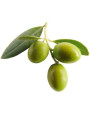
Olive Oil (Extra Virgin)
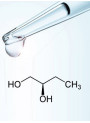
Butylene Glycol

Phenoxyethanol SA (eq. Optiphen Plus)
CoolTouch™ (Menthyl Lactate)

Palmitamide MEA
Pure-Apigenin™
Wax Cream Maker™
Ezerwax™
Laureth-9

Shiso Extract