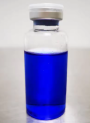
Copper Peptide Color Change and Efficacy with DMAE
Question
In a formula containing Water, Satin Cream Maker, Copper Tripeptide 10x (3%), and DMAE Liquid (5%), the blue color of Copper Peptide disappears after adding DMAE. Does the Copper Peptide still retain its efficacy and intended results?
Answer
Copper Peptide Color Change with DMAE
It is correct that Copper Peptide (GHK-Cu) solutions typically have a blue color, which comes from the copper ion complexed with the peptide. When you add DMAE and the blue color disappears, it indicates that this copper-peptide complex has been disrupted.
This disruption is likely due to an interaction between the Copper Peptide and DMAE or other components in the DMAE solution (such as the tartrate counterion in the case of DMAE Tartrate), or potentially a change in the formula's pH caused by the addition of DMAE.
The efficacy of Copper Peptide relies on the copper ion being properly bound to the GHK peptide. When this complex is broken or altered, as indicated by the loss of the blue color, the Copper Peptide is unlikely to retain its intended biological activity or effectiveness.
Therefore, while the peptide and DMAE are still present in the mixture, the Copper Peptide is likely no longer functioning as expected once the blue color has disappeared. The loss of color serves as a visual cue that the active copper-peptide complex is no longer intact.