Copper Peptide (GHK-Cu) Properties and Formulation Stability
Question
What are the properties and usage guidelines for Copper Peptide (GHK-Cu), particularly regarding its natural blue color, stability in formulations, compatibility with other ingredients like Disodium EDTA, and the correct mixing procedure to ensure its effectiveness for benefits like scar reduction, wrinkle reduction, and hair growth?
Answer
Understanding Copper Peptide (GHK-Cu)
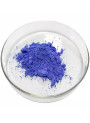
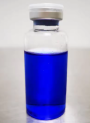
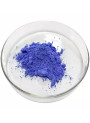
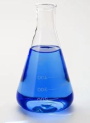
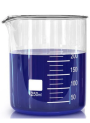
It sounds like you might be noticing the natural color of Copper Peptide (GHK-Cu). Copper Peptide is known for its distinctive blue color, which is completely normal and expected for this ingredient.
If you are encountering issues beyond just the color, such as precipitation or a change in the product's appearance or effectiveness, it might be related to how it's being incorporated into your formulation. Here are a few key points from the product information to keep in mind for stable formulations:
- pH Level: Copper Peptide is most stable in a pH range of 4.5 to 7.4. If your formulation's pH is outside this range, it can affect the stability and effectiveness of the Copper Peptide.
- Avoid Disodium EDTA: Do not include Disodium EDTA in your formula. Disodium EDTA can bind with the copper ions in Copper Peptide, making it less effective.
- Mixing Method: Always add Copper Peptide in the final step of your formulation process, ensuring the temperature is below 40°C.
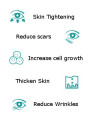
Copper Peptide (GHK-Cu) is a powerful ingredient used for various benefits, including helping with scars, reducing wrinkles, and supporting hair growth. By following the recommended usage guidelines, you can ensure its stability and efficacy in your cosmetic products.
If you can provide more details about the specific issue you are facing or the formulation you are working on, I might be able to offer more targeted advice.
Updated Review: May 2026
This section was added after reviewing the original answer against current product availability and formulation knowledge at the stated point in time.
As of May 17, 2026, our information on Copper Peptide (GHK-Cu) has been updated based on current product specifications.
We now offer multiple forms of Copper Peptide, including the original 1000ppm solution (blue liquid), a concentrated 10,000ppm solution (dark blue liquid), and two powder variants: a 1:1 ratio powder and a newer 2:1 ratio powder (both blue powders).
Please note that specific handling instructions, optimal pH ranges, and usage rates can vary slightly between these different forms:
- Liquid Solutions (1000ppm & 10,000ppm): For maximum stability, maintain a formula pH between 4.5 and 7.4. The recommended usage rate is 0.1% to 3.0%.
- Powder Forms (1:1 & 2:1): These are more sensitive to pH. We recommend formulating within a narrower pH range of 3.5 to 6.5 for best results. The recommended usage rate is lower, at 0.01% to 0.10%.
The core advice remains unchanged: always add Copper Peptide in the final step at a temperature below 40°C, and strictly avoid combining it with Disodium EDTA or other strong chelating agents, as they will deactivate the copper ion and reduce its effectiveness.
Related Products Mentioned