Cosmetic Formula Compatibility and pH Analysis
Question
Please help analyze the ingredients in this formula. I'm not sure if all ingredients can be mixed together in the same formula. I am particularly concerned about Pure-Adenosine™ which has pH limitations. Is this formula compatible? Can Pure-Adenosine™ tolerate the pH in this formula? What adjustments should be made to the formula?
Here is the formula:
- Galactomyces Ferment Filtrate: 70.5%
- AppleCell: 3%
- DMAE: 6%
- Ethyl Ascorbic acid: 5%
- Rosa Hybrid Cell Extract: 2%
- RETINAT™ (Starfish Extract): 2%
- Plankton GP4G™: 2%
- Pure-Adenosine™: 1%
- Ectoine: 1%
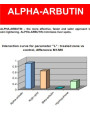
- Alpha Arbutin: 2 %
- Hyaluronic Acid (Small Molecule): 0.5 %
- Laurocapram: 1%
- 1,2-Hexanediol: 1%
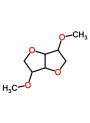
- Dimethyl Isosorbide (DMI): 3%
Total: 100 %
Answer
Formula Analysis and Compatibility
Here is an analysis of your cosmetic formula regarding ingredient compatibility:
pH Compatibility
The primary concern you raised is the pH sensitivity of Pure-Adenosine™. According to the product information, Pure-Adenosine™ is suitable for formulations with a pH range of 3.5-6.5. Several other ingredients in your formula also have specific pH requirements:
- Ethyl Ascorbic Acid: Requires a pH range of 3.5-6.0.
- Alpha Arbutin: Requires a pH range of 3.5-6.5, and should not be mixed in formulations with a pH higher than 8.
- Galactomyces Ferment Filtrate: Has a pH range of 4-7.
- Apple Stem Cell Extract: Has a pH range of 3.5-6.5.
- Rosa Hybrid Cell Extract: Has a pH range of 5.0-6.0.
- RETINAT™ (Starfish Extract): Has a pH range of 5.0-6.0.
- Plankton Artemia Extract: Has a pH range of 4-6.5.
- Double Hyaluron Liquid: Has a pH range of 3-9.
- Ectoine: Can be used in a wide pH range of 1-9.
To ensure the stability and effectiveness of Pure-Adenosine™, Ethyl Ascorbic Acid, and Alpha Arbutin, the final pH of your formula should be carefully adjusted and maintained within the range of 3.5 to 6.0. This range accommodates the requirements of these key sensitive ingredients and is compatible with most other ingredients in your formula.
Ingredient Concentrations and Potential Issues
- DMAE: You are using DMAE at 6%. The product description recommends a usage rate of 1-10%, with 3% recommended, and notes that using above 5% may cause skin irritation and stickiness. Be aware of this potential for irritation, especially if you have sensitive skin. You may consider reducing the concentration if irritation occurs.
- Hyaluronic Acid: You are using 0.5% of Double Hyaluron Liquid (which contains 5% Hyaluronic Acid), resulting in a very low concentration of actual Hyaluronic Acid (0.025%) in the final formula. The recommended usage rate for Double Hyaluron Liquid is 1-20%. At 0.5%, you may not achieve significant moisturizing benefits from the Hyaluronic Acid.
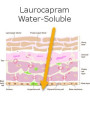
- Laurocapram and Dimethyl Isosorbide (DMI): Your formula includes both Laurocapram (Water Soluble) and Dimethyl Isosorbide (DMI), which are both penetration enhancers. The description for Laurocapram notes that it should be avoided with other carriers except 1,2-Hexanediol, as the overall efficacy may be reduced. While 1,2-Hexanediol is also present and compatible with Laurocapram, the inclusion of DMI might potentially impact the performance of Laurocapram. Monitor the formula's stability and efficacy.
Mixing Instructions
Several ingredients are sensitive to heat and should be added in the final step at lower temperatures:
- Mix below 30°C: Ethyl Ascorbic Acid, Alpha Arbutin.
- Mix below 40°C: Galactomyces Ferment Filtrate, DMAE, Rosa Hybrid Cell Extract, RETINAT™, Plankton Artemia Extract.
- Mix below 60°C: Apple Stem Cell Extract, Laurocapram.
To ensure all heat-sensitive ingredients are protected, it is best to add them during the final cooling phase of your formulation, when the temperature is at or below 30°C.
Conclusion
The ingredients in your formula can likely be combined, provided you carefully adjust and maintain the final pH between 3.5 and 6.0. Be mindful of the potential for irritation from the high DMAE concentration and the low concentration of Hyaluronic Acid. Also, consider the potential interaction between Laurocapram and DMI. It is always recommended to perform stability testing on your final formulation.
Related Products Mentioned
Alpha Arbutin (Switzerland)

Double Hyaluron Liquid
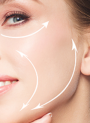
DMAE (SkinTight MD™) Liquid
Rosa Hybrid Cell Extract (HybridCell™)

RETINAT™ (Starfish Extract)

Plankton Artemia Extract
Ectoine (Ectoin, from Bio-fermentation)
Laurocapram (Water Soluble)
Pure-Adenosine™