Cosmetic Formulation Review: Stability, Incompatibility, and Texture Issues
Question
I have developed a cosmetic formulation and would like feedback on its feasibility, stability, texture, and potential issues. I have calculated the ingredient percentages based on weight, and the overall oil phase is approximately 23.25%, and the water phase is approximately 76.75%. My formula includes the following ingredients:
Oil Phase (~23.25%)
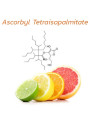
- Ascorbyl Tetraisopalmitate (Perfect-C™)
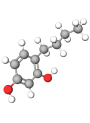
- 4-butyl Resorcinol (Activated Resorcinol)
- Retinyl Palmitate (Vitamin A Palmitate)
- "Transderm oil" (Fermented-Oil™)
Water Phase (~76.75%)
- 3-O-ethyl Ascorbic acid
- Niacinamide (Vitamin B3)
- N-Acetyl-D Glucosamine
- Hyaluronic Acid nano molecule
- Tranexamic Acid
- Disodium EDTA
- "Transderm water" (TransMoist™)
- Water
Could you please review this formula and advise on:
- Whether the ingredients will dissolve properly in their respective phases (oil-soluble in oil, water-soluble in water)?
- Whether the formula is likely to be stable and not separate, given the oil and water percentages?
- Any potential incompatibilities or interactions between the ingredients, especially the combination of Vitamin C derivatives and Niacinamide?
- How to achieve a stable texture (e.g., gel or cream) instead of a separated liquid?
- Whether adding BetaGlucan would help improve the formula's stability or texture?
Answer
Formulation Review and Feedback
Thank you for sharing your detailed formulation and calculations. Based on the weights you provided, the percentages you calculated for each ingredient and the overall oil phase percentage (approximately 23.25%) seem correct.
However, there are a few critical points regarding the formulation that need to be addressed for stability and efficacy:
Solubility and Mixing
- The oil-soluble ingredients in your oil phase (Ascorbyl Tetraisopalmitate, 4-butyl Resorcinol, Retinyl Palmitate) should dissolve in a suitable oil base without needing heat. Retinyl Palmitate might require gentle warming if it has solidified, but 4-butyl Resorcinol should not be heated. The water-soluble ingredients in your water phase (3-O-ethyl Ascorbic acid, Niacinamide, N-Acetyl-D Glucosamine, Hyaluronic Acid nano molecule, Tranexamic Acid, Disodium EDTA) should dissolve in water.
- As suggested in the previous reply, dissolving the Hyaluronic Acid nano molecule separately in a small amount of water first before combining with the rest of the water phase can help ensure it dissolves properly.
Stability and Separation
- Emulsification: Your formula consists of an oil phase (~23%) and a water phase (~77%). To combine these into a stable, non-separating product (like a cream or lotion), you must include a suitable emulsifier. Without an emulsifier, the oil and water phases will separate over time. The ingredients you listed, including what was found for "Transderm oil" (Fermented-Oil™) and "Transderm water" (TransMoist™), do not function as emulsifiers for a system with this much oil.
- Ingredient Incompatibility: It is strongly not recommended to combine Ascorbyl Tetraisopalmitate (Perfect-C™) and Niacinamide (Vitamin B3) in the same formula, as indicated in the product description for Perfect-C™. Similarly, the description for 3-O-ethyl Ascorbic acid also advises against using it with Vitamin B3 (Niacinamide). Your formula includes all three. This combination can lead to instability, reduced efficacy, and potentially increased skin irritation. You should choose one Vitamin C derivative and reconsider the inclusion of Niacinamide alongside it based on compatibility information.
- Active Stability: Some ingredients, like Vitamin A Palmitate and Activated Resorcinol, are sensitive to light and can degrade. It is highly recommended to package the final product in an opaque container. Adding antioxidants (such as ActiveProtec™ OX) can also help improve the long-term stability of ingredients like Vitamin A Palmitate, Activated Resorcinol, and Tranexamic Acid.
Consistency and Packaging
- Without a proper emulsifier and thickener, the mixture will likely be a separated liquid. To achieve a stable gel or cream consistency, you would need to add an appropriate emulsifier to create an emulsion and a thickener to achieve the desired viscosity. The final texture (liquid, light gel, thick cream) would depend on the specific emulsifier and thickener system used and their concentrations.
- If you successfully create a stable emulsion with a gel-like consistency, it might be thick enough for a jar or a pump with a wider opening, as suggested previously. A more liquid serum would be suitable for a pump bottle.
Adding BetaGlucan
- Adding BetaGlucan (a water-soluble ingredient) would increase the water phase percentage. This would not resolve the fundamental issue of needing an emulsifier to prevent separation of the oil and water phases. Any additions should be made after establishing a stable base formulation.
In summary, while your calculations are correct, the current formulation lacks an essential emulsifier and contains incompatible ingredients (Vitamin C derivatives and Niacinamide), which will prevent it from forming a stable, usable product. You would need to revise the formula to include a suitable emulsifier system and address the ingredient incompatibilities to create a stable emulsion. Additionally, consider adding light protection and antioxidants for better stability of sensitive actives.
Related Products Mentioned
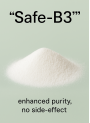
Safe-B3™ (Vitamin B3, Niacinamide)
GlucoBright™ (Acetyl Glucosamine)
Disodium EDTA
Tranexamic Acid (Trans-White™)