Cosmetic Product Shelf Life: Sealed vs. Opened
Question
What is the shelf life of cosmetic products before and after opening? What factors affect the shelf life, especially after opening, and how can the actual shelf life be determined?
Answer
Cosmetic Product Shelf Life: Sealed vs. Opened
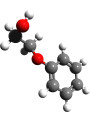
Determining the exact shelf life of a cosmetic product, both before and after opening, is complex and depends on various factors. While using a preservative like Phenoxyethanol is crucial for extending shelf life, there isn't a single fixed duration that applies to all formulations.
Shelf Life When Sealed (Unopened)
When a product is properly formulated with a suitable preservative (such as Phenoxyethanol (Extra Pure), Phenoxyethanol SA, Chlorphenesin / Phenoxyethanol, or Phenoxyethanol P5), sealed tightly, stored away from light, and kept at normal room temperature, its shelf life is significantly extended. The preservative helps prevent the growth of microorganisms. However, the stability of the other ingredients in the formula also plays a role. Over time, even in ideal storage conditions, some ingredients may degrade, affecting the product's quality and efficacy. Without specific stability testing for that particular formula, providing an exact number of months or years is not possible.
Shelf Life After Opening
Once a product is opened, its shelf life is generally reduced compared to its sealed state. This is primarily due to two factors:
- Microbial Contamination: Opening the container exposes the product to the environment, increasing the risk of introducing bacteria, fungi, and other microorganisms from the air or contact with fingers/applicators. Even with a preservative, repeated exposure can challenge its effectiveness over time.
- Ingredient Degradation: Exposure to air, light, and temperature fluctuations after opening can accelerate the oxidation and breakdown of sensitive ingredients, reducing the product's performance and potentially changing its color, odor, or texture.
There is no simple rule, such as solely relying on the expiry date of the fastest-degrading ingredient, to determine the shelf life after opening. The "Period After Opening" (PAO) symbol often seen on cosmetic packaging (an open jar with a number followed by 'M', e.g., 12M) provides a general guideline based on typical product stability and microbial risk, but this is often determined through specific testing.
The Importance of Testing
The most reliable way to determine the shelf life of a specific cosmetic formulation, both sealed and after opening, is through stability and challenge testing. Challenge testing assesses the effectiveness of the preservative system against microbial contamination over time. Stability testing evaluates how the product's physical, chemical, and performance characteristics change under various conditions over its intended shelf life.
In summary, while using preservatives like the various Phenoxyethanol options is essential for preserving your product, the actual shelf life depends on the complete formula, manufacturing hygiene, packaging, storage conditions, and handling after opening. Specific testing is required for a precise determination.
Related Products Mentioned
Phenoxyethanol (Extra Pure)

Phenoxyethanol SA (eq. Optiphen Plus)