Cream Formula Review and Ingredient Usage
Asked by: forfuji1
On: October 28, 2021
Product Type:
Cosmetics
Answered
Question
Could you please review the following cream formula? I would like to know the typical usage percentage for each ingredient and if any ingredients should be added or removed. Thank you.
- Cetearyl Alcohol
- Isopropyl Myristate
- Glyceryl Monostearate
- Apricot Kernel Oil
- Dimethicone
- Glycerin
- Sodium PCA
- Tween 20
- Span 20
- PEG-40 Stearate
- Astaxanthin
- Phenoxyethanol
- Fragrance oil
Answer
Cream Formula Review
Thank you for sharing your cream formula for review. Here is an assessment of the ingredients you've listed, along with typical usage rates and some considerations for your formulation:
- Cetearyl Alcohol: This acts as a thickener and co-emulsifier, helping to give your cream body and stability. It also provides an emollient feel. Typical usage rate is 1-20%. It needs to be heated and mixed into the oil phase.
- Isopropyl Myristate: A light emollient that helps spreadability and reduces greasiness. Typical usage rate is 1-50%, mixed into the oil phase. Be mindful that high concentrations can be comedogenic for some skin types.
- Glyceryl Monostearate SE: This is a self-emulsifying thickener and emulsifier. It contributes to the cream's texture and helps bind the oil and water phases. Typical usage rate is 1-10%. It needs to be heated and mixed into the oil phase.
- Apricot Kernel Oil: A natural oil providing emollience and skin conditioning benefits, rich in fatty acids and vitamins. Typical usage rate in a cream can be from 1-10% or higher depending on the desired richness. Mix into the oil phase.
- Dimethicone: A silicone oil that provides a smooth, silky feel on the skin and can help with slip and spreadability. Typical usage rate is 0.5-10%. Mix into the oil phase.
- Glycerin: A humectant that draws moisture into the skin, helping with hydration. Typical usage rate in a cream is often 1-10%. Mix into the water phase.
- Sodium PCA: Another excellent humectant and part of the skin's Natural Moisturizing Factor (NMF), boosting hydration. Typical usage rate for the 50% solution is 0.5-2%. Mix into the water phase.
- Polysorbate 20 (Tween 20): A high HLB emulsifier/solubilizer, useful for incorporating small amounts of oil into water or as a co-emulsifier in O/W emulsions. Typical usage rate is 1-20%. Can be mixed into either phase depending on the formulation.
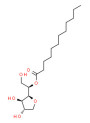
- Sorbitan Laurate (Span 20): A low HLB emulsifier, typically used as a co-emulsifier, especially in combination with high HLB emulsifiers like Polysorbate 20 or PEG-40 Stearate to create stable emulsions. Typical usage rate is 2-4%. Mix into the oil phase.
- PEG-40 Stearate: Another O/W emulsifier that helps stabilize the emulsion. Typical usage rate is 0.5-10%. Can be mixed into either phase.
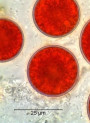
- Astaxanthin (10% Oil): A potent antioxidant. Since it's an oil-soluble active, it should be added to the oil phase. Typical usage rate for this 10% oil extract is often around 0.5-5%.
- Phenoxyethanol: A broad-spectrum preservative essential for preventing microbial growth in your cream. Typical usage rate is 0.5-1.0%. Add during the cooling phase (below 60°C).
- Fragrance oil: Used to add scent to the product. Typical usage rate is usually 0.1-1%, but always check the supplier's recommendations as it can vary. Add during the cooling phase.
Formulation Considerations:
- Emulsifier System: You have a combination of emulsifiers (Glyceryl Monostearate SE, Polysorbate 20, Span 20, PEG-40 Stearate) and thickeners (Cetearyl Alcohol). This is common for creating stable emulsions. Glyceryl Monostearate SE is a primary O/W emulsifier/thickener. PEG-40 Stearate and Polysorbate 20 are also O/W emulsifiers, while Span 20 is W/O. Using a blend of low and high HLB emulsifiers (like Span 20 and Polysorbate 20 or PEG-40 Stearate) can help achieve a stable emulsion, especially when combined with fatty alcohols like Cetearyl Alcohol. The total amount and ratio of your oil phase to water phase, and the specific ratio of these emulsifiers, will determine the final stability and texture of your cream. You'll need to experiment to find the right balance.
- Phase Separation: Typically, you would heat your oil-soluble ingredients (Cetearyl Alcohol, Isopropyl Myristate, Glyceryl Monostearate SE, Apricot Kernel Oil, Dimethicone, Span 20, PEG-40 Stearate, Astaxanthin) together in one phase and your water-soluble ingredients (Glycerin, Sodium PCA, Polysorbate 20, Water) in another phase, both to around 70-75°C. Then, slowly add the water phase to the oil phase while mixing, or vice versa, and continue mixing as it cools to form the emulsion. Heat-sensitive ingredients like Phenoxyethanol and Fragrance Oil are added during the cooling phase below 60°C.
- Water: You haven't listed water, but it will be the main ingredient in the water phase, making up the majority of the formula (e.g., 60-80%+). Use distilled or deionized water.
- Stability Testing: After creating your cream, it's crucial to perform stability testing (e.g., storing at different temperatures) to ensure the emulsion remains stable over time.
- Potential Additions: Depending on the desired properties, you might consider adding a chelating agent (like Disodium EDTA) to help with formula stability, or other active ingredients.
This list of ingredients provides a good foundation for a moisturizing cream. Adjusting the percentages within the recommended ranges will allow you to fine-tune the texture and feel of the final product.
Related Products Mentioned
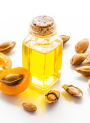
Apricot Kernel Oil (Refined)
Cosmetics
Glycerin (USP/Food Grade)
Cosmetics
Phenoxyethanol (Extra Pure)
Cosmetics
Sodium PCA 50%
Cosmetics
Dimethicone (Medium/350, Low-Odor)
Cosmetics
Polysorbate 20 (Tween 20)
Cosmetics
Cetearyl Alcohol (50/50, e.q. Lanette O)
Cosmetics
Isopropyl Myristate (Deodorized)
Cosmetics
PEG-40 Stearate
Cosmetics
Sorbitan Laurate (Span 20)
Cosmetics
Astaxanthin (10% Algae Extract, Oil)
Cosmetics