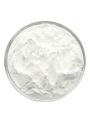
Cream Formulation for Moisturizing and Brightening: Vitamin C Stability and Preservation
Question
I am developing a cream formulation for moisturizing and brightening. My current formula includes:
- L-ascorbic acid (Vitamin C) 10%
- Rosewood essential oil (as preservative)
- Other ingredients (not specified in detail in the original question, but implied to be a cream base with oil and water phases, Alpha Arbutin, and Hyaluronic Acid based on the expert's response).
I am seeking feedback on this formula, particularly regarding the stability of the Vitamin C and the effectiveness of the preservation system, and guidance on how to formulate a stable and effective cream.
Answer
Cream Formulation for Moisturizing and Brightening
Regarding your proposed cream formula for moisturizing and brightening, there are a few points to consider to ensure stability and effectiveness.
Formula Analysis and Recommendations
Your current formula includes Vitamin C (L-ascorbic acid) at 10%. As noted in the previous replies and the product description for Vitamin C (L-ascorbic acid) (Ultra-Fine), this form of Vitamin C is highly effective but is unstable when dissolved in water and can easily oxidize, losing its potency.
To create a stable and effective cream, it is recommended to use a more stable derivative of Vitamin C that is suitable for water-based formulations. Options include Ethyl Ascorbic Acid, Ascorbyl Glucoside (AA-2G), or Perfect-C (Ascorbyl Tetraisopalmitate), as suggested previously. Ethyl Ascorbic Acid is a good water-soluble and highly stable option.
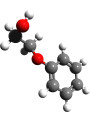
Additionally, using rosewood essential oil as a preservative is generally not sufficient to protect a water-based cosmetic product from microbial growth. A proper, broad-spectrum cosmetic preservative is essential for safety and shelf life. Phenoxyethanol P5 is a suitable preservative for this type of formula.
Here is a revised formula using Ethyl Ascorbic Acid and Phenoxyethanol P5:
- Distilled water
- Sunflower oil
- Alpha Arbutin (Switzerland) 2%
- Ethyl Ascorbic Acid 3% (Replacing L-ascorbic acid)
- Double Hyaluron Liquid 2% (Provides 0.1% active Hyaluronic Acid)
- Light Cream Maker 1%
- Phenoxyethanol P5 1% (As preservative)
The total percentage of active/other ingredients is 2% + 3% + 2% + 1% + 1% = 9%. The remaining 91% will be the water and oil phases. Assuming a 15% oil phase (Sunflower oil), the formula percentages would be:
- Distilled water: 76%
- Sunflower oil: 15%
- Alpha Arbutin (Switzerland): 2%
- Ethyl Ascorbic Acid: 3%
- Double Hyaluron Liquid: 2%
- Light Cream Maker: 1%
- Phenoxyethanol P5: 1%
Quantities for a 50ml Batch
To make a 50ml batch (approximately 50g), the quantities would be:
- Distilled water: 76% of 50g = 38g
- Sunflower oil: 15% of 50g = 7.5g
- Alpha Arbutin (Switzerland): 2% of 50g = 1g
- Ethyl Ascorbic Acid: 3% of 50g = 1.5g
- Double Hyaluron Liquid: 2% of 50g = 1g
- Light Cream Maker: 1% of 50g = 0.5g
- Phenoxyethanol P5: 1% of 50g = 0.5g
Manufacturing Process
Using Light Cream Maker, which is a cold-process emulsifier, the cream can be made without heating.
- Water Phase: In a clean container, combine the Distilled water, Ethyl Ascorbic Acid, Double Hyaluron Liquid, Alpha Arbutin, and Phenoxyethanol P5. Stir until all powders are fully dissolved.
- Oil Phase: In a separate clean container, combine the Sunflower oil and Light Cream Maker. Stir briefly to disperse the cream maker.
- Combine Phases: Slowly pour the oil phase into the water phase while stirring continuously.
- Emulsification: Continue stirring until the mixture thickens and forms a smooth cream. This usually takes 1-5 minutes. Ensure thorough mixing to achieve a uniform texture.
- Packaging: Once the cream is fully formed and smooth, transfer it to a clean container.
This revised formula and process should yield a stable and effective moisturizing and brightening cream.
Related Products Mentioned
Alpha Arbutin (Switzerland)
Vitamin C (L-ascorbic acid) (Ultra-Fine)
Light Cream Maker™
Double Hyaluron Liquid