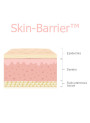
Cream Formulation Guide for Skin-Barrier™ and Skin Barrier Cream Base
Question
I would like to request a detailed guide for formulating a cream using the following two products:
Skin-Barrier™ (Skin Mimic Ceramides Liposome)Skin Barrier Cream Base (Emulsifier Free)
As I am currently ordering these ingredients for mixing, I would appreciate additional information to ensure proper formulation. Please provide guidance on the following:
- What are the specific conditions for mixing these two ingredients?
- What are the recommended mixing quantities or ratios for each product?
- Which thickeners can be used in conjunction with this formulation?
- What should be the target final pH of the cream?
- What is the recommended mixing method (e.g., cold process or hot process)?
- Are there any specific precautions or considerations to be aware of during the formulation process?
Answer
Cream Formulation Guide for Skin-Barrier™ and Skin Barrier Cream Base
For those looking to formulate a skin cream using Skin-Barrier™ (Skin Mimic Ceramides Liposome) and Skin Barrier Cream Base (Emulsifier Free), we offer the following guidance:
1. Skin Barrier Cream Base (Emulsifier Free) (Product ID: 9673)
This is a cream base specifically designed to restore the skin's protective barrier. It already contains skin-mimicking lipids, including Ceramide NP, Cholesterol, and Phytosphingosine.
- Usage Rate:
- For general skin nourishment to maintain strength: We recommend diluting 5-10% (mix with a base gel or other creams).
- For skin with problems such as dryness, dehydration, and irritation: It can be used at a rate of 20-50%, depending on the skin condition.
- Caution: Do not exceed 50% concentration, as it will be too highly concentrated.
- Mixing Method: As a pre-made base, other ingredients can be added directly to it.
- Thickener: If you wish to adjust the texture to a lotion, you can mix it with water and use approximately 0.3%
Xanthan Gum(e.g., Skin Barrier Cream Base 50%, Water 49.7%, Xanthan Gum 0.3%). - Final pH: Generally, skincare products should have a pH in the range of 5.0-6.5 for optimal skin compatibility.
- Precautions: Store at room temperature. Avoid heat and direct sunlight.
2. Skin-Barrier™ (Skin Mimic Ceramides Liposome) (Product ID: 7564)
This is a liposomal ceramide complex developed from the skin's structure, containing Ceramide, Cholesterol, and Free Fatty Acid in appropriate proportions. It aims to restore the skin from dryness, irritation, and strengthen the skin barrier.
- Usage Rate:
- For general skincare formulations: Recommended 5%.
- For dry skin: Recommended 10%.
- For problematic, allergic, or irritated skin: Recommended 15%.
- Mixing Method: Mix into the water phase. We recommend adding it during the cool-down phase or at room temperature to preserve the efficacy of the liposomes, as it is a micro-emulsion that may be sensitive to high heat.
- Product Characteristics: A translucent liquid that can be dispersed in water (will become cloudy but will not settle).
- Precautions: For long-term storage, store in a cool place at 4-8°C. Do not expose to sunlight.
Combined Cream Formulation Guide
Since Skin Barrier Cream Base already contains ceramides, adding Skin-Barrier™ will further enhance its effectiveness in restoring the skin barrier.
- Prepare the Base: Start by using Skin Barrier Cream Base in your desired quantity (e.g., 20-50% of the total formula). Dilute it with purified water or other base gels to achieve the desired texture and concentration.
- Adding Skin-Barrier™: Once the diluted cream base is at room temperature, slowly add Skin-Barrier™ at a rate of 5-15% of the total formula. Stir or mix gently until well combined.
- Adjusting Viscosity (if needed): If a thicker cream texture is desired after diluting the base and adding Skin-Barrier™, you can use
Xanthan Gumat a rate of 0.1-0.5%. Dissolve it in water first, then gradually add it to the mixture. - pH Adjustment: Check the pH of the final formulation. It should ideally be in the range of 5.0-6.5. If necessary, adjust with a small amount of acid (e.g., Lactic Acid) or base (e.g., Triethanolamine).
- General Precautions:
- Always perform a compatibility test with small quantities of ingredients first.
- Strictly follow the storage recommendations for each ingredient.
- If you intend to sell the finished product, you must comply with FDA notification requirements for Skin Barrier Cream Base.