Cream Formulation Issue: Liquid Texture with Satin Cream Maker
Question
My cream formulation using Satin Cream Maker™ resulted in a liquid texture instead of a cream.
I followed these steps:
- Mixed water-soluble ingredients, including heat-sensitive ones like Copper Peptide, Safe-B3, Moist24, Hydrolyzed Milk Protein, and Mild Preserved Eco preservative, with water.
- Heated the water phase.
- Heated the oil phase ingredients (like Cetearyl Alcohol, PE-1 Aqua).
- Combined the water and oil phases.
- Added Satin Cream Maker™ in the almost final step.
What went wrong, and why did the cream not form properly? Can the current batch be fixed?
Answer
Hello,
Based on the information you provided, the reason your cream formulation is liquid and did not form a cream texture is due to incorrect mixing steps.
Error:
You added the Satin Cream Maker in the almost final step, after combining the water and oil phases. This is incorrect.
Correct Mixing Procedure:
Generally, emulsifiers like Satin Cream Maker™ must be mixed into the water phase before heating and combining with the oil phase. When Satin Cream Maker™ is mixed with water and heated properly, it helps create a gel structure in the water phase. When this is combined with the oil phase and stirred continuously while cooling, it forms a stable cream texture.
User C7 provided the correct mixing steps in a previous post, which is the guideline you should follow. The key steps are:
- Mix water-soluble ingredients (except heat-sensitive ones like Copper Peptide, Safe-B3, Moist24, Hydrolyzed Milk Protein, and Mild Preserved Eco preservative, which should be added after cooling) with water, and add Satin Cream Maker™. Stir until a gel texture is formed (do not add Safe-B3, Hydrolyzed Milk Protein, Moist24, Copper Peptide at this stage).
- Heat the mixture from step 1 to approximately 80°C.
- Heat the oil phase ingredients (like Cetearyl Alcohol, PE-1 Aqua) to approximately 80°C until fully melted and combined.
- Slowly pour the hot oil phase into the hot water phase (or vice versa) while continuously stirring or blending.
- Continue stirring or blending as the cream cools down until a smooth, uniform cream texture is achieved.
- Once the cream has cooled to room temperature (around 25-30°C), then add the heat-sensitive ingredients such as Copper Peptide, Safe-B3, Moist24, Hydrolyzed Milk Protein, and Mild Preserved Eco preservative. Stir until well combined.
What to do with the current batch:
Since you added Copper Peptide in the first step before heating the mixture to form the cream, reheating it later to fix the texture would degrade the Copper Peptide, rendering it ineffective for reducing acne scars. Additionally, the liquid texture is not the intended result.
Therefore, the cream you made is not suitable for its intended purpose of reducing acne scars with Copper Peptide and may have stability issues. It is recommended to discard it.
Related Products Mentioned
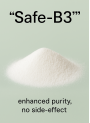
Safe-B3™ (Vitamin B3, Niacinamide)

Satin Cream Maker™
Cetearyl Alcohol (50/50, e.q. Lanette O)


PE-1 Aqua
Mild Preserved Eco™ (Preservative-Free)