Cream Formulation Issues: Texture, Solubility, and Odor
Question
I am formulating a cream and have encountered some issues with the texture and ingredients. My latest experimental formula includes the following phases:
Water Phase:
- Water
- Satin Cream Maker
- Pro Polymer
Lipid Phase:
- Apricot Kernel Oil (changed from Shea Butter)
- Kojic Acid Dipalmitate
- Deoxyarbutin
- Reservoir-Tech
- SKIN-DEFENSE® V
- Sym-White™
Other Ingredients:
- Chamomile Extract
- Phenoxyethanol SA (Optiphen Plus)
In previous attempts, I had issues with AnyGel clumping and in the latest attempt, Pro Polymer also clumped, resulting in a lumpy, thick, and sticky texture. The formula also has a rancid smell (previously thought to be Shea Butter, but now with Apricot Kernel Oil). Kojic Acid Dipalmitate was difficult to dissolve in the Lipid phase and caused it to thicken upon cooling.
I have the following questions:
- Which oil can be used that dissolves easily and doesn't have a rancid smell? I have Octyldodecanol; can it be used instead?
- Regarding Pro Polymer, will using heat help it dissolve better? If I use a smaller amount, will the cream be less thick?
- In the Lipid phase, can I reduce the amount of Kojic Acid Dipalmitate? I want the lipid phase to be more liquid for easier mixing because it coats the beaker when it cools down.
- How can I adjust the formula to achieve a lighter, easier-to-spread, and faster-absorbing cream?
- Can Cyclomethicone be added to make it easier to apply and faster-drying? Where should I add it, and do I need to add another emulsifier?
- Regarding fragrance, which scent can be added? I want a light, subtle scent like chamomile (Chamomile Oil (Roman) is available). Can it be added directly to the formula, or does it need to be mixed with fragrance first?
Answer
Hello, I understand you are trying to refine your cream formulation to achieve the desired texture and efficacy. Based on the information you provided and the staff's responses, I will summarize and provide additional advice based on your questions.
Summary from previous recommendations:
- The staff recommended removing
DeoxyarbutinandDMAEif you are concerned about irritation. - It was recommended to increase the proportion of
Satin Cream Makerto 1.5% or 2-2.5% if the texture is too liquid. - It was recommended that
Satin Cream Makershould be in the water phase, and mixing should involve gradually adding the oil phase to the water phase at a similar warm temperature. - It was noted that
Kojic Acid Dipalmitatewill disperse in the cream texture, not dissolve completely clear.
From your latest experimental formula and process:
You have adjusted the formula by removing DMAE and changing Shea Butter to Apricot Kernel Oil, as well as adding Pro Polymer and Satin Cream Maker to the Water phase and moving Deoxyarbutin, Reservoir-Tech, SKIN-DEFENSE® V, Kojic Acid Dipalmitate, Sym-White™ to the Lipid phase, which is the correct approach for separating ingredients by type.
The problems encountered were a lumpy texture and a rather thick and sticky consistency, with a rancid smell (which you attributed to Shea Butter, but in the latest formula, you changed to Apricot Kernel Oil, which natural oils can also become rancid). You also had issues with AnyGel clumping in the first attempt and Pro Polymer clumping in the second attempt, as well as Chamomile Extract not dissolving well and Kojic Acid Dipalmitate being difficult to dissolve and making the Lipid phase thick upon cooling.
Answers to your questions:
Which oil can be used that dissolves easily and doesn't have a rancid smell?
- The
Octyldodecanolyou have can be used instead of natural oils in the formula. It will help make the texture less sticky thanShea ButterorApricot Kernel Oiland does not have a rancid smell. However, as the staff mentioned,Octyldodecanolis primarily used for color dispersion in makeup formulations, but it can also be used as an Emollient in general skin creams. If you want an oil with a light texture, easy absorption, and no rancid smell, you can consider using other light and easily absorbed Ester Oils or Silicone Oils such as Caprylic/Capric Triglyceride (MCT Oil), Isopropyl Myristate (IPM), Isopropyl Palmitate (IPP), or Silicone Oils likeCyclomethicone(which will be addressed in question 5) instead of natural oils.
- The
Will using heat help
Pro Polymerdissolve better? Will using less result in less thick cream?- Based on the staff's previous recommendation, it is advised to remove
Pro Polymerfrom the formula entirely. Your formula already containsSatin Cream Maker, which functions to create the cream texture and emulsify oil into water. Using a high amount ofPro Polymercan lead to the uneven, lumpy texture you observed. - If you still wish to use
Pro Polymer(which is not recommended for this formula), using heat (as you experimented with at 50-60 degrees) will help it dissolve and disperse more smoothly. And yes, using a smaller amount ofPro Polymerwill result in a less thick cream proportionally.
- Based on the staff's previous recommendation, it is advised to remove
Can the amount of
Kojic Acid Dipalmitatebe reduced?- Absolutely. Reducing the amount of
Kojic Acid Dipalmitatewill help make the Lipid phase more liquid and easier to mix when it cools down. Your formula already contains other whitening ingredients such asEthyl Ascorbic acid,L-Glutathione,Tranexamic Acid,Deoxyarbutin,Sym-White™, which are sufficient for whitening purposes. ReducingKojic Acid Dipalmitateto 1% or an amount that dissolves more easily based on your experiments is a good approach.
- Absolutely. Reducing the amount of
How to adjust the formula for a lighter, easier-to-spread, faster-absorbing cream?
- Reduce the total amount of the Lipid phase: The proportion of the Lipid phase in your latest formula is 14.10%, which is quite high for a cream intended to be light. Try reducing the total amount of the oil phase, for example, to around 8-10%, by potentially reducing the amount of
Apricot Kernel OilorKojic Acid Dipalmitate(as per question 3). - Use lighter oils/Emollients: Instead of using
Shea ButterorApricot Kernel Oil, which have a relatively heavy texture, try using Ester Oils or Silicone Oils that have a lighter texture and are more easily absorbed, such as Caprylic/Capric Triglyceride, Isopropyl Myristate, Isopropyl Palmitate, orCyclomethicone(as per question 5). - Adjust Emulsifier: Ensure you are using an appropriate amount of
Satin Cream Maker(1.5-2.0% as recommended by the staff) to achieve the desired consistency and stability. - Remove
Pro Polymer: As recommended in question 2, removingPro Polymerwill help make the cream texture smoother and prevent gel lumps.
- Reduce the total amount of the Lipid phase: The proportion of the Lipid phase in your latest formula is 14.10%, which is quite high for a cream intended to be light. Try reducing the total amount of the oil phase, for example, to around 8-10%, by potentially reducing the amount of
Can
Cyclomethiconebe added? Where to add it? Is an additional emulsifier needed?- Yes, adding
Cyclomethicone(5-8% as recommended by the staff) will help improve spreadability and absorption speed, making the texture feel lighter and less sticky. - Add to the Lipid phase:
Cyclomethiconeis a Silicone Oil and should be added to the oil phase (Lipid phase). - No additional emulsifier needed: The
Satin Cream Makeryou are using is an Emulsifier capable of emulsifying oils into water, including Silicone Oils. Therefore, you do not strictly need to add another Emulsifier specifically forCyclomethicone, although the total amount of emulsifier might need slight adjustment depending on the final percentage of the oil phase.
- Yes, adding
Regarding fragrance, which scent can be added? Can it be added directly?
- You can add the
essential oilorfragranceyou desire to the formula. If you want a light, subtle scent like chamomile, you can useChamomile Oil (Roman). - Add in the final step: As recommended by the staff, you can add
essential oilsorfragrancesin the final step of making the cream, after the water and oil phases have been combined and the cream has started to cool down. Then, mix or stir to incorporate.Satin Cream Makerwill help emulsify the fragrance into the cream texture.
- You can add the
Summary of recommended formula and process adjustments:
- Remove
Pro Polymerfrom the Water phase. - Reduce the amount of
Kojic Acid Dipalmitatein the Lipid phase (e.g., to 1-2%). - Consider changing the oil in the Lipid phase from
Apricot Kernel Oilto a lighter, non-rancid Ester Oil or Silicone Oil, or use it in combination with theOctyldodecanolyou have. - Add
Cyclomethiconeat 5-8% to the Lipid phase to help the cream spread and absorb faster. - Check the amount of
Satin Cream Makerto ensure it is appropriate (1.5-2.0%) to achieve the desired thickness and stability. - Mixing process:
- Prepare the Water phase by dissolving water-soluble ingredients (including
Satin Cream Maker) and stirring/mixing until a smooth gel-cream texture is obtained. - Prepare the Lipid phase by dissolving oil-soluble ingredients (including
Cyclomethiconeand the reduced amount ofKojic Acid Dipalmitate). - Gradually add the Lipid phase to the Water phase in small amounts while continuously mixing or stirring. Ensure both phases are at a similar warm temperature (around 70 degrees as recommended by the staff).
- Once the cream starts to cool down, gradually add heat-sensitive ingredients such as
Phenoxyethanol SA (Optiphen Plus)andessential oils/fragrancesin the final step and mix thoroughly.
- Prepare the Water phase by dissolving water-soluble ingredients (including
These adjustments should help you achieve a smoother, lighter, easier-to-spread, faster-absorbing cream without a rancid smell.
If you have any further questions or need to adjust the formula again, feel free to ask.
Related Products Mentioned
Pal-GHK, Pal-GQPR (eq Matrixyl 3000)
Vitamin E (Tocopheryl Acetate)
Allantoin
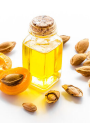
Apricot Kernel Oil (Refined)
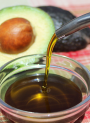
Avocado Oil (Refined)
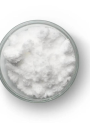
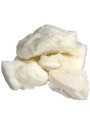
Shea Butter (Refined , Deodorised)
Ethoxydiglycol (e.q. Transcutol)
Light Cream Maker™
Kojic Acid Dipalmitate
Cetrimonium Chloride (CTAC)
Disodium EDTA
Glutathione (L-Glutathione) (Extrasol)
Shea Butter (Ultra Soft)
Pro Polymer™ (Gel Maker)

Satin Cream Maker™
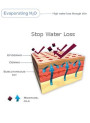
WaterLock™ (Polyquaternium-51)

Trans-White™
Double Hyaluron Liquid
DMAE (SkinTight MD™) Liquid

SKIN-DEFENSE® V ลดระคายเคืองจากธรรมชาติ
Purified Water, TDS Limit 1PPM)
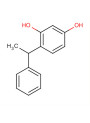

Phenoxyethanol SA (eq. Optiphen Plus)
Trisiloxane

Chamomile Extract (Apigenin)
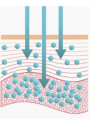
Reservoir-Tech
AnyGel™ (Dehydroxanthan Gum)