Cream Formulation Issues: Texture Thinning and Separation
Question
I am formulating a cream and have encountered some issues with texture and stability. I have a few questions:
Why do the ingredients
1,2-HexanediolandSoy Extractcause the cream's viscosity to decrease or make the texture thinner? Besides these two, what other ingredients can make the cream thinner?I have two formulas (Formula 1 and Formula 2). After one day, Formula 1 remains stable, but Formula 2 separates. What causes this separation in Formula 2, and how can I fix it?
In another formula (Formula 4), I mixed the oil phase (heated until dissolved) with the water phase (heated to the same temperature as the oil phase) by slowly pouring the water into the oil and blending. After blending for a while and as the temperature cooled down, the oil phase started to separate from the water phase (they didn't become a single texture like in my other formulas). The ingredients added to Formula 4, compared to Formulas 1 and 2, include wax types, and I used
Butter Cream Makerat 2%. How can I fix this separation issue?Can I use
Satin Cream MakerorAnyGelas an emulsion stabilizer to prevent separation? Which one is suitable?If I use
Butter Cream Makerat 5-6% in my formula, isMilk Lotion Makerstill necessary?
Answer
Subject: Re: Product Texture Creation
Hello,
Thank you for your detailed questions regarding your cream formulations. Based on your observations and the staff's replies, here are the answers to your questions:
Why do 1,2-Hexanediol and Soy Extract reduce cream viscosity?
- 1,2-Hexanediol: This ingredient belongs to the group of polyols or solvents. Ingredients in this group can act as solvents within the formulation, which can disrupt the structure formed by thickeners or emulsifiers, leading to a reduction in viscosity or thinning of the cream texture.
- Soy Extract: Natural extracts are often dissolved in a solvent during the extraction process. When you add a significant amount of the extract (like 5% in your formula), you are also adding a considerable amount of this solvent into your formulation. This added solvent contributes to the overall solvent load in the cream, similar to 1,2-Hexanediol, causing the texture to become thinner.
- Principle: The general principle is that ingredients that function as solvents or contain a high percentage of solvents can interfere with the thickening or emulsifying network in a formulation, leading to reduced viscosity. This applies to other solvents and glycols as well.
Besides these two, what other ingredients can make the cream thinner?
Following the principle mentioned above, other ingredients that act as solvents or contain significant amounts of solvents can also cause thinning. This includes other types of glycols, certain liquid extracts, or raw materials where the active component is dissolved in a solvent base.Why did formula 2 separate after one day while formula 1 did not, and how to fix it?
Formula 2 experienced separation likely because it has a relatively high oil content combined with a high amount of ingredients (like 1,2-Hexanediol and Soy Extract) that tend to thin the texture and can reduce stability. While formula 2 adjusted the ratio of Milk Lotion Maker and Butter Cream Maker compared to formula 1, the overall system was less stable due to the factors mentioned.
To fix this, the staff recommended increasing the amount of the main emulsifier, Butter Cream Maker, to 5-6%. Alternatively, you can add an Emulsion Stabilizer to the formula. Suitable stabilizers mentioned are Xanthan Gum (0.5-1.0%), ClayThick, ClayThick Ready, or AnyGel. These stabilizers help maintain the emulsion's integrity, especially in challenging conditions or with high oil phases and thinning ingredients.How to fix the separation issue in formula 4?
In formula 4, the separation occurring as the temperature cools down indicates that the amount of emulsifier used was insufficient to maintain a stable emulsion during the cooling phase. The staff noted that using Butter Cream Maker at 2% is too low for this formula. To fix this, you should increase the usage rate of Butter Cream Maker. The staff suggested increasing it to 5-6% for formulas with high oil content, which would likely resolve the separation issue in formula 4 as well.
Additional Clarifications:
- Regarding using Satin Cream Maker or AnyGel as emulsion stabilizers: AnyGel can function as an emulsion stabilizer, helping with stability in challenging conditions. However, Satin Cream Maker is primarily an emulsifier, not a stabilizer in the same sense, and may not effectively prevent separation caused by factors like high oil load or thinning ingredients.
- Regarding the necessity of Milk Lotion Maker: If you increase Butter Cream Maker to 5-6%, Milk Lotion Maker is no longer necessary in the formula. Butter Cream Maker at this concentration is sufficient to emulsify the formula on its own. However, adding a stabilizer like AnyGel (as you considered) is a good measure to further ensure stability.
I hope this explanation helps you understand the principles and resolve the issues with your formulations.
Related Products Mentioned
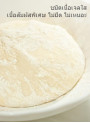

Satin Cream Maker™

Soy Extract (Isoflavones / Genistein)
Milk Lotion Maker™
Butter Cream Maker™

ClayThick Ready™ (Cream Stabilizer)